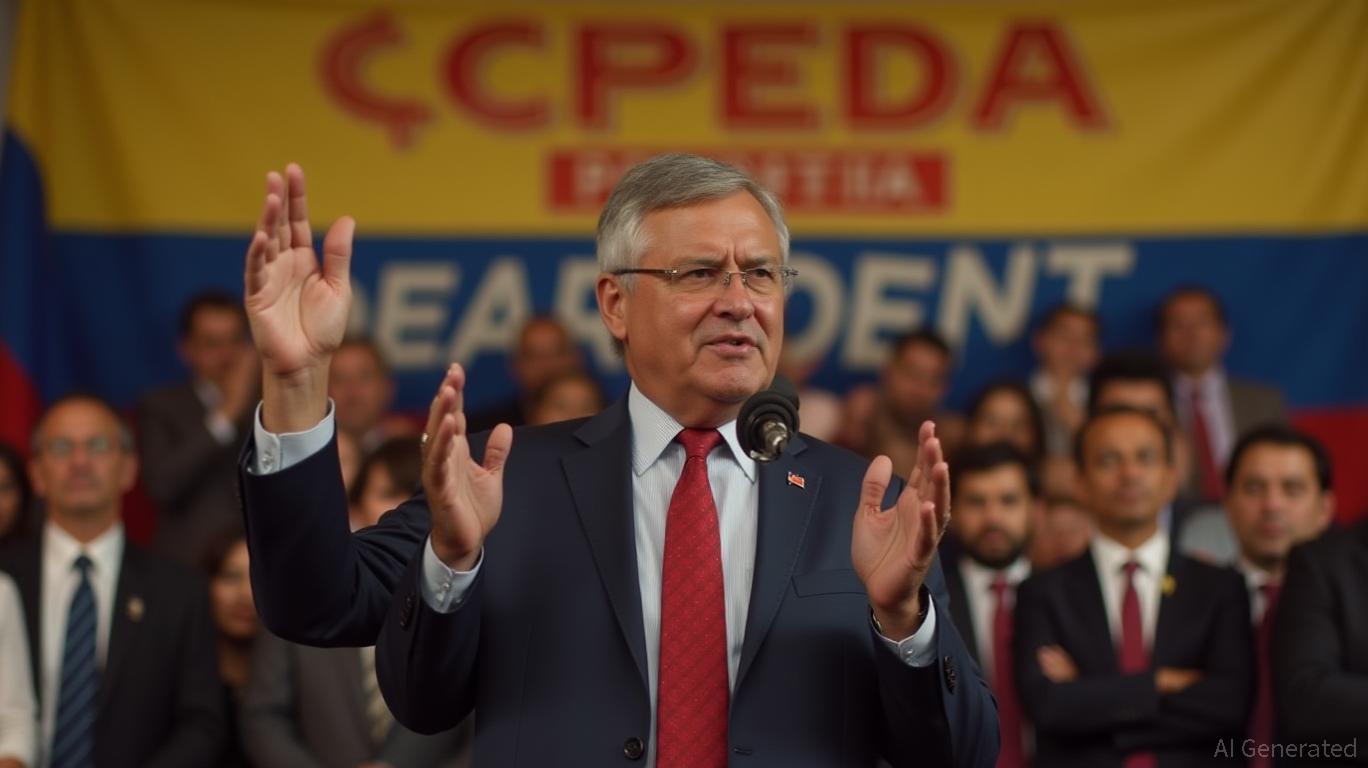
Colombia leftist candidate Cepeda says will seek national consensus for reforms if elected, backing away from possibility of new constitution
Colombia’s leftist presidential candidate, Iván Cepeda, has signaled a shift in his approach to governance, stating that he will seek a national consensus to advance reforms if elected, rather than pursuing the creation of a new constitution. This marks a departure from earlier statements in which he had suggested convening a constitutional assembly to reshape the country’s political framework.
Cepeda, a senator and key figure in the ruling Pacto Histórico coalition, has long advocated for progressive economic and social policies, including land redistribution, expanded welfare programs, and continued peace negotiations with armed groups. His platform emphasizes strengthening Petro-era reforms, such as increase in the minimum wage and progressive tax policies. However, in recent weeks, he has distanced himself from the idea of a constitutional overhaul, which had drawn criticism from political opponents and some legal experts who viewed it as a potential threat to democratic institutions.
The decision to abandon the constitutional assembly proposal appears to be a strategic move to broaden Cepeda’s appeal ahead of the June 21 runoff election. His main rival, Abelardo de la Espriella, has positioned himself as a staunch opponent of Petro’s policies, advocating for hardline approach to security and economic austerity. De la Espriella has also pledged to dismantle several government agencies and reduce public spending by up to 40% over four years.
Cepeda’s pivot to a consensus-driven approach may help him secure support from moderate voters who have expressed concerns about the risks of radical institutional change. It also aligns with the broader political climate in Latin America, where several left-wing governments have faced setbacks in recent elections amid growing public skepticism about expansive reform agendas.
Despite this shift, Cepeda remains committed to the core principles of the Petro administration, including the pursuit of “total peace” with armed groups and continued efforts to address social inequality. He has also reiterated his stance on foreign policy, emphasizing Colombia’s sovereignty and independence from U.S. influence, a position that contrasts sharply with de la Espriella’s calls for closer security cooperation with Washington.
With the election approaching, the outcome will have significant implications for Colombia’s economic trajectory. A Cepeda victory would likely see the continuation of Petro’s expansionary fiscal policies, including increased public spending and social welfare programs. In contrast, a de la Espriella win could lead to contraction in government expenditure and a shift toward more orthodox economic policies.
Investors and financial analysts will be closely watching the election results and the subsequent policy direction of the next administration, as Colombia’s economic performance remains sensitive to political stability and institutional credibility.