What a Fantasy Can Reveal About Real Life
TL;DR
Characters' fantasies and lies in literature often reveal deeper truths about their psychology and desires. Shirley Jackson's 'The Haunting of Hill House' uses a protagonist's fabricated daydreams to expose her loneliness and vulnerability. These fictional imaginings can help readers understand real human nature.
Key Takeaways
- •Fictional characters' fantasies and lies can illuminate their deepest psychological truths more effectively than straightforward facts.
- •In 'The Haunting of Hill House,' Eleanor Vance's fabricated life story reveals her profound loneliness and lack of autonomy after years of caregiving.
- •When fantasies collapse, they often give way to darker realities, as seen in Eleanor's breakdown when her lies are exposed.
- •Readers can empathize with characters who create protective fantasies, gaining insight into universal human experiences of vulnerability.
- •Literature that explores imagination's 'limitless realm of freedom' can reveal truths about both fictional characters and real human nature.
This is an edition of the Books Briefing, our editors’ weekly guide to the best in books. Sign up for it here.
Someone once said something like “Literature is the lie that tells the truth”—although, appropriately enough, the origin of the phrase is uncertain. Straightforwardly, this means that a novel’s invented characters and plots can sometimes help us understand human nature better than factual recitations can. But many of my favorite stories raise the stakes; they revolve around a made-up character who, in turn, makes things up. This week, Erin Somers wrote in The Atlantic about six books that dwell in the “limitless realm of freedom” conjured by a person’s imagination. Lately, I’ve been indulging in books with protagonists who lie in ways that illuminate the truth about them.First, here are five new stories from The Atlantic’s Books section:
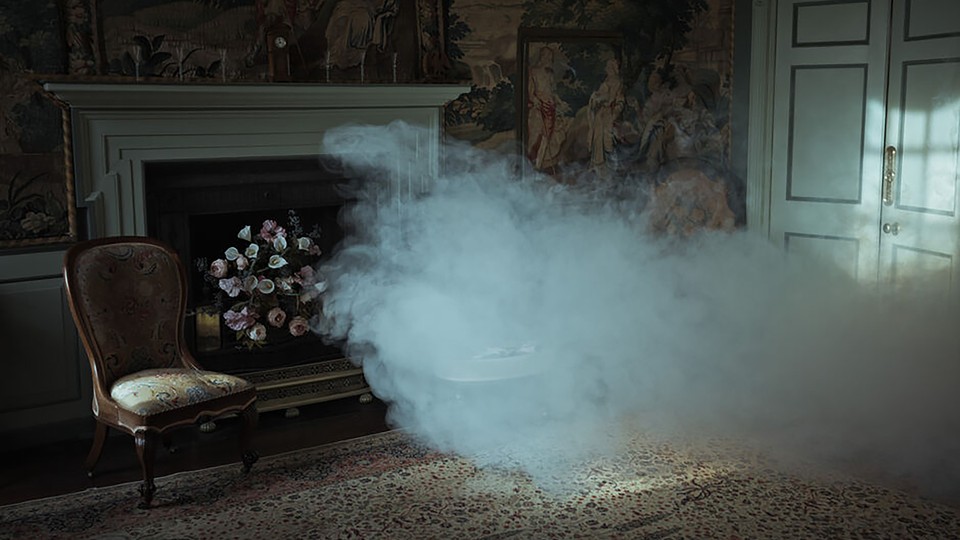
The reader knows, however, that Eleanor has no home of her own; after years spent caring for her ailing mother, she occupies a cot in her sister’s house. Even the car she’s driven doesn’t entirely belong to her. As the happenings at Hill House begin to erode her sanity, the fabrication of her independent life also collapses, intensifying her humiliation. Jackson reveals more about Eleanor’s psychology through the shape of her lies, which are built over the loneliness and vulnerability in her life, than she does through glimpses of harsh reality.
If The Haunting of Hill House were merely about an evil domicile, one described as “arrogant and hating,” it wouldn’t be much more than a ghost story. Instead, it is about what happens when a fantasy falls apart, giving way to something darker. Eleanor only confesses her untruth once she’s brought to a breaking point, and she only lied in the first place because she had precious little else to live on. Her predicament made me think of the nameless narrator of Knut Hamsun’s 1890 modernist classic, Hunger, another character prone to fantasies and lies—who says, during his own confession, that “there were natures that fed on trifles and died from a harsh word.” Like him, Eleanor is deeply unhealthy and in many ways extreme. But anyone who has nurtured a daydream, or told a self-protective lie, can empathize with her, and learn something true about themselves.
Six Books You Can Get Lost In
By Erin Somers
These novels highlight the power—both good and bad—of unchecked fantasizing.
Read the full article.
What to Read
The Haçienda: How Not to Run a Club, by Peter Hook
The Haçienda in Manchester was a catalyst of the U.K. acid house scene in the late ’80s, and a prophecy foretold: “The haçienda must be built,” the Situationist poet Ivan Chtcheglov wrote in 1953. Heeding these cryptic words some three decades later, the audacious (and well-read) impresario Tony Wilson opened the Haçienda together with the circle of post-punk musicians and designers involved with his label, Factory Records. Their attempt to decipher Chtcheglov’s mystical phrase lasted 15 years. Hook, the bassist for New Order, served as a kind of player-coach at the Haçienda, helping manage its madcap affairs while his band became the club’s cash cow. In this memoir of misbegotten business administration, Hook returns to the storied nights out that changed British culture even as they threatened to bankrupt him—and worse. Beset by gangs and guns, the Haçienda faltered in the ’90s despite clever-sounding schemes such as replacing the club’s security with the gangsters themselves. This is a scrapbook of utopian folly, yes, but also an insider’s look at what was, for a time, the wildest workplace on Earth. — Andrew Holter
Read: Five books about going out that are worth staying in for
Out Next Week
📚 The School of Night, by Karl Ove Knausgaard, translated by Martin Aitken
📚 Nothing Random: Bennett Cerf and the Publishing House He Built, by Gayle Feldman
📚 The Revolutionists: The Story of the Extremists Who Hijacked the 1970s, by Jason Burke
Your Weekend ReadHow Sweetgreen Became Millennial Cringe
By Ellen Cushing
Last spring, Sweetgreen did something shocking, at least insofar as the menu adjustments of a fast-casual salad chain can be described that way: It added fries. In interviews, the company’s “chief concept officer,” Nicolas Jammet, paid lip service to “reevaluating and redefining fast food,” but I suspect that Sweetgreen was also “reevaluating and redefining” how to make money in a world that appeared poised to move on from buying what the company was trying to sell.
Read the full article.
When you buy a book using a link in this newsletter, we receive a commission. Thank you for supporting The Atlantic.
Sign up for The Wonder Reader, a Saturday newsletter in which our editors recommend stories to spark your curiosity and fill you with delight.
Explore all of our newsletters.