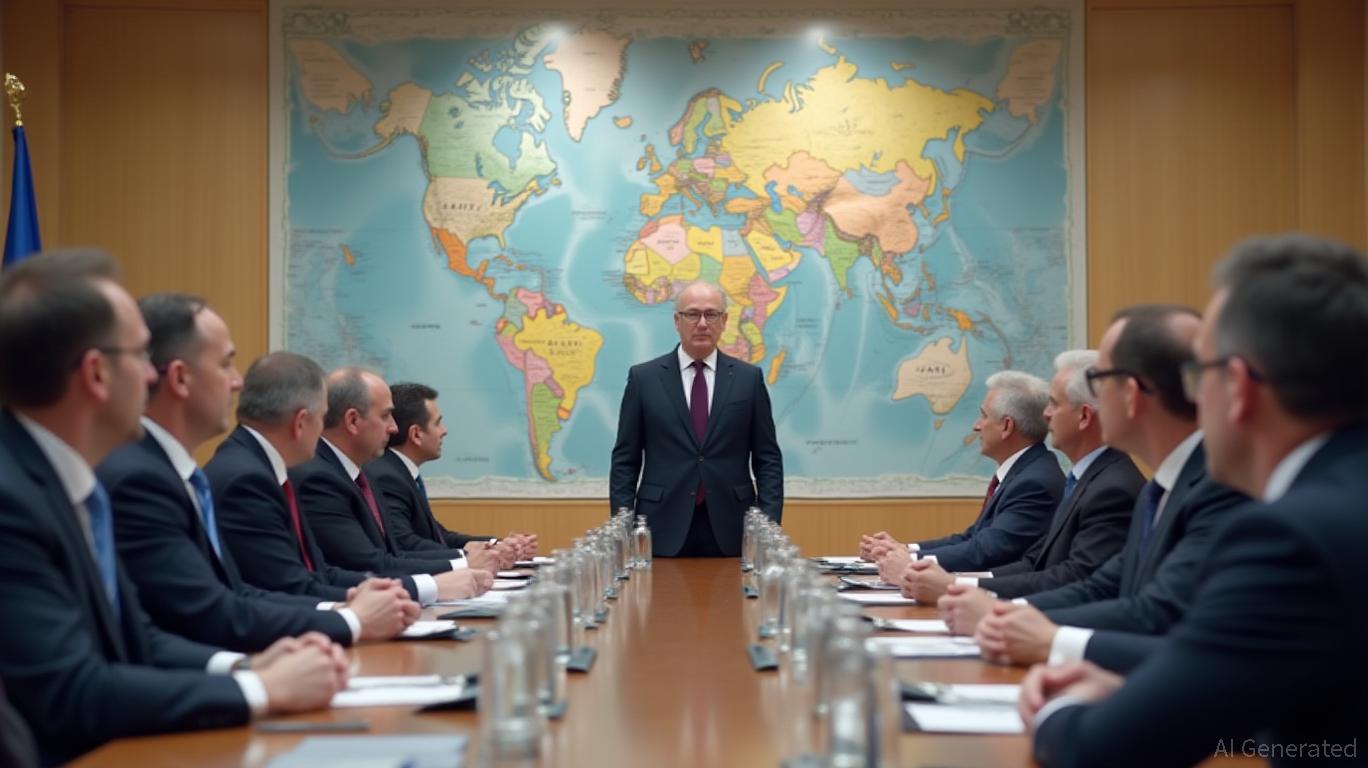
Kallas says EU foreign ministers to meet GCC ministers tomorrow
TL;DR
EU foreign ministers will meet GCC counterparts tomorrow to strengthen strategic partnership, focusing on geopolitical stability, economic collaboration, and regional security, including Gaza and Ukraine issues.
Tags
Kallas says EU foreign ministers to meet GCC ministers tomorrow
EU Foreign Ministers to Hold Key Meeting with GCC Counterparts Amid Expanding Strategic Partnership
The European Union’s foreign ministers are set to meet with Gulf Cooperation Council (GCC) counterparts tomorrow, following a recent joint ministerial council in Kuwait City. The gathering, hosted by Kuwait, underscores a deepening EU-GCC strategic partnership, with discussions expected to focus on geopolitical stability, economic collaboration, and regional security.
Recent talks between EU High Representative Kaja Kallas and GCC officials highlighted priorities such as addressing conflicts in Gaza, Ukraine, and the broader Middle East, alongside strengthening trade and climate initiatives. Kallas emphasized the EU’s commitment to a two-state solution in Gaza, noting the bloc’s role as the largest humanitarian donor to the region, with €1.6 billion allocated for Palestinian support from 2025–2027. The EU also reiterated pressure on Russia to negotiate peace in Ukraine, while acknowledging Gulf states’ contributions to prisoner exchanges and sanctions enforcement.
Economic cooperation remains a cornerstone of the partnership. The EU and GCC have launched mechanisms like the Trade and Investment Dialogue and Green Transition Forum to align on energy transitions and sustainable growth. Nearly half of commitments from the 2024 EU-GCC Summit have already been implemented, with opportunities for expanded collaboration in innovation and infrastructure projects. The European Commission is set to announce the Pact for the Mediterranean next week, a framework potentially extending to Gulf nations for cross-regional investments.
For investors, the evolving relationship signals growing alignment on energy security, green technology, and regional stability. However, geopolitical risks—including conflicts in the Red Sea and sanctions enforcement—remain critical factors influencing trade dynamics. The upcoming ministerial meeting will likely assess progress on these priorities, with outcomes expected to shape EU-GCC economic ties in the coming year.