The Year in Dogecoin 2025: DOGE Goes Political and Commercial
TL;DR
Dogecoin had a turbulent 2025, gaining institutional and corporate adoption but losing its grassroots ethos without financial gains. Despite political ties to Elon Musk's DOGE department and corporate moves like ETFs and sports sponsorships, DOGE's price fell 65% and failed to set new highs.
Key Takeaways
- •Dogecoin became politicized through Elon Musk's Department of Government Efficiency (DOGE), causing price volatility but ultimately fading from prominence.
- •Corporate adoption grew with Dogecoin ETFs, treasury acquisitions by public companies, and sports team sponsorships through the House of Doge initiative.
- •Despite bullish developments, Dogecoin's price fell 65% in 2025 and failed to reach new all-time highs, disappointing its community.
- •The Dogecoin community maintains its 'Do Only Good Every Day' ethos despite external co-option, focusing on utility over speculation.
- •Builders remain optimistic about 2026, viewing 2025's developments as validation for Dogecoin's long-term utility-focused growth trajectory.
Tags
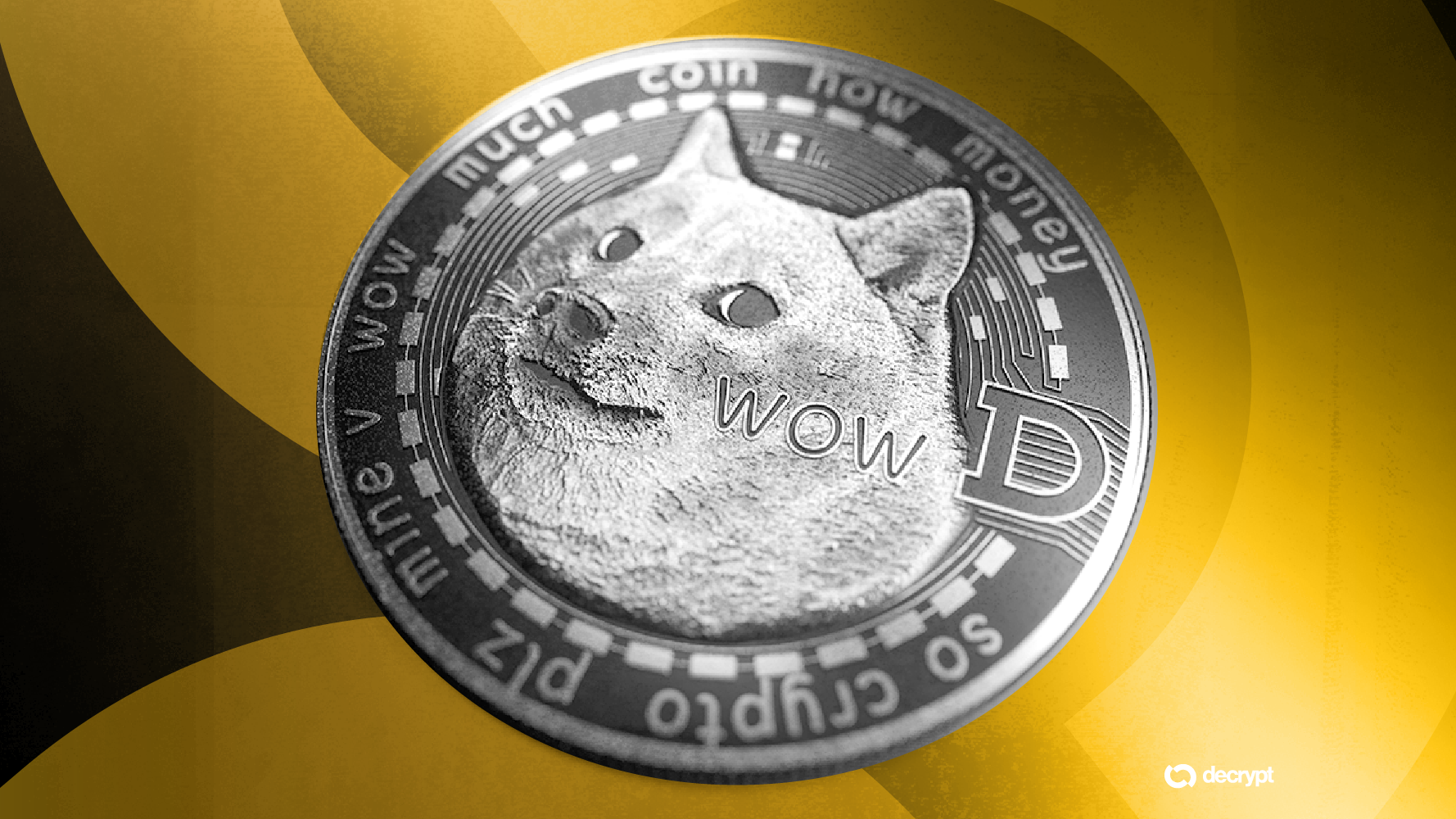
It started as a joke, but this year, Dogecoin was embraced by institutions, bought up by public companies, and its namesake was shared with a highly controversial U.S. government initiative led by billionaire Elon Musk.
Still, despite this, the original meme coin didn’t set a new all-time high—to the dismay of its diehard fanbase. As of December 15, DOGE has erased any gains made in 2025, falling about 65% over the course of 12 months.
As a result, Dogecoin has had an awkward year; it has moved away from its grassroots ethos without any of the assumed financial benefits. However, Dogecoin builders believe that the project is poised for an explosive 2026.
Here’s a look back at Dogecoin in 2025.
The Department of Government Efficiency
Late in 2024, the Trump administration positioned Musk as the public face of the newly created Department of Government Efficiency, or DOGE, even though his formal authority within the agency later became a point of dispute.
The department’s goal was to cut government spending as much as possible. This year, the madness continued with Dogecoin somehow at the center of it all.
Minutes after President Trump’s inauguration, the Musk-led department was served a lawsuit by public interest law firm National Security Counselors. The 30-page complaint alleged that DOGE is illegally operating as a federal advisory committee because it was breaking laws set out in the Federal Advisory Committee Act on hiring, disclosures, and other matters.
The next day, the Dogecoin logo appeared on the Department of Government Efficiency website. The meme coin jumped 14% to a market capitalization of $58 billion as a result. The logo was soon removed, prompting the token to dump, with the site becoming a place to track all the government spending cuts that DOGE was apparently making.
Musk even considered using a public blockchain for the agency, according to Bloomberg, though he ruled out using Dogecoin directly. That blockchain implementation never came to fruition.
Once the Department got up and running, the controversy didn’t stop. DOGE wrongly cut an estimated 2,000 healthcare workers, pushed to slash foreign aid that critics argued would damage global health, and it was caught inflating its alleged savings.
Alex Hoffman, the head of ecosystem at Dogecoin application layer DogeOS, told Decrypt that his family thought he was joining Musk’s agency when he said he was working on DOGE.
In reality, he was helping to build a product for Dogecoin. It’s just one example of how Dogecoin was politicized this year by Musk, to the extent that the general public tied the two together.
“Do you know what the Dogecoin community says DOGE stands for? Do Only Good Every Day,” Hoffman explained. “As a community, we have a lot of power to be like DOGE: Do Only Good Every Day. Sure, Elon co-opted it. That's fine, you know. But the community is very focused on doing positive things.”
The Department of Government Efficiency eventually faded into obscurity, with Musk being pushed away from the U.S. government. That was before Musk ranted that his former bestie, President Trump, is in the Epstein files.
Dogecoin goes corporate
Digital asset treasuries dominated the narrative this year, with a handful of exchange-traded funds (ETFs) for altcoins and meme coins also catching headlines. Dogecoin was wrapped up in both of these trends.
In January, REX Shares filed to create an ETF for Dogecoin, with analysts first estimating it could be approved in April, which it wasn’t.
Two months later, the Dogecoin Foundation formed House of Doge to boost Dogecoin adoption through corporate deals. It set aside 10 million DOGE, approximately $1.83 million at the time, for its initiatives.
By June, a publicly traded former cannabis company that had rebranded as Dogecoin Cash made a Dogecoin treasury move by forming a new subsidiary, Dogecoin Treasury Inc. The company wouldn’t clarify its plans when contacted by Decrypt, but its telemedicine platform started accepting Dogecoin for payments months later.
Bitcoin treasury firm Thumzup turned to Dogecoin to diversify its treasury holdings in early July, and later acquired a Dogecoin mining company. That same month, Bitcoin mining firm Bit Origin acquired $10 million in Dogecoin to create a meme coin treasury. Dogecoin's price has only fallen since those acquisitions.
In September, a new treasury firm stepped forward in CleanCore Solutions, which brought on Elon Musk’s personal lawyer, Alex Spiro, as the chairman of its board of directors.
CleanCore Solutions was touted as the first “official” DOGE treasury due to its connections to the Dogecoin Foundation and the House of Doge. As of December 15, CleanCore held 733.1 million DOGE, or about $90 million worth.
That same month, the first Dogecoin ETF started trading in the United States, and it “destroyed” the expectations of analysts in early trading. In November, the Grayscale ETF debuted with a slow start, followed soon after by Bitwise’s fund.
“The way that I see it is that all of this stuff is good for DOGE on the macro level,” Hoffman said. “What I have learned is that the DOGE community wants validation, and they want utility. Anything that happens around that is enforcing the idea that [Dogecoin] deserves and is getting validation.”
On a similar note, House of Doge went public on the Nasdaq in October through a reverse takeover by Brag House Holdings, a college-focused online gaming business.
The corporate arm of the Dogecoin Foundation then acquired a majority equity stake in European soccer club U.S. Triestina Calcio 1918—then slapped Dogecoin branding on its jerseys and stadium.
Despite all this seemingly bullish news, Dogecoin failed to reach a new all-time high. In fact, it is the only top-10 crypto by market cap to not hit a new peak during the most recent crypto bull run. Was this all in vain?
“Dogecoin remains firmly on a growth trajectory tied to utility rather than speculation,” Timothy Stebbing, director at the Dogecoin Foundation, told Decrypt. “In years past, Dogecoin led the speculative asset pack but has been finding its feet as a utility currency, and as you would expect, that puts it on a different growth path than cryptocurrencies chasing the 'always-up' fairytale.”