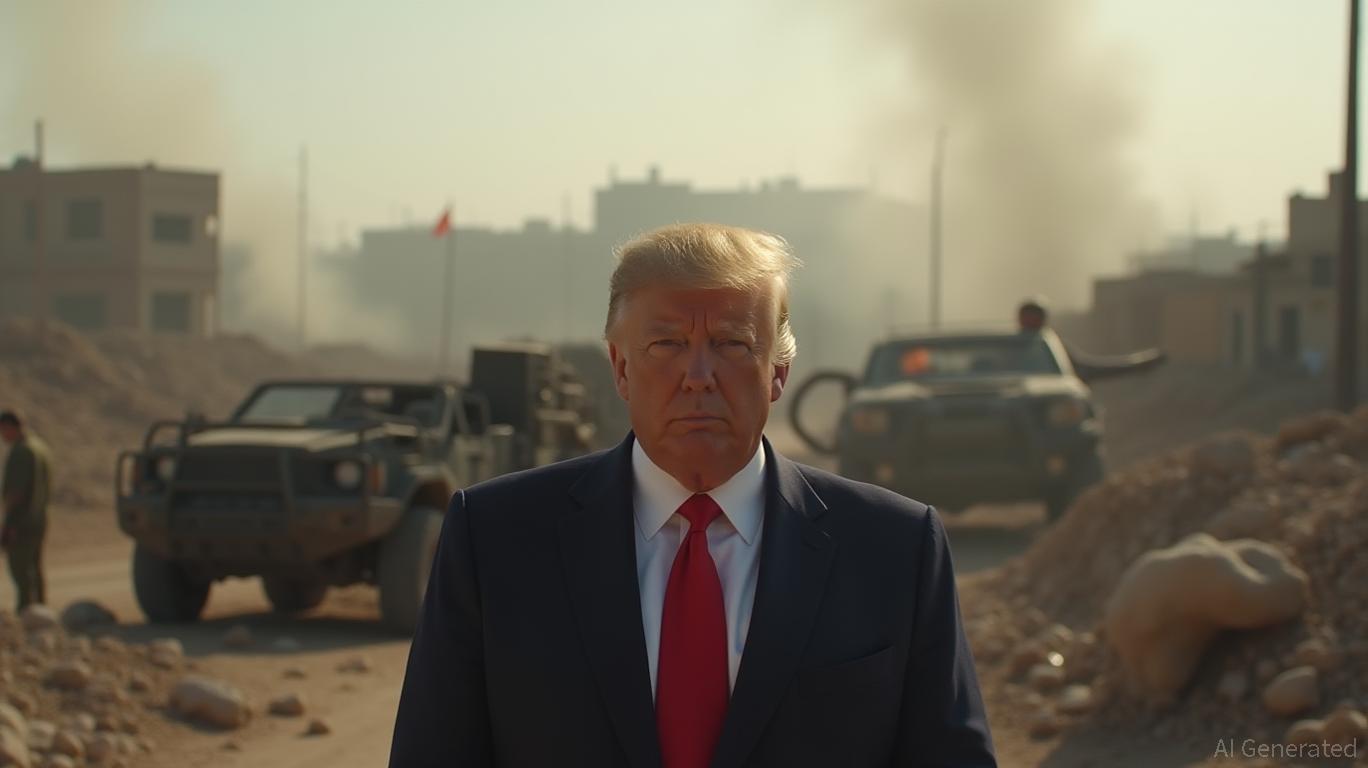
Trump: Iran attacking countries that had nothing to do with what's going on || Iran hitting only civilian places
TL;DR
U.S.-Iran tensions escalate as Iran targets civilian infrastructure in Gulf states, disrupting global trade and energy flows, leading to market volatility and economic uncertainty.
Tags
Trump: Iran attacking countries that had nothing to do with what's going on || Iran hitting only civilian places
U.S.-Iran Tensions Escalate: Financial Implications of Civilian Targeting and Regional Instability
Recent U.S. military strikes on Iran, justified by President Donald Trump as a response to perceived nuclear and missile threats, have intensified regional volatility, with financial markets reacting to the prospect of prolonged conflict. Iran’s retaliatory actions, which have targeted civilian infrastructure such as airports, ports, and hotels in Gulf nations, have raised concerns about disruptions to global trade and energy flows. These strikes, coupled with Trump’s assertion that Iran is “attacking countries that had nothing to do with what’s going on” according to his statement, underscore a widening conflict with potential economic ripple effects.
The targeting of civilian infrastructure in neutral Gulf states—such as Saudi Arabia and the UAE—has forced these nations into a precarious position, balancing diplomatic ties with the U.S. and economic dependencies on Iranian trade. Analysts note that attacks on ports and airports could disrupt critical shipping lanes in the Strait of Hormuz, a vital artery for global oil exports as research indicates. Even a partial closure of the strait could drive oil prices to multi-year highs, exacerbating inflationary pressures and dampening global economic growth.
Investor sentiment has already shifted, with commodities markets showing heightened volatility. Brent crude futures surged 8% in the week following the strikes, reflecting fears of supply constraints. Equity markets in the Middle East and Asia have also dipped, as regional instability threatens tourism, trade, and foreign direct investment.
The U.S. administration has emphasized minimizing civilian casualties, but Iran’s focus on civilian targets—such as hotels and commercial ports—risks escalating public backlash and humanitarian crises, which could further destabilize the region. Financial institutions are monitoring the potential for sanctions on Iranian banks and Gulf entities, which could fragment global financial networks.
Long-term, the conflict’s trajectory will hinge on whether diplomatic channels reopen or if the U.S. and Iran pursue deeper military escalation. For now, markets remain on edge, with central banks and investors bracing for shocks to energy prices, trade routes, and regional stability. As Trump frames the conflict as a “noble mission” according to his full statement, the financial sector is left navigating a landscape of geopolitical uncertainty and shifting risk premiums.
(https://www.bbc.com/news/articles/c620d3nnw80o): BBC analysis of Trump’s justification for strikes.
(https://theconversation.com/irans-targeting-of-airport-ports-and-hotels-in-reaction-to-us-strikes-has-forced-gulf-nations-onto-front-lines-of-a-war-they-want-no-part-in-277208): Impact of Iran’s targeting on Gulf trade and infrastructure.
(https://www.pbs.org/newshour/world/read-trumps-full-statement-on-iran-attack): Trump’s statement on Iran’s attacks and civilian casualties.