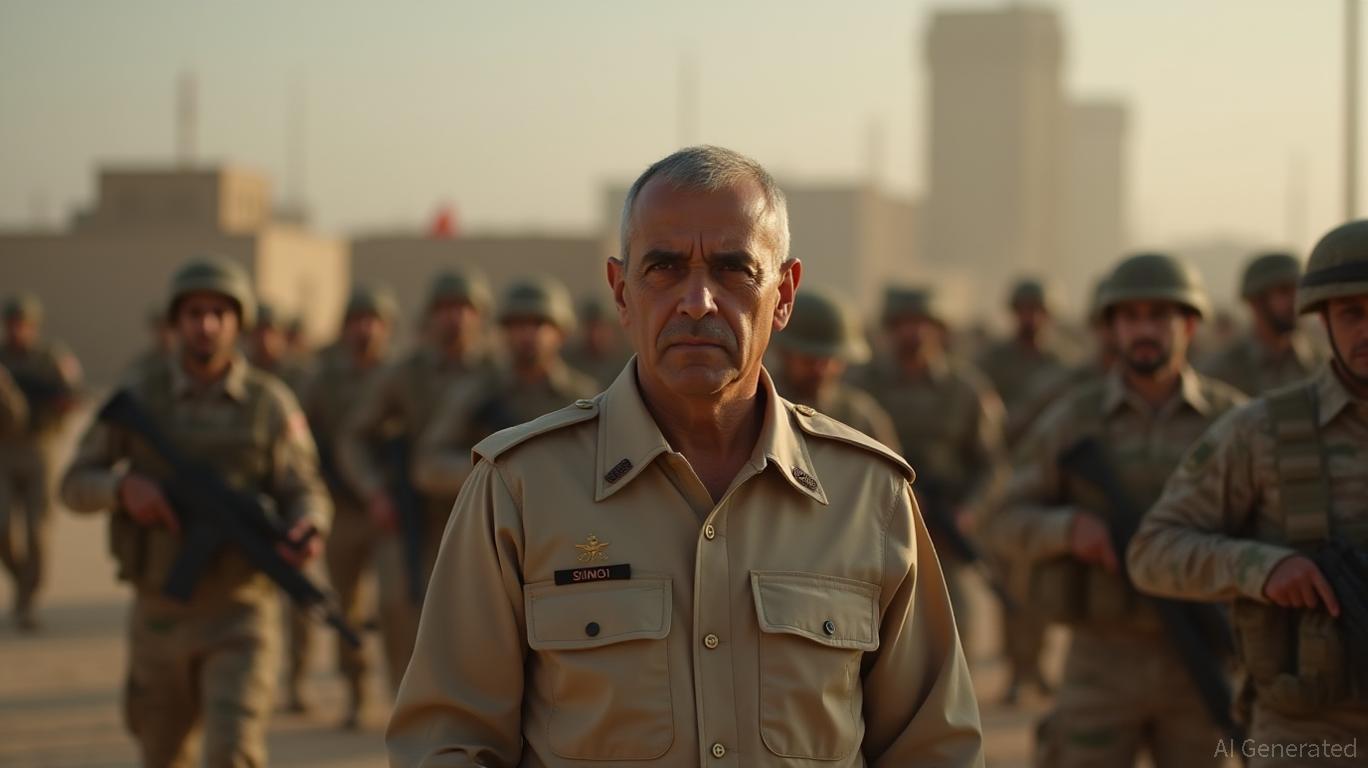
Iraqi Prime Minister: Instruct security forces to counter any action that would undermine security and stability
TL;DR
Iraqi Prime Minister al-Sudani has ordered security forces to counter threats to stability, including from ISIS remnants and Iran-aligned militias. The government faces challenges in balancing relations with Iran and U.S. support, while political tensions and economic recovery depend on improved security.
Tags
Iraqi Prime Minister: Instruct security forces to counter any action that would undermine security and stability
Iraqi Prime Minister Directs Security Forces to Counter Threats to Stability
Iraqi Prime Minister Mohammad Shia al-Sudani has issued directives to security forces to intensify efforts against any actions destabilizing the country's security, amid ongoing challenges from extremist groups and political tensions. The order underscores the government's commitment to maintaining stability, a critical factor for Iraq's economic recovery and reconstruction efforts.
The primary security threats persist from ISIS remnants and Iran-aligned militia groups (IAMGs), including U.S.-designated factions like Kataib Hezbollah. Despite a decline in large-scale terrorist attacks in 2022, ISIS has shifted to smaller, asymmetric operations in rural areas of Anbar, Diyala, and Kirkuk provinces. The Iraqi Security Forces (ISF), including the Counterterrorism Service (CTS), have demonstrated improved capabilities in counterterrorism operations, though challenges remain in border security and militia integration.
Prime Minister al-Sudani's government faces dual pressures: balancing relations with Iran, whose-aligned militias continue to defy central command, and maintaining U.S. support for counterterrorism assistance. Recent U.S. actions highlight the coalition's role in stabilizing the region. However, Baghdad's ability to assert control over border crossings and PMF groups remains limited, complicating efforts to curb cross-border threats.
Political instability further strains security priorities. The recent nomination of former Prime Minister Nouri al-Maliki as a prime ministerial candidate has reignited tensions between Iran-backed factions and U.S. interests, with Washington warning of potential aid restrictions. Meanwhile, the government's handling of displaced populations and reintegration of former ISIS fighters remains a delicate balancing act to prevent radicalization.
Economic recovery hinges on security improvements, as instability deters foreign investment and hampers oil exports—a cornerstone of Iraq's budget. The government's $152 billion 2026 budget aims to address fiscal challenges, but sustained security threats could undermine these efforts. With regional tensions and militant activities persisting, Iraq's path to stability remains precarious, requiring coordinated domestic and international action.
Country Reports on Terrorism 2022: Iraq: Country Reports on Terrorism 2022: Iraq
CFR Global Conflict Tracker: Political Instability in Iraq: CFR Global Conflict Tracker: Political Instability in Iraq