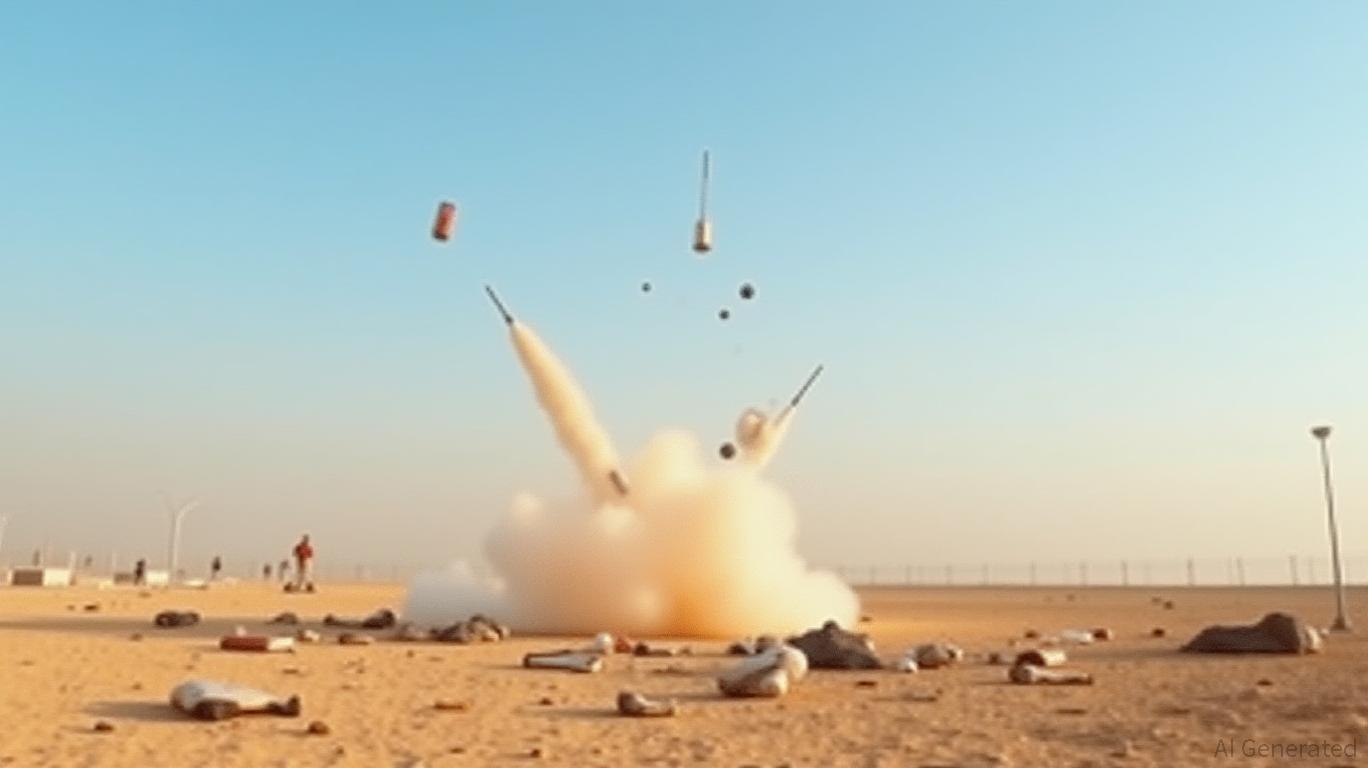
Rocket parts fall in open areas near Jerusalem
TL;DR
Rocket fragments from Iranian attacks near Jerusalem raise safety and economic concerns, with substantial costs for Israel's defense systems and infrastructure damage. The financial burden of asymmetric warfare strains resources, impacting agriculture and security budgets.
Tags
Rocket parts fall in open areas near Jerusalem
Rocket Debris Fallout Near Jerusalem Sparks Financial and Security Concerns
Recent missile strikes by Iran and its proxies have resulted in rocket fragments landing in open areas near Jerusalem, raising safety and economic concerns. On February 28, 2026, a missile fragment struck a residential building in Israel's coastal district, causing minor injuries and structural damage, though no fires broke out. Separately, a barrage of over 200 Iranian missiles launched toward Israel earlier in the month injured 16 people, with two in critical condition. These incidents underscore the persistent threat posed by asymmetric warfare tactics, which have significant financial implications for Israel's defense and reconstruction efforts.
The financial burden of defending against such attacks is substantial. Israel's multi-layered air defense systems—including Iron Dome, David's Sling, and Arrow interceptors—have incurred billions in costs. For instance, repelling Iran's April 2024 attack, which involved 185 drones, 35 cruise missiles, and 110 ballistic missiles, cost an estimated $550 million to $1 billion in interceptor and operational expenses. Additionally, cumulative damage to civilian infrastructure from rocket attacks since October 7, 2023, exceeds $400 million, with ongoing rehabilitation efforts in northern Israel alone receiving a $3.5 billion government allocation.
The environmental and long-term economic toll further compounds these costs. Rocket and missile strikes have ignited wildfires, degraded soil, and damaged ecosystems, requiring extensive restoration work. Experts note that soil degradation from intense fires can reduce agricultural productivity and increase erosion risks, with recovery spanning decades.
While Israel continues to invest in advanced defense technologies—such as the upcoming Iron Beam laser system—sustaining these measures strains both public and private resources. The asymmetrical financial burden, where defenders expend high-cost interceptors against low-cost projectiles, remains a critical challenge. As tensions persist, the economic impact of rocket attacks on infrastructure, agriculture, and national security budgets is likely to remain a focal point for policymakers and investors.
Facebook post by The Jerusalem Post, February 2026.
The Jerusalem Post, February 2026.
The Jerusalem Post, January 2026.
Israel Policy Forum, 2024 analysis.