BAIC, Changan Auto Rise on Approval for Level 3 Driver Assist
TL;DR
BAIC Motor and Changan Auto shares rose after receiving China's first Level 3 driver-assist permits, allowing conditional self-driving in specific areas. This marks a step up from Level 2 technology, with carmakers taking partial responsibility during operation.
Tags

BAIC Motor Corp. and Changan Auto Co. rose Tuesday after the two state-controlled automakers received China’s first permits for Level 3 advanced driver assistance, allowing conditional driverless operations in designated areas.
The Shanghai-traded shares of BAIC’s electric car unit Blue Park New Energy Technology Co. jumped by the daily limit of 10%, while Changan Auto climbed 5.5%.
The driver-assistance technology currently available in the country is mostly at Level 2, where it can steer the car, change lanes and speed up or slow down, but the driver must keep their hands on the steering wheel and pay full attention.
Under Level 3, navigation can be assigned to the vehicle, and if an accident occurs while the technology is engaged, the carmaker would bear partial responsibility, according to rules laid out by the Beijing city government in April.
BAIC’s permit allows its electric Arcfox Alpha S sedan to operate on conditional self-driving mode in selected areas of Beijing, including expressways that connect to the city’s airports, at speeds up to 80kms/hr (50m/hr). An EV from Changan’s Deepal brand can drive on designated expressways in central parts of the southwestern city of Chongqing at up to 50kms/hr, according to a notice by the Ministry of Information and Industry Technology published Monday.
Defined by standards organization SAE International
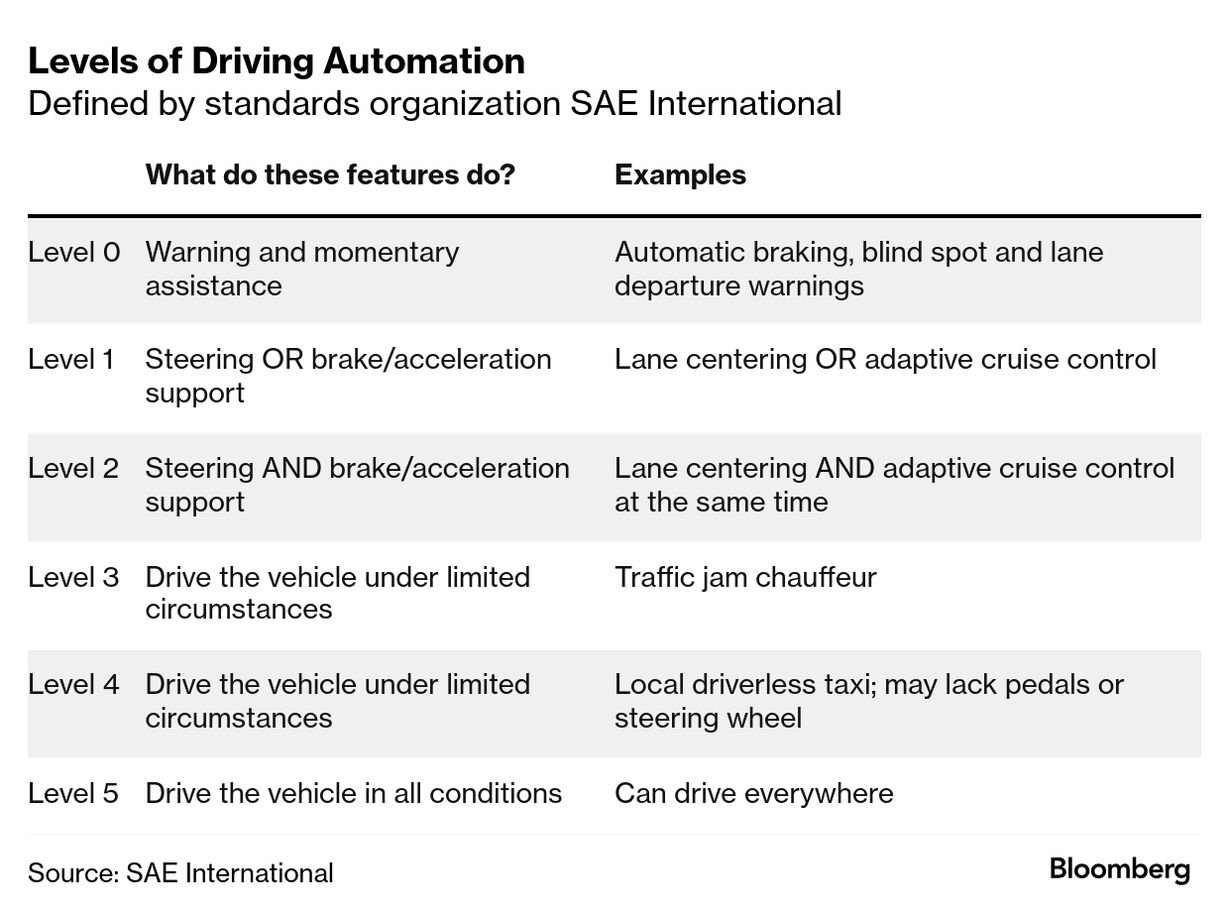
China is advancing self-driving technology, treating it as another strategic objective much as it did in encouraging the EV industry. Authorities have set a goal for the country to become a leader in the sector by 2035, and several robotaxi companies including Baidu Inc.’s Apollo Go, Pony AI Inc. and Weride Inc., are taking the lead in deploying driverless vehicles around the world. These companies are operating at Level 4, which doesn’t require a human driver.
Read More: Chinese Robotaxis Race Waymo to Take Driverless Cars Global
Other carmakers are also pushing to bring Level 3 technology to the market. Tesla Inc. is continuously updating the system that it markets as Full Self Driving, which operates at an advanced Level 2. But Mercedes-Benz Group AG seems to have a lead, with its Level 3 Drive Pilot approved by German authorities early this year for operating at speeds up to 95kms/hr on the autobahn network, the fastest certified system for conditional self-driving for a production vehicle, according to the company.
Mercedes and manufacturers including BMW AG and BYD Co. also have models under trials for Level 3 driving assistance in Chinese cities such as Beijing.