Russian Oil Output Fell Further in February, OPEC Data Shows
TL;DR
Russia's crude oil output fell for the third straight month in February, hitting its lowest since August due to US sanctions and Ukrainian drone strikes on refineries. However, a US waiver has led India to resume purchases, and Middle East conflicts may boost Russian production in March.
Tags
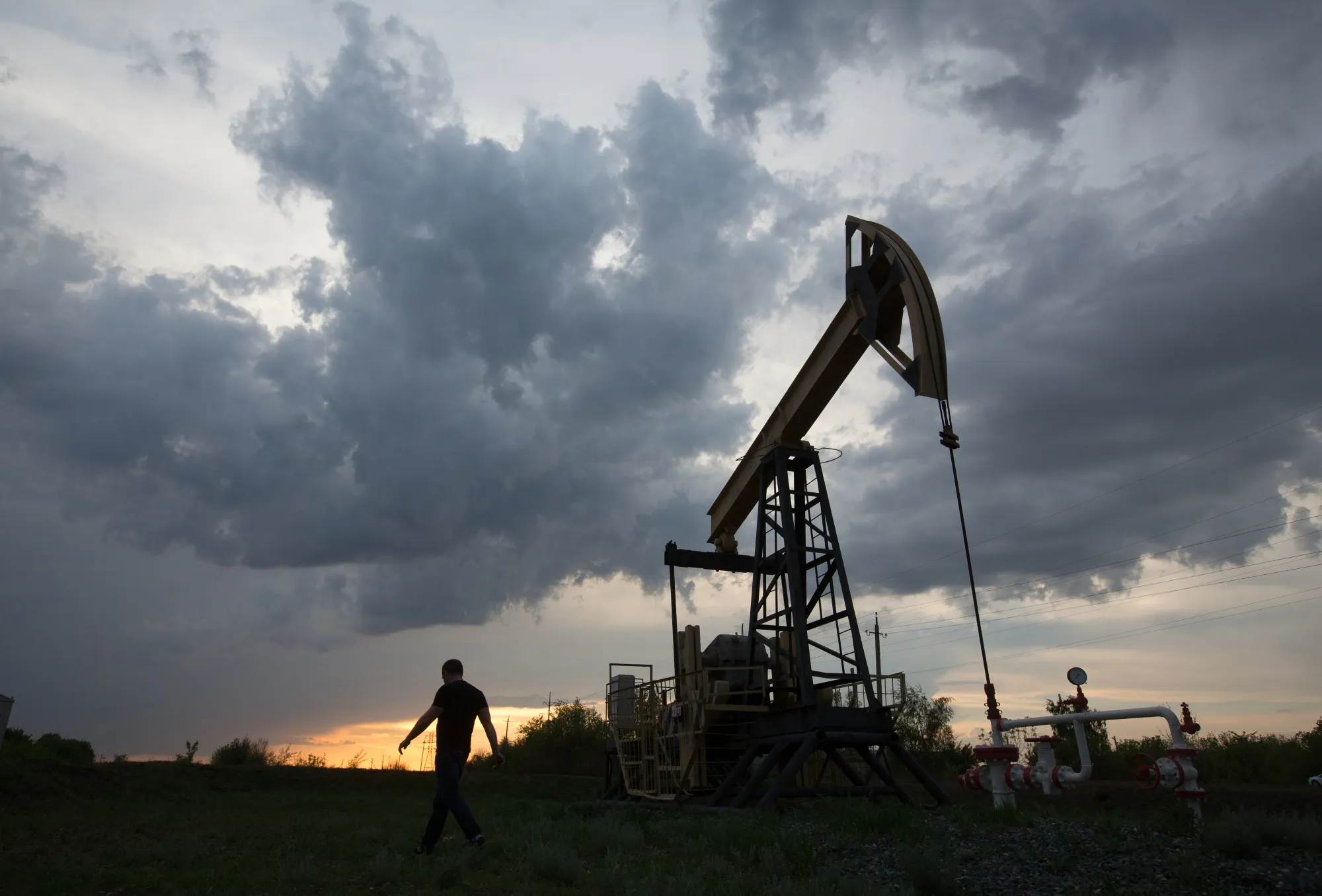
Russia’s crude output declined for a third consecutive month in February, underlining the impact of US sanctions and as Ukrainian drone strikes curb domestic oil-processing.
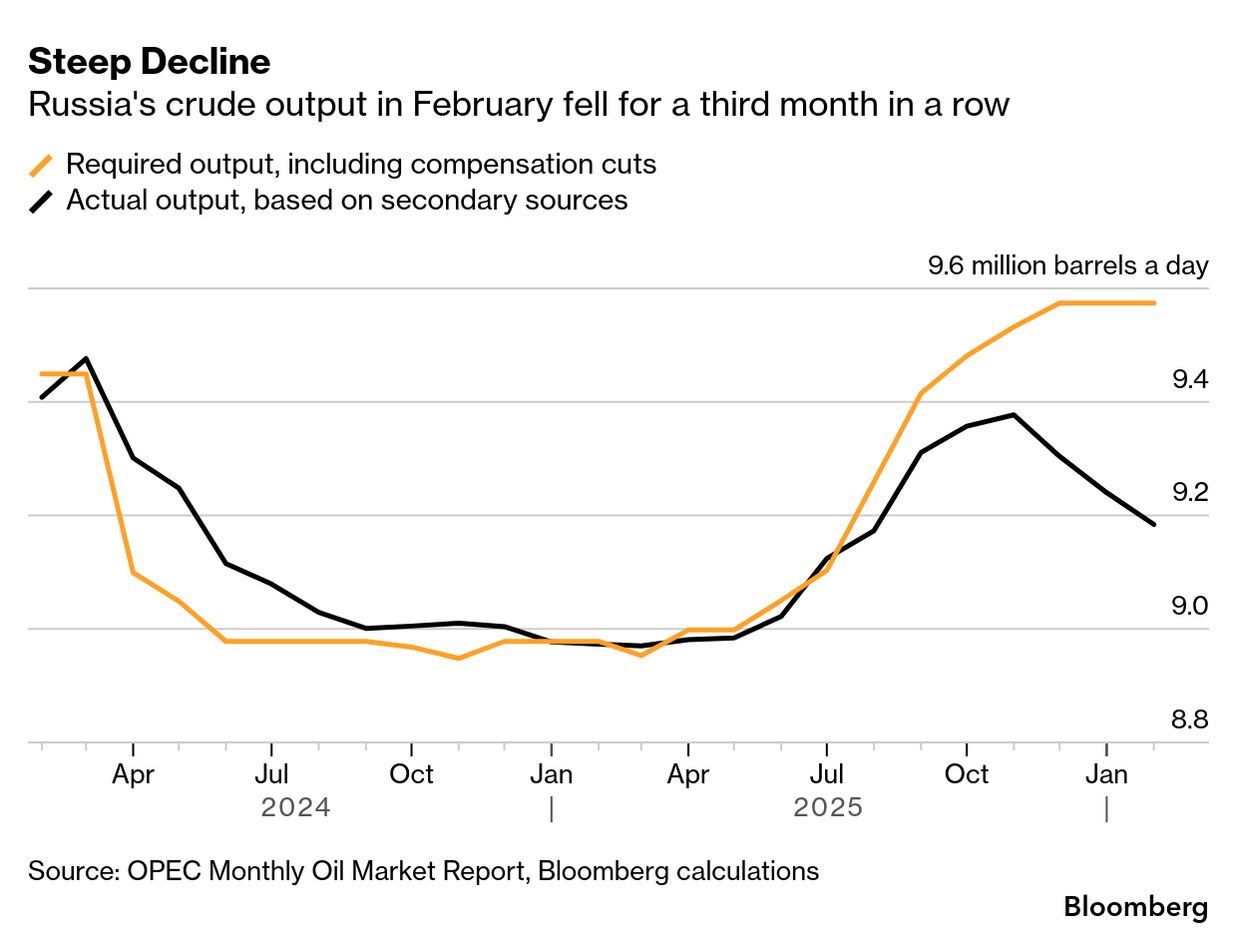
Russian producers pumped an average of 9.184 million barrels a day of crude oil in February, according to the monthly OPEC report published Wednesday. That’s the lowest level since last August, estimates from the Organization of the Petroleum Exporting Countries show.
The figure — which doesn’t include output of condensate — is 56,000 barrels a day below an already-reduced level in January. It’s also 390,000 barrels a day lower than what Russia was allowed to produce in February under an agreement with OPEC and its allies.
Russia's crude output in February fell for a third month in a row
The decline came as millions of Russian oil barrels accumulated on idled tankers, signaling dwindling interest from potential buyers amid Western energy sanctions. Domestic processing in February was under pressure from Ukrainian drone strikes, which completely or partially halted operations at a number of major Russian refineries.
Yet the widening conflict in the Middle East, which effectively closed navigation through the Strait of Hormuz and forced several regional producers, including Saudi Arabia, to cut their output, may boost Russian crude production in March.
Russian oil doesn’t need to go through the Strait of Hormuz to reach clients in Asia. India, which had pared back purchases of oil from Moscow in recent weeks amid US pressure, has resumed buying Russian barrels after the White House issued a temporary 30-day waiver.
Since the US waiver was granted late last week, refiners in the South Asian nation including Indian Oil Corp. and Reliance Industries Ltd. have snapped up about 30 million barrels of unsold Russian crude in the spot market, according to people with knowledge of the deals
Read More: India Buys 30 Million Barrels of Russian Oil After US Waiver
The US may ease Russian sanctions further if flows of Middle Eastern crude through the Strait of Hormuz don’t resume soon. Meanwhile, Russia’s refinery runs in March are on track to recover as damaged facilities are repaired and the domestic oil industry prepares for a higher agricultural demand.