The U.S. failed to adopt Ukraine's cost-effective anti-drone tactics before attacking Iran, relying instead on expensive systems. Ukraine's 90% success rate against Iranian drones highlights this oversight, leading to urgent requests for Ukrainian expertise from Middle Eastern allies.
Key Takeaways
•Ukraine has developed highly effective, low-cost methods (e.g., lasers, AI drones) to counter Iranian Shahed drones with a 90% success rate.
•The U.S. used expensive interceptors like Patriot missiles against cheap drones, depleting resources without adequate swarm defense.
•Ukrainian expertise is now being sought by Middle Eastern allies after initial U.S. oversight, marking a shift in military innovation leadership.
•The U.S. prioritized defense against long-range threats (e.g., China) over close-range drone swarms, exposing a critical gap in planning.
•Investment in Ukrainian defense tech (e.g., UForce) is growing, with proven systems like counter-Shahed drones offering scalable, affordable solutions.
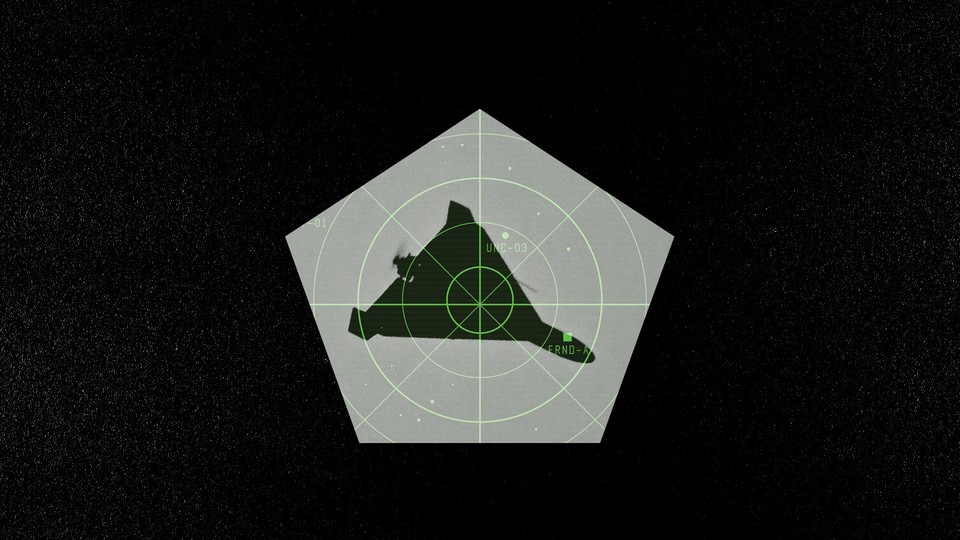
The Pentagon failed to adopt Ukraine’s best tools for downing drones. Illustration by The Atlantic. Source: Sergei Supinsky / AFP / Getty. The United States and Israel took at least a month to prepare their attack on Iran, assembling the largest arsenal of aircraft carriers and fighter jets that the Middle East has seen in decades. But one gap in their planning became clear during the first days of the war, as the United States and its allies used their most advanced anti-aircraft systems to shoot down swarms of cheap, easily replaceable Iranian drones.
The flaws in that approach have seemed particularly obvious to the leaders of Ukraine, who have more experience countering these drones than any other country. In the fall of 2022, Iran sold the Kremlin designs for a drone known as the Shahed-136, and Russia has since produced and launched tens of thousands of them in its war with Ukraine.
“Iranian attack drones are the same ‘shaheds’ that have been striking our cities, villages, and our Ukrainian infrastructure throughout this war,” Ukrainian President Volodymyr Zelensky said in a statement yesterday. The country’s engineers have developed a variety of ways to shoot down the drones, such as lasers and AI-enabled interceptor drones, some of which cost as little as $1,000. Their overall success rate against Shaheds stands at about 90 percent, according to Ukrainian-government estimates. “It’s our innovation,” Oleksandr Kamyshin, an adviser to Zelensky on arms production, told us this week. “And I think it would be very useful for our partners right now in the Middle East.”
But to the surprise of some officials in Kyiv, no one from the U.S. bothered to ask Ukraine to share its expertise in how to defend against drones before starting the offensive in Iran. “I have not received any direct requests,” Zelensky told reporters on Monday. “I have not discussed this with anyone.” That changed the following day, when Zelensky began a flurry of calls with U.S. allies in the Middle East, including the leaders of Qatar, Jordan, Bahrain, and the United Arab Emirates. All of their countries have faced a barrage of Iranian drones in recent days, and Ukraine has agreed to send them personnel and equipment to help defend against such attacks. “Our military possesses the necessary capabilities,” Zelensky said in a post on X yesterday. “Ukrainian experts will operate on-site, and teams are already coordinating these efforts.”
The deployment of Ukrainian weapons to help U.S. allies in the Middle East marks an astonishing reversal in military innovation, an area in which the U.S. has been the recognized leader for decades.
The American failure to adopt lessons from the war in Ukraine extends across administrations and political parties when it comes to both producing attack drones and developing the means to protect U.S. forces and assets from such attacks. Both tasks have taken on new urgency as the U.S. military confronts enemy drones on the battlefield.
Alternative means of defending against drone attacks—such as lasers—could bring down the cost of intercepting a drone from millions of dollars to a few bucks. But until recently, the U.S. had invested more in its multilayered defense against drones, which involves interceptors, combat air patrols, electronic warfare, and short-range missiles. The U.S. was planning for—and bought weapons aimed at countering—threats from far-away targets such as China, not close-range foes such as Iran.
Iran has made extensive use of its drone fleet in the opening days of the war. One attack on an American base in Kuwait led to the deaths of at least six U.S. military personnel over the weekend and wounded several others. Iran’s Islamic Revolutionary Guard Corps said yesterday that it had fired 230 drones at facilities that host American troops in the Middle East, including the U.S. embassy in Riyadh. Earlier in the week, Iranian media released footage of what appears to be a large stockpile of Shahed drones inside a tunnel. To counter the widespread assault, the U.S. is quickly depleting its limited, costly supply of interceptors—missiles that cost millions of dollars apiece, compared with $30,000 for an Iranian drone. But even if the U.S. had a surplus of Patriot missiles, they are not designed to stop a swarm of attack drones.
“There are not great defenses available to the U.S. military to defend against the Shahed,” a congressional official told us after a closed-door briefing Tuesday on Capitol Hill with senior members of the Trump administration. Defense Secretary Pete Hegseth and General Dan Caine, the chairman of the Joint Chiefs of Staff, acknowledged this gap in U.S. counter-drone technology. “So they have to use the defensives they have, which are costly,” the congressional official said. “We have known this for a long time. We don’t have, at scale, good defenses against drones.”
Iran launched more than 2,000 drones Saturday through yesterday morning, according to the Pentagon, toward both U.S. bases and Gulf allies. Although the number of Iranian missiles launched at the U.A.E. has dropped since Saturday, the number of drones has remained steady, according to statistics provided by the U.A.E.’s Ministry of Defense. During a Pentagon briefing yesterday, Hegseth said that the military was targeting “drones and facilities that produce them.” But he also said that the U.S. media were covering a drone attack that killed six troops“to make the president look bad.”
Hegseth outlined some of the U.S. defenses. “Thousands of Iranian missiles and drones have been intercepted and vaporized, tens of thousands of American and allied lives protected,” he said. “We have pushed every counter-UAS system possible forward, sparing no expense or capability.” (UAS refers to “unmanned aircraft system,” or, in civilian-speak, drones.)
The mismatch in the United States’ defenses against Iran’s drone offensive was already apparent in the U.S. campaign last summer against the Houthis, an Iranian-backed proxy in Yemen. In that weekslong conflict, the U.S. used expensive interceptors to bring down armed drones. The Pentagon has also sought to create its own alternative, cheap, one-way attack drone. At a cost of $35,000, the LUCAS (short for Low-Cost Unmanned Combat Attack System) has an eight-foot wingspan, can travel about 500 miles, and can be deployed from ships and truck-mounted launchers. But the weapon wasn’t designed to take out drones aimed at U.S. forces.
U.S. military planning for drone warfare reflects how the U.S. has traditionally fought wars and how it had been planning for a future one. During the U.S. counterterrorism wars in Iraq and Afghanistan, cheap offensive drones were not part of the arsenal. Instead, the U.S. developed the MQ-9 Reaper, an unmanned $30 million aircraft that has a 66-foot wingspan and can fly for hours, hover over potential targets, and fire on them. After that, the U.S. focused on a potential war against China, one in which it expected to deploy forces over long distances—even if an attack drone could travel thousands of miles, it would likely be shot down en route.
All the while, Iran kept expanding its drone arsenal. Tasnim, a semi-official Iranian news agency, reported in January that the nation’s armed forces had received 1,000 drones, though that could not be verified. Some of Iran’s drones are so basic that they run on repurposed lawnmower engines. To shoot them down, the U.S. and its allies have used some of their most advanced and expensive weapons, including Apache helicopters, F-35 fighter jets, and Patriot-missile batteries. The preliminary Pentagon estimate of the war’s cost is $1 billion a day, the congressional official told us, which could lead the Pentagon to request as much as $50 billion in supplemental funding.
American officials and business leaders have long known about Ukraine’s ability to shoot down Iranian drones on the cheap. Zelensky’s government has built partnerships in recent months with several European countries on the joint production of drones and interceptors. Some of the top manufacturers of these systems in Ukraine recently joined forces to create a company called UForce, which aims to make Ukrainian battlefield innovations more widely available.
UForce recently became the first Ukrainian defense start-up to close a seed-funding round, which brought in $50 million from foreign investors. Among them was Shield Capital, a Silicon Valley firm whose co-founder Raj Shah led a defense-innovation unit inside the Pentagon during Donald Trump’s first term. “Scaling this kind of proven capability is urgently relevant across the free world,” he said in a statement announcing the investment.
Oleksiy Honcharuk, the chair of UForce, told us that the company was built to bolster the defenses of Ukraine and its allies. “We need investment in our defense sector, and the West needs the best of what Ukraine has produced,” he said. Among the more promising technologies in the UForce portfolio is a software that allows small interceptor drones to lock on to moving targets and blow them out of the sky. “This is a counter-Shahed system,” Honcharuk said. “It has already been used to shoot down over 1,000 Shaheds.”
Eric Schmidt, a former CEO of Google, has also invested in Ukrainian drones and counter-drone technology, and he has lobbied the U.S. military to integrate these systems. “They’re so inexpensive. They’re so battle-tested,” Schmidt told a European security summit last month. “When you go to the factories, it’s almost like China: rows and rows and rows of people working incredibly hard 24 hours a day.”
During a visit to one such factory last month in Kyiv, the makers of the P1-Sun, one of Ukraine’s most effective drone interceptors, told us that they can produce 100,000 a month, far more than the company supplies to the Ukrainian military. Those drones may soon be en route to the war theater around Iran. “The Middle East is calling us,” Zelensky told reporters in Kyiv on Tuesday. The development seemed to surprise him. “We’re at war,” he said. “But they’re reaching out to us.”
Ukraine’s anti-drone innovations have been born, in part, from necessity. The nation has struggled to secure supplies of Patriot missiles from its Western allies. The maker of the Patriot system, Lockheed Martin, produced 620 interceptors last year and has plans to increase annual production to 2,000 over the next few years. But this still would not be enough to replenish U.S. and allied stockpiles anytime soon. Fears are already circulating at the Pentagon that the U.S. will soon burn through its arsenal of advanced air-defense systems, given the intensity of the air war in the Middle East.
Whether those fears are realized could depend on how long the war lasts. But the U.S. failure to deploy cheap and effective weapons against Iranian drones already looks like poor planning at best, and hubris at worst.