Connor Storrie Knew What ‘SNL’ Viewers Wanted to See
AI Summary4 min read
TL;DR
Connor Storrie's SNL monologue and a sketch about an injured stripper knowingly played with his fans' desire to see him undressed. The sketch served as meta-commentary on objectification, blending physical comedy with his public image.
Key Takeaways
•Connor Storrie's SNL monologue acknowledged his fans' attraction to him from his role in 'Heated Rivalry'.
•A sketch featured Storrie as an injured stripper who continues performing despite pain, subverting expectations of fan service.
•The comedy acted as meta-commentary on objectification, showing viewers' desire persisting despite the character's agony.
•Storrie's background in clowning influenced his physical comedy, using his body as a prop to explore vulnerability.
•The episode highlighted how Storrie harnessed his public image for subversive humor about celebrity and desire.
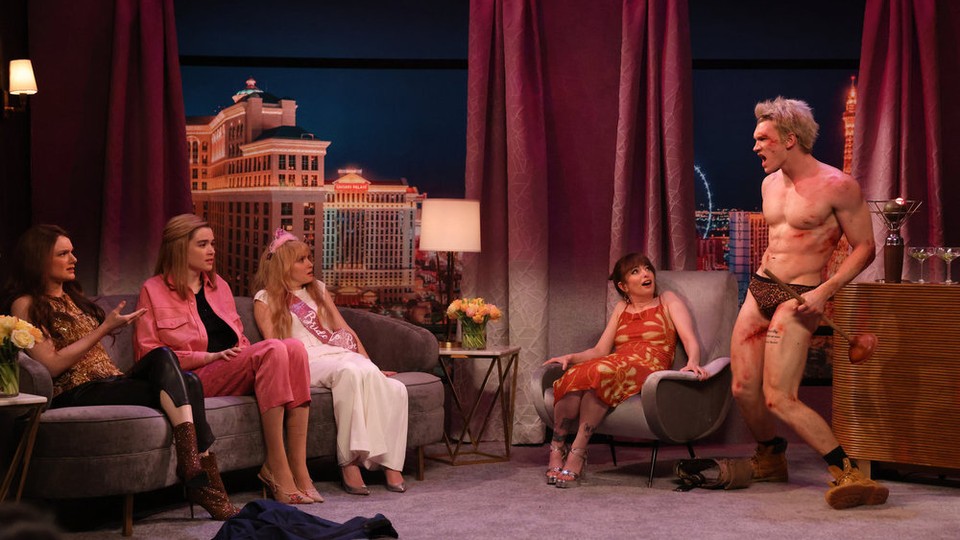
An actor known for baring it all on-screen transformed his body into a prop. Will Heath / NBC Connor Storrie is well aware that his fans lust for him. The Heated Rivalry actor and first-time Saturday Night Live host—who only recently catapulted to fame, after the steamy, hockey-centric gay romance he stars in became a surprise TV hit—opened his monologue by acknowledging as much. “It’s a show that’s taught a lot of people about hockey, and it’s taught a lot of straight women that their sexuality is ‘gay guy,’” he said of the HBO series. The studio audience, seemingly stuffed with Heated Rivalry viewers, chortled back in approval. From the jump, Storrie knowingly winked at those who had likely tuned in because of his role on the show: as an athlete with a rippling physique, who often appears naked on-screen. That self-awareness gave way to the episode’s best sketch, which saw Storrie harnessing the viewers’ bawdy gazes to fuel a bit of subversive slapstick.
The joke was predicated on Storrie, a gifted physical comedian, transforming his own body into the gag. It opened with a group of friends celebrating at a bachelorette party in Las Vegas. They received a knock on their hotel-room door, expecting to find the male exotic dancer they’d hired for the evening. But the stripper (played by Storrie) was not all there: He squirmed across the floor in pain, his body beat and his face bloody. He had been hit by a car en route to the fete, he told them. The laughs came from how committed the mangled stripper, embodying a sexy-plumber fantasy, was to the gig. “Did somebody call a plumber?” he gasped, laboriously hoisting himself from the ground and attempting to dance on what appeared to be fractured legs, wobbly balancing himself on a plunger.
On its surface, the entire bit could be read as fan service for those hungry to see the Heated Rivalry star in a state of undress. But Storrie’s character both leaned into and toyed with viewers’ thirstiness. In the sketch, the horrified group of friends watched uncomfortably as the stripper refused to acknowledge his battered state, instead keeping the raunchy charade going. The more he shed the plumber getup, the worse his pain seemed to get: At one point he shakily used the plunger to help him crawl toward the women in a come-hither routine, huffing as the ladies, nervous smiles frozen on their faces, politely looked on. Finally, he inched toward one of them, inviting her to take his pants off. As she hesitantly jerked the pants off his body, the stripper shrieked and fell to the ground in misery. Yet for as uncomfortable as both he and the bachelorettes in the sketch were, the crowd continued hooting and hollering each time Storrie ripped off an item of clothing. It made for an effective meta-commentary about how viewers engage with a person known for taking his clothes off: Storrie’s character’s obvious agony had no effect on their desire to see him pantsless.
Perhaps why Storrie understood this character so well was because he developed it himself. Before his acting career took off, he studied the art of clowning. That comedic form relies upon a performer’s willingness to be physically vulnerable; it draws solely on the imagination, with a clown’s body being his primary prop. Storrie combined these instincts with his own public image, making a meal of the outsize attention that is now placed on his appearance; even when he asked a bachelorette to tie his tool belt around his thigh like a tourniquet, his efforts to look sexy continued apace. Ultimately, the comedy acted as cheeky commentary on the at times twisted nature of objectification: As one of the women put it, “I’m worried about him, but I definitely don’t want him to stop.”