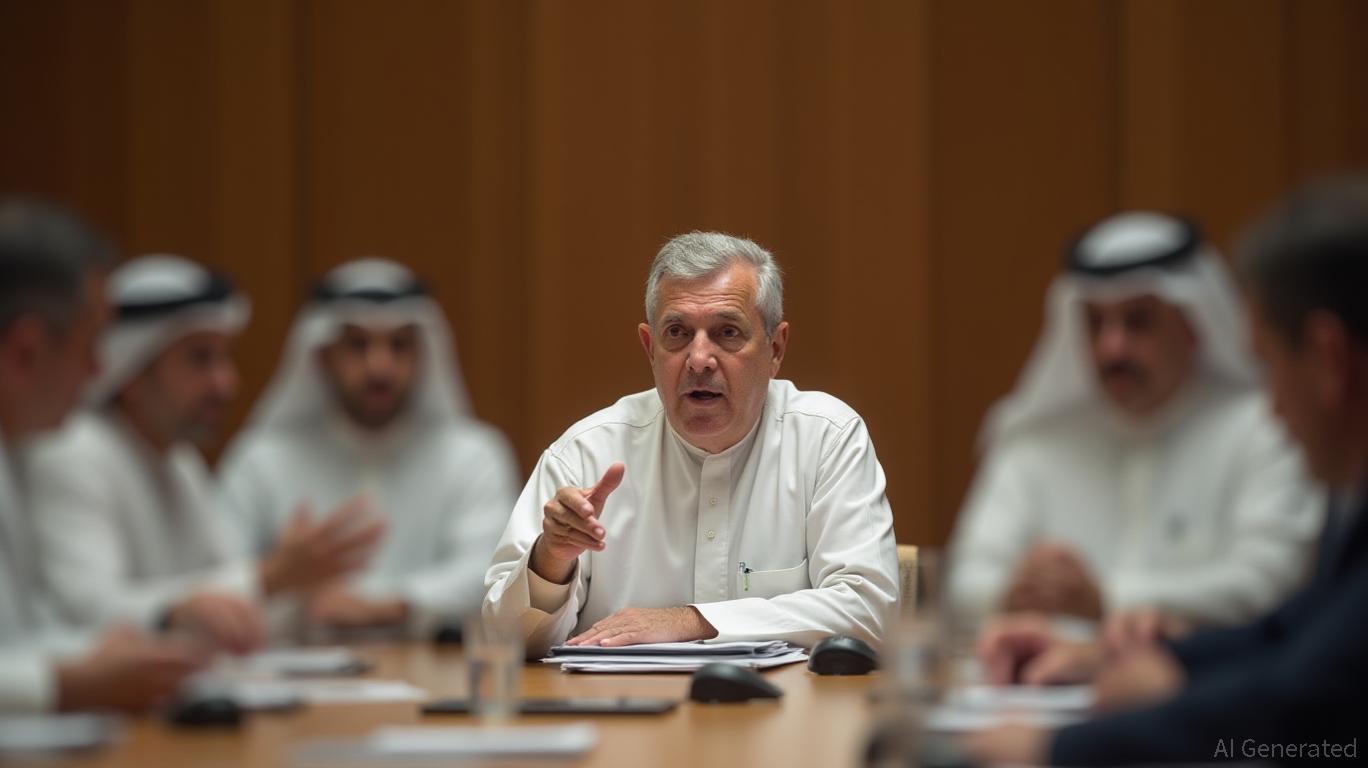
Secretary General of the Gulf Cooperation Council: We call on the international community to shoulder its responsibilities to stop the repeated Irania...
TL;DR
The Gulf Cooperation Council urges the international community to address Iranian attacks on member states, emphasizing threats to regional stability, global energy supplies, and maritime security, while advocating for diplomatic solutions and UN action.
Secretary General of the Gulf Cooperation Council: We call on the international community to shoulder its responsibilities to stop the repeated Iranian aggressions
The Gulf Cooperation Council (GCC) has called on the international community to address escalating regional tensions following a series of Iranian missile and drone attacks targeting GCC member states, including the United Arab Emirates, Saudi Arabia, and Bahrain, which began on February 28, 2026 according to GCC statements. The attacks, which struck civilian infrastructure, service sites, and residential areas, caused significant material damage and disrupted regional stability, raising concerns about the security of global energy supply chains and maritime navigation as reported.
In a joint statement, the GCC reaffirmed its commitment to collective self-defense under Article 51 of the United Nations Charter, emphasizing its legal right to respond to aggression while urging de-escalation according to the GCC. The Council highlighted the critical role of the Arabian Gulf in global economic stability, noting that disruptions to regional waterways—such as the Strait of Hormuz—could have far-reaching consequences for international trade and energy markets as stated.
The GCC's 50th extraordinary ministerial meeting, held via videoconference on March 1, 2026, underscored the need for coordinated diplomatic and security measures to restore stability. The Council also reiterated its preference for dialogue, acknowledging Oman's efforts to mediate with Iran according to GCC sources. A parallel joint statement with the European Union (EU) condemned the attacks as a threat to global security and called for intensified efforts to prevent Iran from advancing its ballistic missile programs or destabilizing the region according to the joint statement.
The EU and GCC emphasized the importance of protecting supply chains and energy infrastructure, with the EU highlighting its naval operations—such as Aspides and Atalanta—as tools to safeguard maritime routes as reported. Both parties stressed that regional stability is a cornerstone of international economic security, urging the United Nations Security Council to take decisive action to prevent further aggression according to GCC.
The GCC's appeals reflect growing concerns about the financial and geopolitical risks of prolonged conflict, particularly as global markets remain sensitive to disruptions in oil exports and regional trade as noted.