Fear Index Shows Traders Bracing For More Selling in Indian Shares As War Rages
TL;DR
Indian markets show heightened volatility as the Middle East conflict escalates, with traders buying protection amid rising oil prices and a weakening rupee. The fear gauge is nearing US levels, threatening IPOs and energy supplies.
Key Takeaways
- •India's volatility index is rising close to US levels due to Middle East conflict uncertainty, potentially increasing trading activity.
- •The IPO market is slowing sharply with only $1.5 billion raised this quarter versus $10.86 billion previously, as market turmoil hurts investor appetite.
- •The rupee hit a record low but outperformed some Asian peers, with RBI support and cheap valuation potentially limiting further losses.
- •Energy sector faces immediate disruption with Petronet LNG declaring force majeure, while cooking gas supplies could be rationed if conflict extends beyond March.
- •Some sectors like sugar millers and small-cap IT firms are benefiting from higher crude prices and weaker rupee respectively.
Tags
Good morning...
I’m Savio Shetty, an equities reporter in Mumbai, with your before-the-bell market snapshot.
Indian stocks look set to snap a three-day losing streak — their longest since January — as global sentiment steadies. South Korea is leading the regional rebound after suffering its worst rout on record. Even so, the mood remains fragile, with signs that both Washington and Tehran are preparing for a prolonged conflict. The nervousness is evident from the spike in the volatility index.
India’s heavy reliance on oil and gas imports leaves it particularly exposed, keeping traders on edge as Brent rises further. The rupee underscores that pressure: it weakened past 92 per dollar on Wednesday, touching a fresh intraday record low.
On the charts, the Nifty has broken decisively below its 200-day moving average, reinforcing a negative near-term bias. The index is now nearing a key support zone.
In today’s newsletter, we write about:
- IPO-bound companies hit by market turmoil
- The RBI stepping in to support the rupee
- The few stocks bucking a sliding market
But first, the volatility gap with the US is narrowing.
Markets Buzz: Fear Gauge Nears US VIX
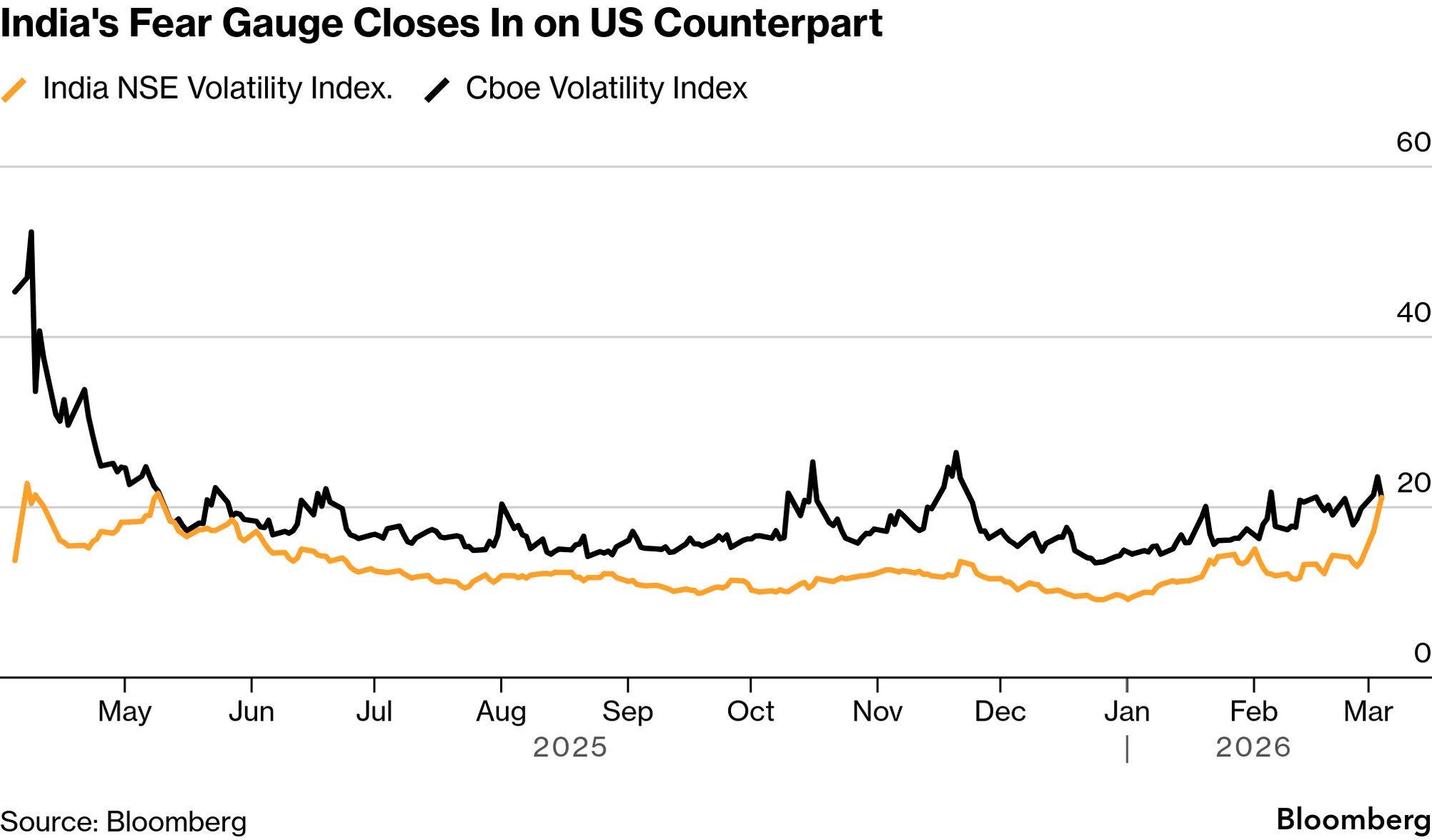
India’s gauge of implied volatility — also known as the market’s fear gauge — is closing in on the US counterpart. It briefly moved above the US VIX in May last year during a spell of domestic uncertainty in a rare crossover. Now, after a calm 2025, volatility is picking up again as traders buy protection against fresh uncertainty from the Middle East conflict. If India’s gauge rises above its US counterpart again, it could spur higher trading activity from proprietary and high-frequency desks that have struggled during the recent period of low volatility.
Three Things to Start Your Day
Market turmoil slams brakes on IPO boom
A shaky start to the year has turned into a rout for local shares, threatening to slow down the country’s once-booming IPO market. The Middle East conflict has heightened volatility, hurting investor appetite and clouding valuations. Firms raised $1.5 billion from IPOs so far this quarter, versus $10.86 billion in the October-December period, Bloomberg data shows. The slowdown reflects concerns over economic growth, foreign outflows, and a weaker currency. Stocks are trailing Asian peers after their worst January in a decade, with most recent IPOs trading below issue prices.
Rupee hits record low — but holds up better than its peers
The rupee slid to a record low on concerns that high energy prices will strain the government’s finances. Still, it has held up better than many Asian peers. By the close of Wednesday’s trading, it was down 1.3% for the week — outperforming the Korean won, Philippine peso and Taiwanese dollar, and matching Malaysia’s ringgit. Support from the RBI and the currency’s cheapest valuation in over 12 years may help limit further losses. With foreign investors already cutting local equity exposure, the rupee may also be less vulnerable to speculation.
Bright spots in a falling market
It wasn’t all negative, with a few pockets emerging as surprise winners. Beaten-down sugar millers gained as crude climbed past $80 a barrel, raising the odds that global producers, especially in Brazil, will divert more cane toward ethanol, tightening sugar supplies and supporting prices. Domestic mills, already trading at steep discounts, also drew support from concerns that an El Niño weather event could curb cane output. A handful of small-cap IT firms advanced as well, helped by a weaker rupee that boosts export earnings.
Stocks to Watch
- BSE: The bourse gets the regulator’s approval for derivative contracts on BSE Sensex Next 30
- Gujarat Gas: The company has invoked force majeure, and will restrict supply from March 6
- IIFL Finance: The shadow lender is looking at options to exit its microfinance unit Samasta, report says
- Mangalore Refinery: The refiner has halted fuel exports because of Iran war hitting feedstock
- SBI Life: The insurer has said that the tax demand for FY22 has been slashed to 4.71 billion rupees from 53.2 billion rupees
War Shock: Will Cooking Gas, Fuel Stocks Hold?
Five days into the conflict, the effects are emerging across India’s energy supply chain. With heavy reliance on imported natural gas and cooking fuel — and freight and commodity prices surging — the question is how long buffers will last and who feels the impact first.
What does the LNG disruption mean for companies?
The hit is immediate for industrial users. Petronet LNG has declared force majeure on Qatari supplies. India imports about half its gas needs and has limited reserves. Freight rates have doubled and spot prices jumped about 50%, raising costs for sectors including ceramics, steel, refineries and petrochemicals. Petronet shares tumbled over 9% on Wednesday.
Will households face shortages of cooking gas?
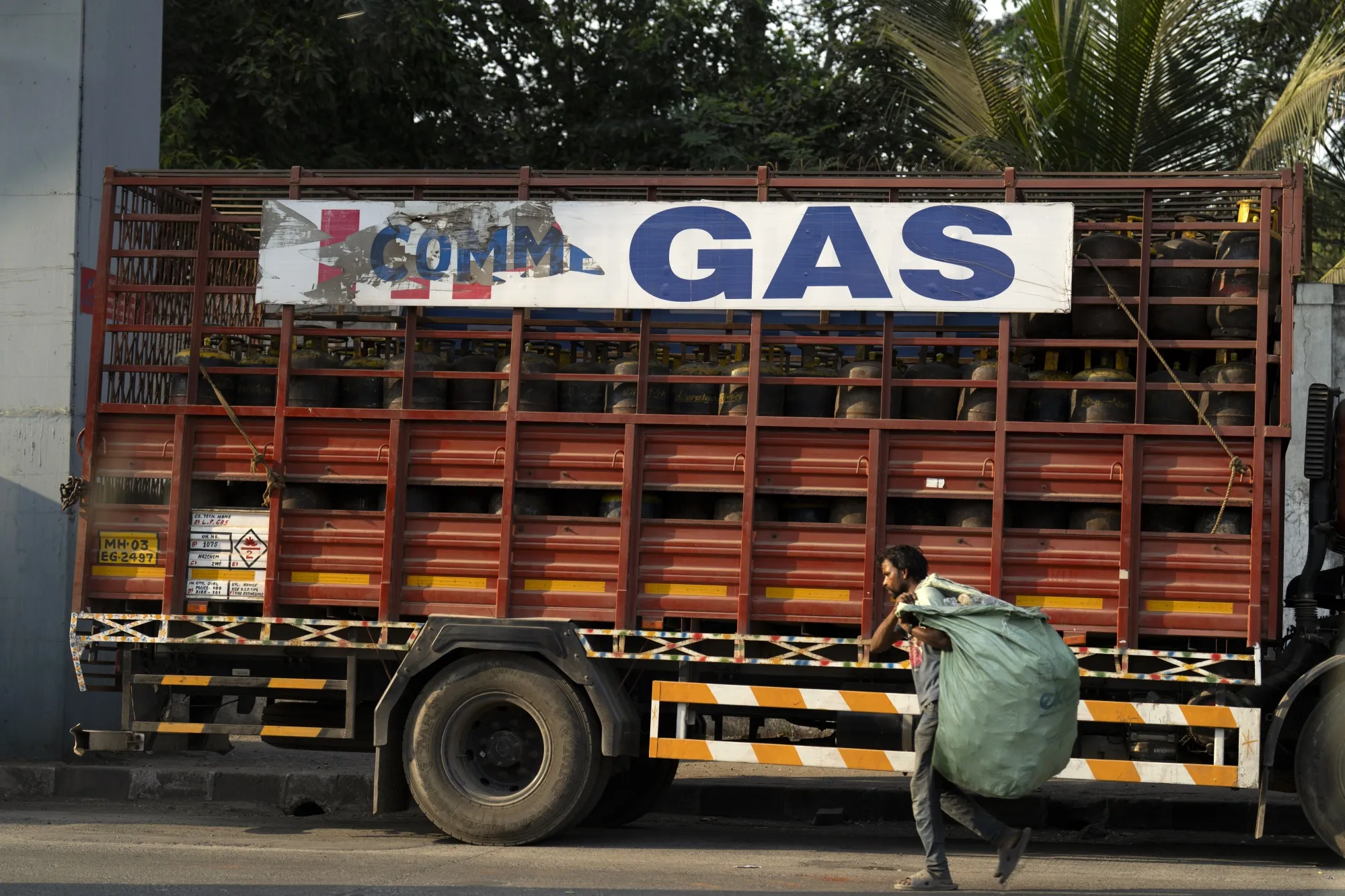
Not immediately, but risks rise if the war extends beyond a few weeks. State refiners hold 20-30 days of LPG stock. But most imports come from the Middle East, and US cargoes take about 45 days to arrive. A prolonged conflict could lead to rationing. If the conflict continues past late March, the government may ration supplies, meaning cooking fuel may not be available on demand.
Are gasoline and diesel supplies at risk for motorists?
Near-term supplies are adequate. India has about 25 days of crude stocks, plus fuel inventories and strategic reserves. Pump prices are unlikely to rise immediately, as the government is expected to delay passing on higher global oil prices in the short run.
Quote of the Day
divEditor’s Choice: More Than Just Oil

NEW: Explore live streaming news and interviews, documentaries, reporter analysis and more, all in one place. Check out Bloomberg.com/videos.
Three Great Reads
- Big Take: Iran satellite images reveal Trump’s strategy risks chaotic endgame
- Goldman’s Solomon watching for private credit “frothiness”
- Bloomberg Opinion: Why the Iran War has morphed into panic selling in Asia
Thank you for reading Markets Daily India. If you haven’t yet, sign up here.
Bloomberg Invest Dubai: Join us March 27 as we unite family offices as well as private and public investors to navigate global market uncertainty. As geopolitical risk and tech volatility rise, we’ll explore where capital is moving next, how private markets are reshaping wealth and the role the Middle East is playing in the global investment market. Learn more.
Enjoying Markets Daily India? You might also like:
- Markets Daily, our global edition for what’s happening in stocks, bonds, currencies and commodities right now — and what will move them next
- India Edition with Menaka Doshi for an insider’s guide to the emerging economic powerhouse
- Breaking News Alerts for the biggest stories from around the world, delivered to your inbox as they happen
- Odd Lots for Joe Weisenthal and Tracy Alloway’s daily newsletter on the newest market crazes
- Points of Return for Bloomberg Opinion’s John Authers’ daily dive into markets
- Get weekly updates on these industries with our new Retail Monitor, Auto Monitor, Defense Monitor, Real Estate Monitor, and Banking Monitor
- Explore all newsletters at Bloomberg.com. Bloomberg.com subscribers have exclusive access to all of our premium newsletters.