Maduro's ouster alarms Tehran as it exposes Iran's vulnerability and the unreliability of its allies. This fuels domestic unrest and fears of potential U.S. intervention, highlighting the regime's precarious position.
Key Takeaways
•Maduro's removal has shaken Iran, revealing the fragility of its anti-American alliances and the inaction of key allies like Russia and China.
•The event has intensified domestic challenges for Iran's regime, including protests, economic crisis, and fears of U.S.-led regime change.
•Iranian reactions range from regime panic and defiant rhetoric to opposition optimism, with debates over whether Iran needs military power or popular legitimacy to survive.
•The situation has emboldened Iranian dissidents and sparked discussions about potential successors, though U.S. interest in direct intervention remains uncertain.
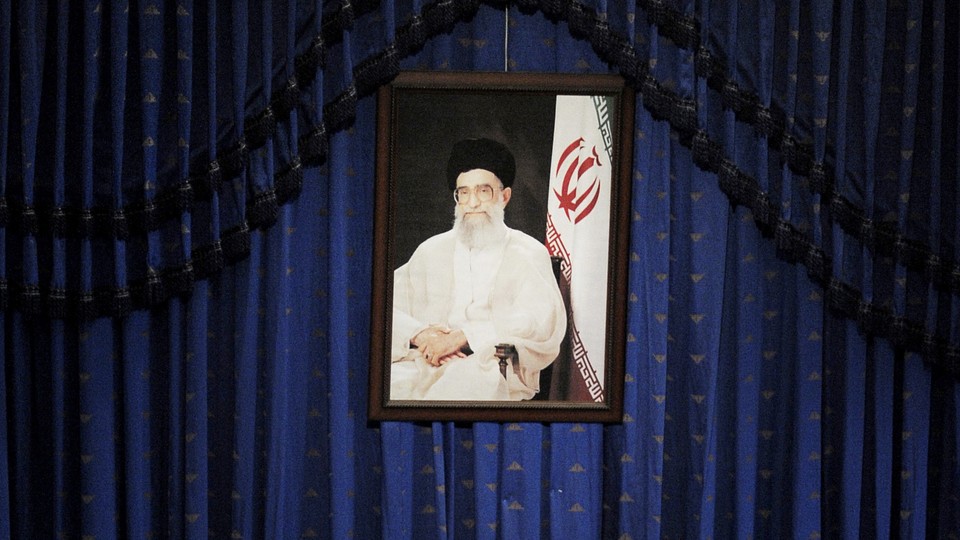
Trump’s ouster of Venezuela’s president has the Islamic Republic on edge and the opposition energized. Babak Sedeghi / Panos Pictures / Redux Few world capitals have been as shaken by the dramatic ouster of Nicolás Maduro as faraway Tehran. Anti-Americanism has united Iran and Venezuela in a tight alliance for more than two decades. As recently as 2022, Supreme Leader Ayatollah Ali Khamenei welcomed Maduro to Tehran, praising the Venezuelan strongman’s “resistance” against America and his “anti-Zionist positions,” adding: “No two countries are as close as we are.”
Khamenei also promised that Iran would “come to the aid of its friends when they are faced with danger.” But when American troops rousted Maduro and his wife from bed early on the morning of January 3, neither Khamenei nor his more powerful allies in Moscow and Beijing came to the rescue.
By now, Khamenei has gotten used to losing friends. He appeared helpless to protect his main regional ally, Syria’s Bashar al-Assad, from being overthrown a year ago. Israeli strikes have decimated the so-called Axis of Resistance, a coalition of anti-Israel Arab militias backed by Iran. Khamenei has now also lost an alliance first forged with Maduro’s predecessor, Hugo Chávez, who christened it the Axis of Unity. A former Iranian official quipped on X that Iran had to accept Hezbollah’s disarmament next: Donald Trump’s “new order is not that hard to understand!”
The blow couldn’t come at a worse time for Iran’s dictator. Khamenei’s regime faces a new round of street protests and a deepening economic crisis. Iran’s 12-day war with Israel and America ended inconclusively last year; the possibility of renewed attacks is never far from mind. The U.S. president has already compared the success of the operation in Caracas to last year’s bombing of Iran. And if that were not ominous enough, Maduro’s capture took place on the sixth anniversary of the Trump-ordered killing of Qassem Soleimani, Khamenei’s top general.
And so the regime reacted with evident panic. Reports on Iran’s state broadcaster insisted for hours that the United States might be lying about capturing Maduro. Once that line became impossible to sustain, a well-known former member of parliament blustered that Maduro would return to power “as a national hero” and that America’s “revolutionary youth would send Trump to the dustbin of history.” Ahmad Vahidi, the newly appointed deputy commander of the Islamic Revolutionary Guard Corps, said that the operation signaled “America’s collapse and decline.”
Be that as it may, Khamenei’s partner in resistance had been spirited to a New York courtroom, and Russia and China, the great-power allies supposedly backing both Caracas and Tehran, had sat the whole episode out. What lesson was the Iranian regime to draw? One Guards-linked analyst concluded that international law was an illusion, and that Iran needed “military and economic power” to survive. Commentators in more reformist-leaning outlets countered that what Iran actually needed was a government with popular legitimacy.
Certainly the news from Caracas has emboldened the Iranian regime’s opponents. On social media, many Iranians joked about being jealous of Venezuelans. A journalist at a reformist daily taunted the rulers in Tehran: “If you don’t leave power with the vote of the people, you will have to do so by a larger foreign force.” A left-leaning dissident in Tehran simply posted, “Congratulations Venezuela.”
The implicit premise of these reactions is that Trump could be contemplating as bold an action in Tehran as he undertook in Caracas. One former U.S. official I spoke with was skeptical that the Trump administration has any interest in decapitating the Iranian regime. “Venezuela is a core U.S. interest in a way that Iran isn’t,” Alan Eyre, who was the Persian-language spokesperson for the State Department under President Barack Obama and is now a diplomatic fellow at the Middle East Institute, told me. “I think this administration is focused elsewhere, and is by and large content to leave Iran to Israel, unless and until Israeli actions in Iran threaten to further destabilize the region.”
Still, the chatter about regime change—whether affected by the U.S. and Israel or by protesters pressing against a weakened power structure—has been growing louder, and one figure has moved inescapably to its center. Former Crown Prince Reza Pahlavi, from his American exile, has declared himself Iran’s transitional leader, and many Iranian protesters have chanted support for him in recent days. Pahlavi has toldThe Wall Street Journal that he doesn’t advocate military strikes on Iran. But he didn’t oppose the American and Israeli attacks over the summer, and some of those close to him, including his wife, Yasmine Pahlavi, openly backed them.
Is there a conceivable future in which an American-military intervention installs Pahlavi in power? Venezuela doesn’t offer a very promising precedent. Control in Caracas has passed not to the popular democratic opposition leader, María Corina Machado, but to Maduro’s vice president, Delcy Rodríguez, whom U.S. officials reportedly chose to lead the country weeks ago. One can easily imagine that in Iran, too, Washington would bypass exiled oppositionists in favor of a pliant strongman. And Pahlavi is a divisive figure, with less sway among Iranian-regime critics than Machado has with their Venezuelan counterparts. In fact, Ali Javanmardi, Trump’s appointee to head the Voice of America’s Persian-language service, claimed on air on Sunday that Trump had “concluded that the opposition groups can’t come to a consensus and thus can’t be defined as the alternative” to the regime. Javanmardi added that the U.S. State Department believes that “the alternative is inside Iran.”
Inside Iran, the protest movement appears to be growing, and Khamenei, besieged by his people and surrounded on all sides by foreign adversaries, must know that his days are numbered. No matter who comes out on top when he’s gone, the core structures and central policies of his regime are bound to change. How and by whom the Islamic Republic will be dismantled, and what will succeed it, are the questions that remain.