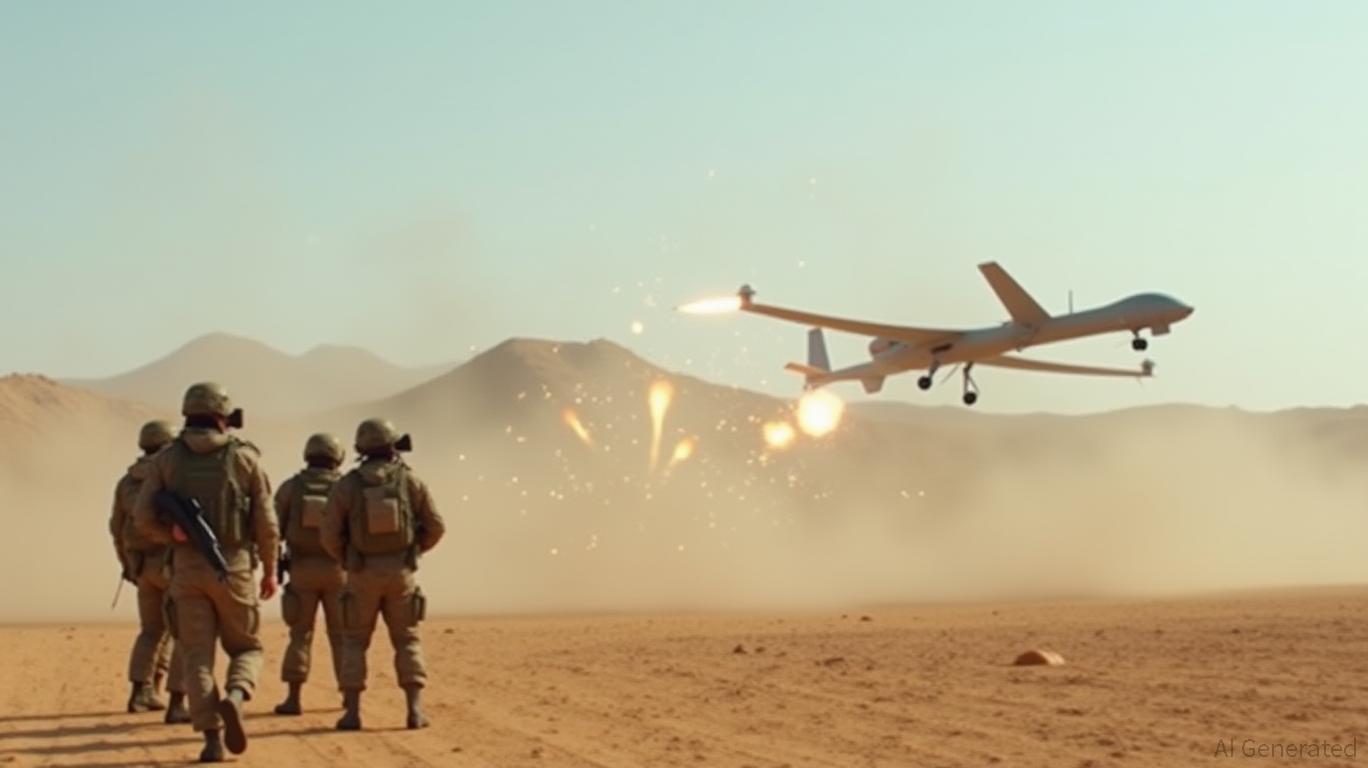
U.S. says it shot down two Iranian drones
On March 19, 2026, the U.S. military confirmed it had carried out defensive strikes on an Iranian military facility following the downing of attack drones. The operation, conducted by forces under U.S. Northern Command, utilized a new "Flyaway Kit" (FAK) to neutralize the drone threat at an undisclosed strategic military base. General Gregory Guillot, head of Northcom and North American Aerospace Defense Command, highlighted the incident in a statement to the Senate Armed Services Committee, emphasizing counter-small unmanned aerial system capabilities in defending U.S. installations against drone incursions.
Earlier on March 9, 2026, a U.S. fighter jet shot down an Iranian Shahed-139 drone as it approached the aircraft carrier USS Abraham Lincoln in the Arabian Sea. The drone was described as "aggressively approaching" the carrier with "unclear intent," prompting the Navy to take defensive action to protect the vessel and its crew. The Lincoln was operating approximately 500 miles from Iran’s southern coast at the time of the incident.
Later the same day, a U.S. Navy destroyer provided assistance to a U.S.-flagged tanker that was harassed by Iranian small boats and a drone in the Strait of Hormuz. The tanker, M/V Stena Imperative, was approached at high speed by two Iranian Revolutionary Guard boats and a Mohajer drone, prompting the USS McFaul to escort the vessel to safety.
The Institute for the Study of War (ISW) noted that these incidents likely represented a deliberate effort by Iran to test U.S. naval responses and signal its ability to challenge American forces in the region. The pairing of the drone and tanker incidents was interpreted as a "probing action" aimed at gauging U.S. military readiness and potentially deterring a potential strike by demonstrating Iran’s capacity to disrupt U.S. naval operations.
These events occurred amid heightened tensions between the U.S. and Iran, with diplomatic talks between the two nations scheduled to take place in Turkey. Despite the incidents, White House press secretary Karoline Leavitt stated that the talks remained on schedule, with President Donald Trump emphasizing a preference for diplomatic solutions while maintaining a range of military options.
The U.S. military has increasingly focused on countering drone threats, particularly in light of the proliferation of small unmanned systems and their use in surveillance and asymmetric warfare. The deployment of advanced C-sUAS technologies, such as the Flyaway Kit, reflects a broader strategic shift toward rapid-response capabilities to address emerging threats.