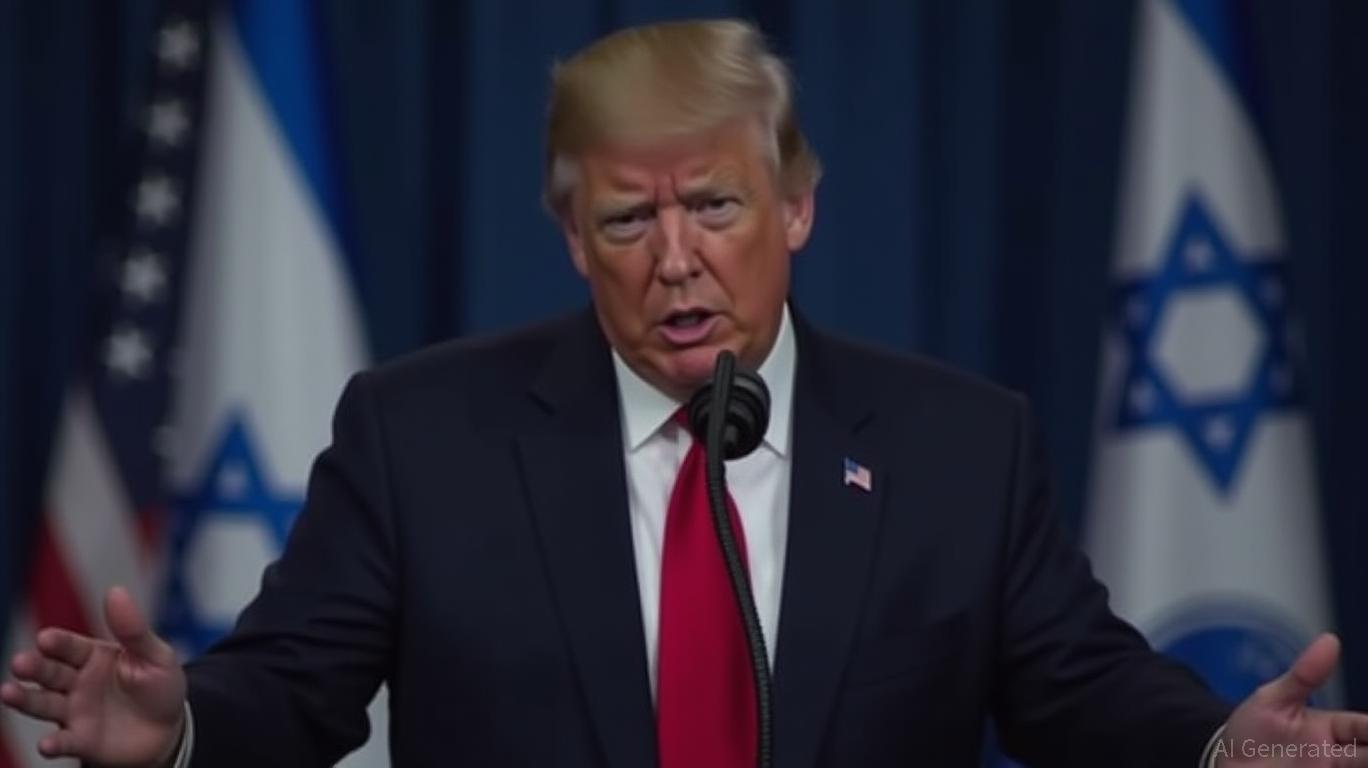
Trump: US and Israel goals in Iran might be slightly different
TL;DR
The U.S. and Israel have coordinated military strikes against Iran since 2026, reducing missile and drone activity, but their goals differ: the U.S. focuses on infrastructure and nuclear capabilities, while Israel targets leadership. Trump's inconsistent rhetoric has caused market volatility, and analysts warn that misaligned strategies risk long-term success and economic stability.
The U.S. and Israel have coordinated extensive military operations against Iran since February 2026, yet differences in their strategic objectives remain evident. While both nations have targeted Iran's air defense systems and missile capabilities— resulting in a 90% reduction in Iranian ballistic missile launches and 83% decline in drone activity— their focus on specific targets diverges. The U.S. has prioritized degrading hardened infrastructure, naval assets, and Iran's nuclear program, including sinking over 30 Iranian vessels. Israel, meanwhile, has concentrated on eliminating Iranian political and military leadership, striking regime officials, Revolutionary Guard Corps (IRGC) headquarters, and Basij command centers.
These distinctions reflect broader disagreements over end goals. Israeli Prime Minister Benjamin Netanyahu has emphasized ending the "threat from the Ayatollah regime," while U.S. officials, including President Donald Trump, have oscillated between demanding Iran's "unconditional surrender" and framing the conflict as a campaign to neutralize Iran's military capabilities. Trump's shifting rhetoric—ranging from declaring the war "very complete" to vowing to escalate strikes—has created uncertainty for markets, with oil prices surging to $120 per barrel before retreating to $90 amid mixed messaging.
Analysts warn that inconsistent U.S. objectives risk undermining long-term strategic success. Sina Azodi, a Middle East politics expert, notes that while the U.S. has imposed battlefield superiority, it has failed to dismantle Iran's missile program or achieve regime change. The economic toll, including disrupted shipping through the Strait of Hormuz and rising U.S. gasoline prices, further complicates the conflict's resolution. For investors, the war's prolonged uncertainty underscores vulnerabilities in global energy markets and geopolitical stability, with outcomes hinging on whether U.S. and Israeli strategies align or diverge further.