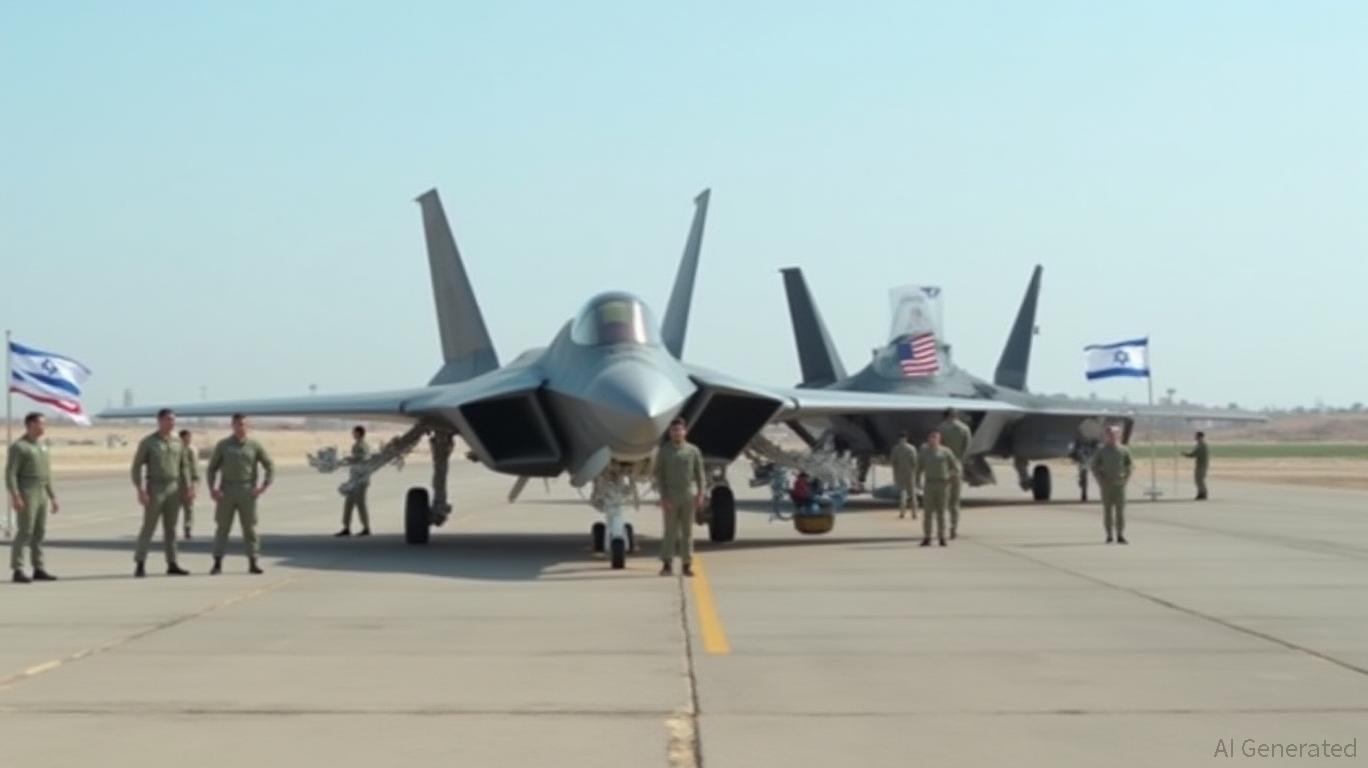
Total of 12 F-22 jets on the way to Israel: CNN
TL;DR
The U.S. deployed 12 F-22 stealth fighters to Israel amid escalating Middle East tensions with Iran, part of a broader military buildup including warships and surveillance aircraft. This reflects concerns over Iran's nuclear program and could impact oil prices and global markets.
Tags
Total of 12 F-22 jets on the way to Israel: CNN
U.S. Deploys 12 F-22 Fighters to Israel Amid Escalating Middle East Tensions
On February 24, 2026, the U.S. Air Force deployed 12 F-22 Raptor stealth fighters from RAF Lakenheath in the United Kingdom to an Israeli air base, marking a significant escalation of American military presence in the Middle East amid heightened tensions with Iran. The deployment, supported by aerial refueling tankers, follows a broader U.S. strategy to reinforce air superiority and deter potential Iranian aggression.
The F-22s, escorted by KC-46A and KC-135 tankers, are part of a larger surge of U.S. military assets in the region, including additional F-35s, F-16s, surveillance aircraft, and two aircraft carrier strike groups. The USS John Finn, an Arleigh Burke-class guided-missile destroyer, recently joined 11 other U.S. warships operating in the CENTCOM area, underscoring Washington's commitment to maintaining a robust naval and air footprint.
The deployment reflects concerns over Iran's nuclear program and recent military exercises in the Strait of Hormuz, a critical global oil transit route. Analysts note that the F-22s' advanced stealth capabilities and sensor fusion systems position them to dominate airspaces with dense air defenses, while tanker support ensures sustained operations over long distances. However, one F-22 reportedly returned to RAF Lakenheath due to a technical issue, highlighting logistical challenges in rapid deployments.
The military buildup coincides with indirect nuclear negotiations between the U.S. and Iran, mediated by Oman, though diplomatic progress remains uncertain. President Donald Trump has indicated a potential military response if talks fail, adding volatility to regional markets. The U.S. has also evacuated non-essential diplomatic staff from Lebanon and increased surveillance operations, signaling preparedness for multiple contingencies.
From a financial perspective, the deployment could exacerbate oil price fluctuations and disrupt trade routes, particularly if tensions escalate. Investors are monitoring developments in the Strait of Hormuz, where even minor disruptions could impact global energy markets. Additionally, the U.S. military's expanded logistical footprint—evidenced by hundreds of cargo flights into the region—may influence defense spending trends and regional investment flows.
While the U.S. emphasizes deterrence and reassurance to regional allies, the deployment underscores the fragility of the current geopolitical landscape. For financial professionals, the interplay of military posturing, diplomatic efforts, and energy security will remain critical factors shaping market stability in the coming weeks.