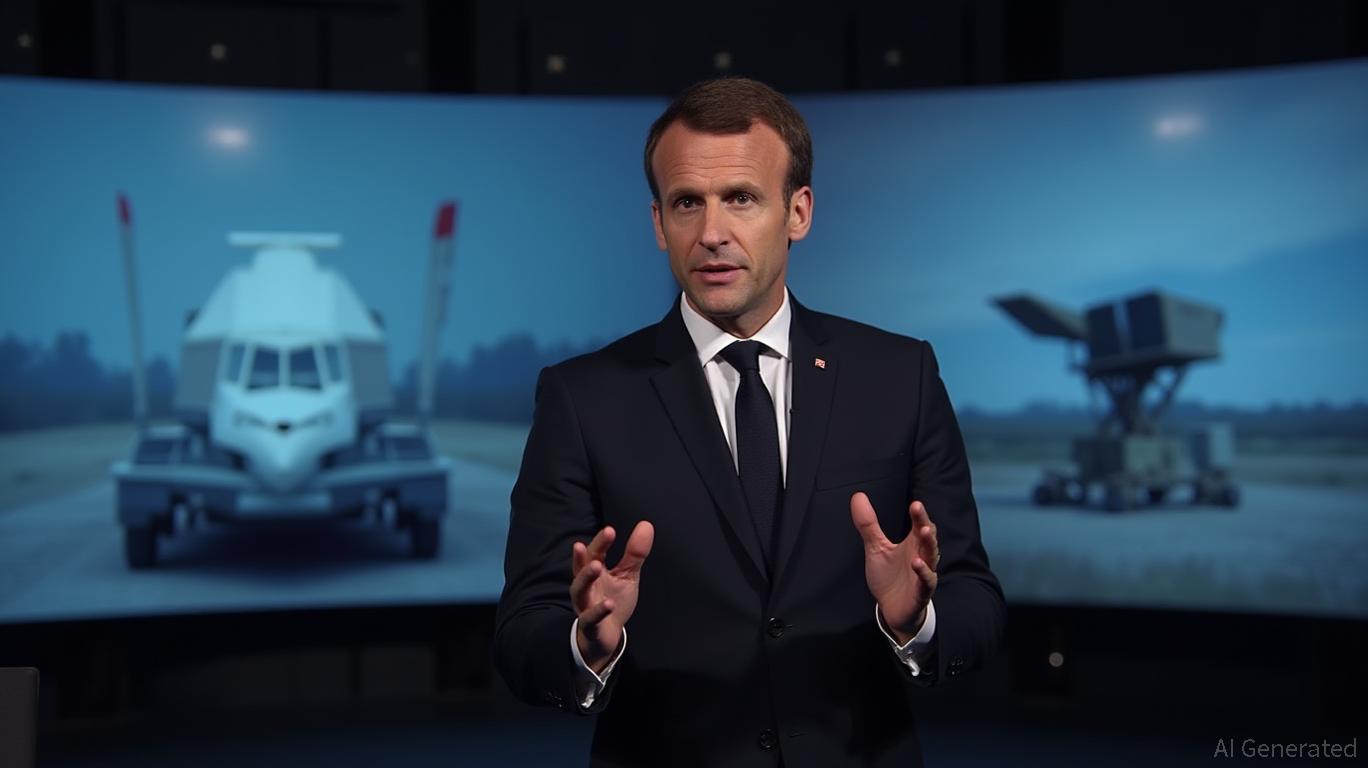
Macron: France has deployed Rafales, air defense systems and radars; warns Israel land operation would be dangerous escalation and strategic error
TL;DR
French President Macron announced France's deployment of Rafale jets, air defense systems, and radars to the Gulf and Red Sea to protect assets and allies amid tensions with Iran. He warned that an Israeli ground operation in Iran would be a dangerous escalation and strategic error, emphasizing the need for restraint to avoid further conflict and economic disruptions.
Tags
Macron: France has deployed Rafales, air defense systems and radars; warns Israel land operation would be dangerous escalation and strategic error
Macron: France Deploys Air Defenses, Warns Against Israeli Land Operation in Iran Conflict
French President Emmanuel Macron has announced that France has deployed Rafale fighter jets, air defense systems, and advanced radars to the Gulf and Red Sea regions to protect its military assets and allies amid escalating tensions between the U.S., Israel, and Iran according to a report. The move follows a drone strike on a French military facility in the UAE, prompting increased combat air patrols over Abu Dhabi to counter Iranian drone and missile threats as reported. Macron emphasized that France remains committed to safeguarding its interests and regional partners, while urging restraint to prevent further escalation.
In a statement, Macron warned that an Israeli ground operation in Iran would constitute a "dangerous escalation and strategic error," citing risks to regional stability. The French leader's remarks align with broader European concerns over the conflict's spillover effects, particularly after Iran threatened to close the Strait of Hormuz—a critical oil transit route—amid retaliatory strikes against U.S. and Israeli targets according to economic reports. The Strait handles 20% of global oil consumption, and its disruption has already prompted major shipping companies to reroute vessels around the Cape of Good Hope, increasing transportation costs and energy price volatility as documented.
France's military posturing includes reinforcing European naval operations in the Red Sea with two additional frigates equipped to intercept drones and missiles, underscoring its role in stabilizing commercial shipping lanes according to defense analysis. Meanwhile, the EU is coordinating evacuation plans for citizens in the region, with Germany, Italy, and other member states seeking to repatriate nationals amid heightened security risks as reported by the Guardian.
Macron also reiterated France's commitment to strengthening its nuclear deterrent, including increasing warhead stockpiles and coordinating with European allies for "advanced deterrence" according to DW reporting. However, he stressed that France retains sole authority over its nuclear arsenal, rejecting NATO-style shared control.
For investors, the conflict's prolongation and energy supply disruptions pose risks to global markets, particularly in oil, shipping, and insurance sectors. Geopolitical uncertainty may also drive demand for safe-haven assets and inflation-linked securities. As Macron and European leaders advocate for de-escalation, the financial community will closely monitor diplomatic efforts and regional security developments.