이 글은 역사적 인물과 가상 인물의 감정을 이해할 때 공감과 낯섦의 균형을 논의합니다. 역사학자 롭 보디스는 과거의 감정이 현대와 다를 수 있다고 주장하며, 헨리 제임스의 소설 속 이사벨 아처의 행동을 예로 들어 설명합니다.
Key Takeaways
•역사학자 롭 보디스는 과거 사람들의 감정이 현대와 다를 수 있어 공감에 의존한 이해를 경계합니다.
•헨리 제임스의 '숙녀의 초상' 속 이사벨 아처의 행동은 현대 독자에게 낯설 수 있어, 가상 인물 이해에 공감과 낯섦이 모두 필요함을 보여줍니다.
•독서는 타인에 대한 호기심을 자극하는 행위로, 인간 경험의 다양성을 탐구하는 데 도움이 됩니다.
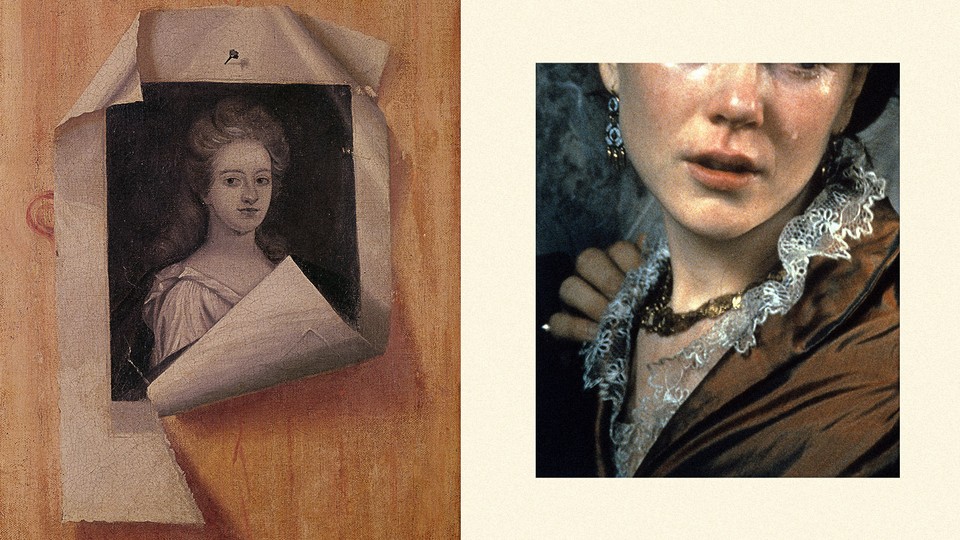
Fictional people, especially those from the past, are interesting because they are both strange and familiar. Edwaerdt Collyer / Bridgeman Images / Gramercy / Getty
This is an edition of the Books Briefing, our editors’ weekly guide to the best in books.
In college, I took a pair of Shakespeare survey courses that taught me two divergent but complementary ways of reading classic fiction. The professor in one class frequently asked us to put ourselves in the characters’ shoes—by asking us, for instance, to contemplate how heavy our heads might be if we, like Henry IV, wore the crown, or to imagine ourselves as Juliet on the balcony. The other professor emphasized everything in the plays that was alien to modern ears: how, for example, King Lear’s resentful banishment of his daughter Cordelia didn’t necessarily read as cruel, because it reflected a world that prized fealty over love. I suspect the second teacher would have been intrigued by a young academic field, the subject of a new Atlantic article by Gal Beckerman, that questions our tendency to see ourselves mirrored in figures of the past.
First, here are four new stories from The Atlantic’s Books section:
Beckerman focuses on Rob Boddice, a historian who challenges the assumption that “people in the past were just like us, with slight tweaks for their choice of hats and standards of personal hygiene.” We oversimply feelings, Boddice says—they are not nearly as universal as we think they are; even emotions such as happiness, sadness, anger, and disgust may not have existed in the same way for people who lived a few centuries ago that they do for us. In fact, some of Boddice’s earliest research showed that humans’ experience of events changed frequently; an activity “that once caused delight” could, a few decades later, “elicit revulsion.” A medieval carpenter who banged his thumb with a hammer, at a time when people thought differently about God, medicine, work, and even pain, might react to the blow in ways that would confuse us.
When Boddice wryly tells Beckerman, “Down with empathy,” he happens to touch on a common debate over books: Is reading an exercise in empathy? I recently read Henry James’s 1881 novel, The Portrait of a Lady, and marveled at how much seeing Isabel Archer choose a terrible husband felt like seeing a modern woman fall for a charming dirtbag. “Girl, don’t marry him!” I wanted to shout, as if I were watching a reality show—or one of many contemporary movie adaptations of Jane Austen novels. The film Clueless, which turns Emma Woodhouse into a Valley girl, works by convincing the audience that the heroine of an 18th-century British novel had quirks and desires that transcended her time, place, and social milieu. Just as Emma, in the guise of flighty Cher, is familiar to today’s filmgoers, headstrong and flawed Isabel seemed legible to me.
But Boddice’s approach to history makes me think back to all of my confusion over Isabel. Why did she marry shady Gilbert Osmond after just a couple of visits to his palazzo, and why did she seemingly balk at escaping his clutches? Would a modern Isabel find crass schemers charming; would she stay in a loveless, childless marriage that was bleeding her fortune; would she turn away in revulsion from offers of help? I was left, at the end, with many such questions, and in thinking through them, my affection for the novel only grew.
The best reading experiences, for me, involve some empathy and some bafflement. Fictional people, like their real counterparts of the past and present, are interesting because they are strange and because they are familiar. Beckerman concludes his essay with a similar synthesis, writing, “Maybe to be human, at the most basic level, is to be curious about other humans.” And reading is nothing if not an act of curiosity.
What if Our Ancestors Didn’t Feel Anything Like We Do?
By Gal Beckerman
The historians who want to know how our ancestors experienced love, anger, fear, and sorrow
Girlie Delmundo, a daughter of Filipino immigrants, is a Las Vegas–based content moderator at a social-media company who bears the distinctly unpleasant burden of being a specialist in child-sex-abuse materials. She’s also one of the most memorable, expertly drawn characters in recent fiction: sarcastic, tough, funny, and so good at her job that she’s promoted into a high-paying role policing a lush new virtual-reality system, Playground. As Castillo gradually makes clear, Girlie is suppressing a lot of pain, even beyond the daily horrors of her work. Along with formidable descriptions of cyberspaces, the novel also explores the ever-shifting relationship between Girlie and her new boss, William—two equally repressed people who feel drawn to each other. At one point, Girlie observes to William that Playground is “larger than life. Realer reality. Sensory overload.” Castillo’s book creates that same feeling—it’s about the costs and responsibilities of technological progress, explored through delicious, full-bore immersion into a fictional character’s head.
Why Couples Therapists Are Sick of ‘Therapy-Speak’
By Olga Khazan
Gaslighting is just one of the “therapy-speak” terms that couples therapists told me their clients are misusing, typically after seeing descriptions of the ideas on social media. Other common, wrongly applied terms include boundaries, triggered, and trauma bond. Some clients proclaim to their therapist that their partner has obsessive-compulsive disorder, bipolar disorder, autism, or ADHD, even though their partner hasn’t been clinically diagnosed with such a condition. Attachment styles—the theory that people have different ways of maintaining relationships—have also entered the arena: [the therapist Jonathan] Alpert had one client who complained that her husband had “avoidant attachment,” and he, in turn, accused his wife of having “anxious attachment.” Alpert said that “neither of the labels was accurate.”