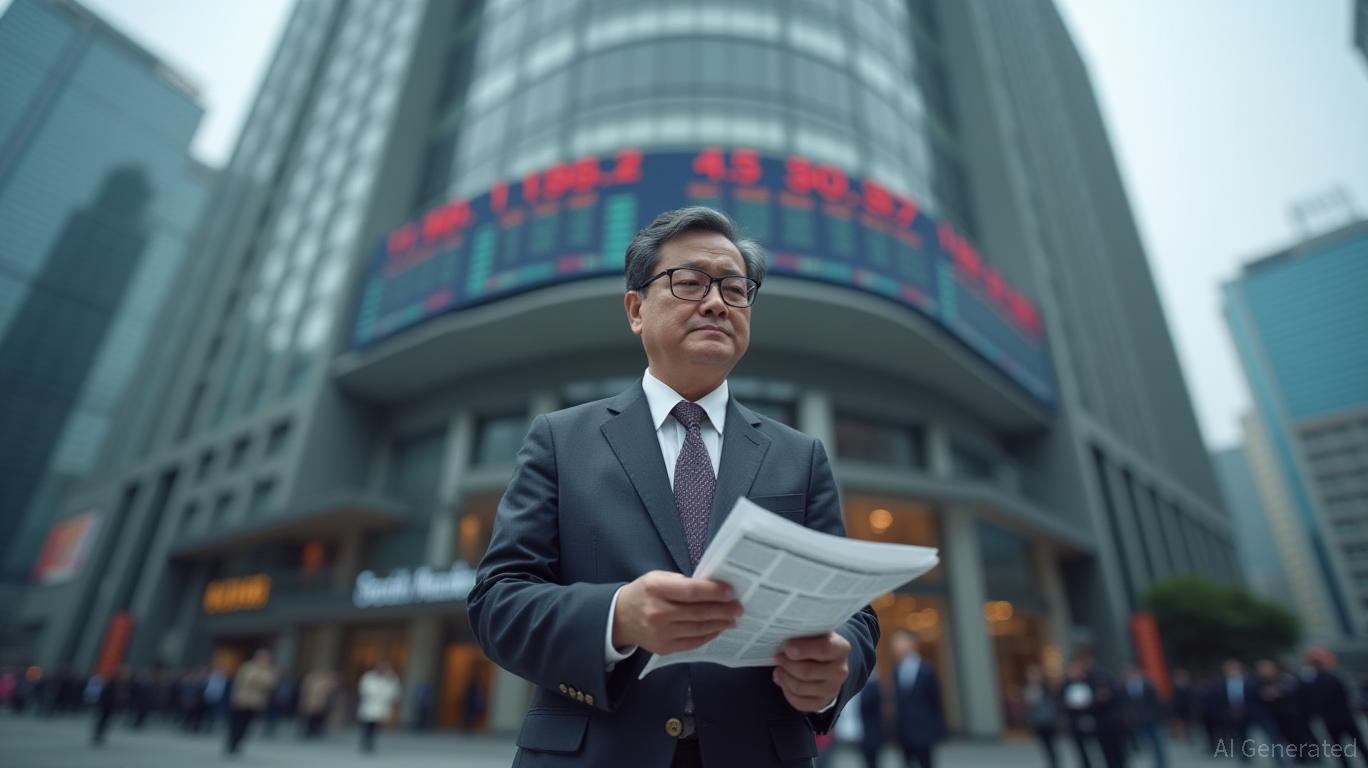
S. Korea finance minister flags worries about an increase in leveraged stock market exposure
South Korea’s finance ministry has raised concerns over a surge in leveraged stock market exposure, particularly among retail investors. The country’s financial regulator, the Financial Supervisory Service (FSS), has highlighted a growing trend of domestic investors, especially younger demographics, allocating significant capital into highly leveraged overseas exchange-traded products (ETPs). These include three times leveraged and inverse ETFs, which amplify daily returns of underlying indices. Between January and March 2026, nearly 80% of top 50 ETPs invested in by South Korean retail investors.
The Kospi, South Korea’s benchmark index, has experienced extreme volatility in recent months, with a record single-day drop of 12% followed by a 10% rebound. Analysts attribute this instability to the index’s heavy concentration in two semiconductor giants—Samsung Electronics and SK Hynix—which together one-third of Kospi's market capitalization. This concentration, combined with the widespread use of margin debt and leveraged ETFs, has amplified market swings.
Margin loans for Korean stocks have surged to $26 billion as of May 2026, more than doubling since 2025. Retail investors, many of whom are in their 20s and 30s, have opened over 4.9 million accounts, with a significant portion using leveraged products to amplify returns. However, the FSS has warned that such products carry high volatility and compounding risks, especially in overseas markets with no price limits.
While the semiconductor sector remains a key driver of South Korea’s equity market, concerns persist over the sustainability of the current rally. The FSS and other analysts caution that excessive leverage could lead to corrections if market sentiment shifts or external shocks emerge.