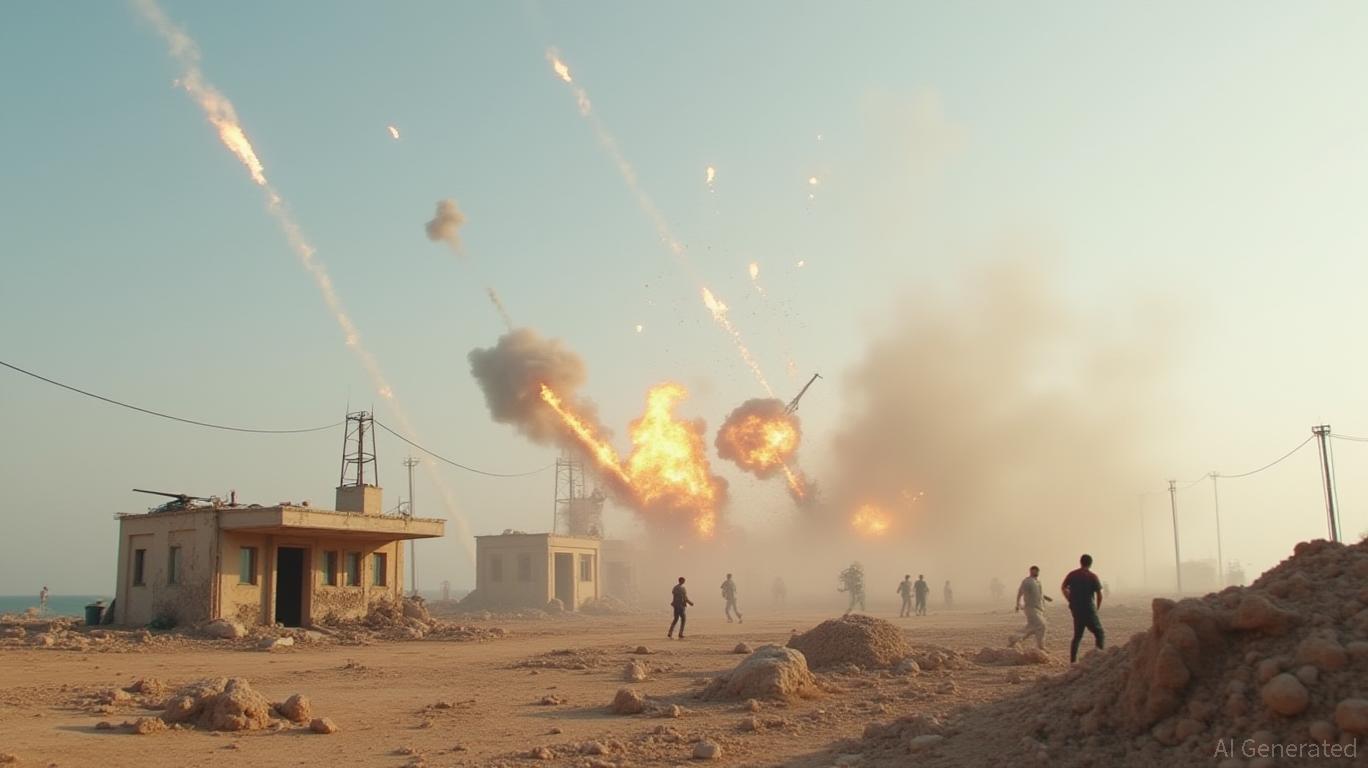
Fars News Agency: Airstrikes on Kharg Island cause damage to air defenses, the naval base, the observation tower, and the helicopter aircraft hangar
TL;DR
U.S. airstrikes on Iran's Kharg Island damaged military infrastructure, avoiding oil facilities to limit global supply disruption. The conflict has closed the Strait of Hormuz, spiking oil prices and causing market volatility, with threats of escalation.
The U.S. military’s recent bombing raid on Iran’s Kharg Island has caused significant damage to military infrastructure, including air defenses, a naval base, an observation tower, and a helicopter aircraft hangar, according to Fars News Agency. The attack, authorized by President Donald Trump, targeted all military facilities on the island while deliberately avoiding oil infrastructure, which accounts for a substantial portion of Iran’s crude exports. The move underscores the U.S. strategy to degrade Iran’s military capabilities without directly disrupting global oil supplies, at least initially.
The conflict has already disrupted energy markets, with the Strait of Hormuz—a critical shipping route for 20% of global oil— effectively closed due to Iranian mine-laying efforts. While U.S. officials temporarily lifted sanctions on Russian oil to stabilize supplies, global oil prices remain near $100 per barrel, reflecting persistent supply concerns. The Trump administration has warned Iran that further obstruction of the strait could lead to expanded military action, including targeting oil infrastructure.
Financial markets have reacted to the escalating tensions, with the S&P 500 posting its worst single-day performance since the war began, and Asian indices falling sharply. Analysts highlight the risk of prolonged energy shocks, with Iran’s Revolutionary Guards suggesting oil prices could surge to $200 per barrel if the conflict intensifies. The war’s economic fallout, including disrupted trade, rising fuel costs, and geopolitical uncertainty, continues to weigh on global investors.