Rubio: Partners share commitment to disrupt cartel networks
TL;DR
Secretary Rubio emphasized a shared commitment among Western Hemisphere leaders to disrupt cartel networks at the Shield of the Americas Summit, with Trump advocating military collaboration and critics raising sovereignty concerns.
Tags
Rubio: Partners share commitment to disrupt cartel networks
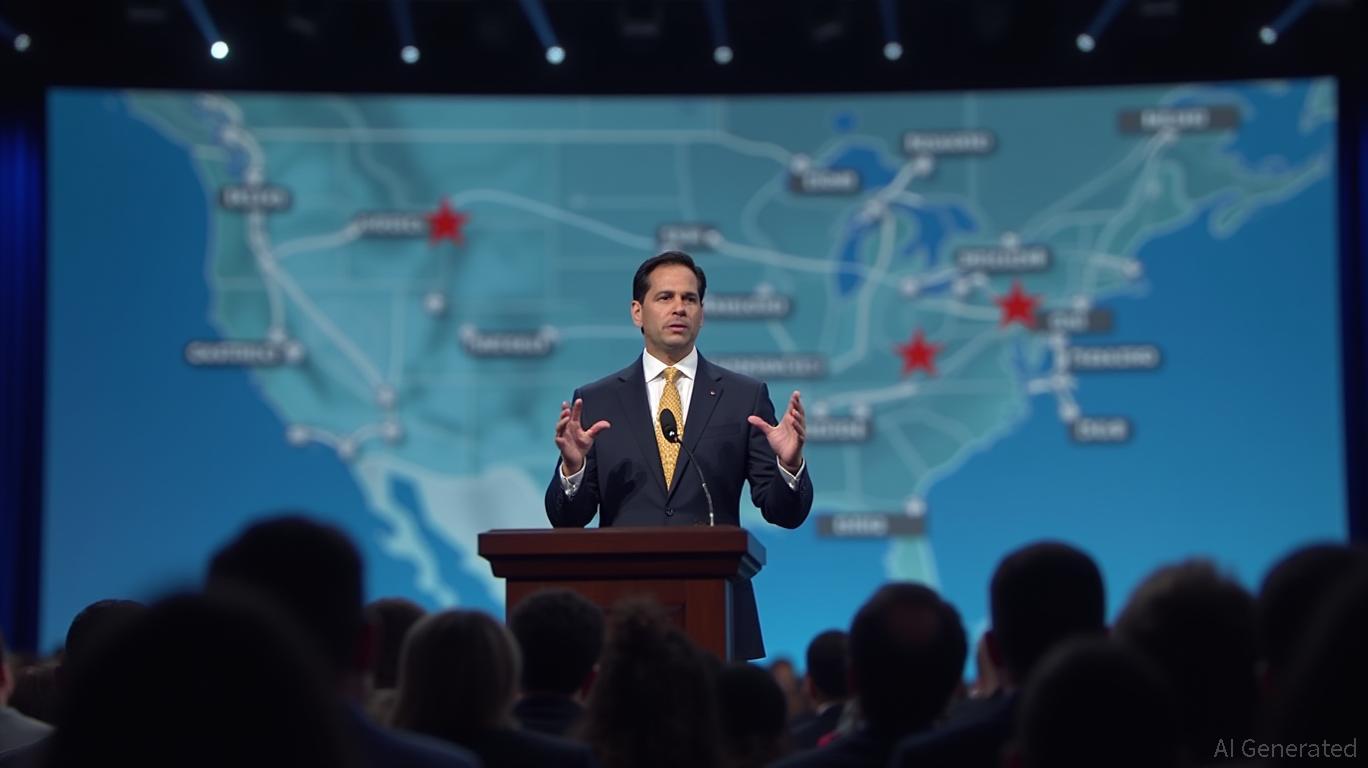
Secretary of State Marco Rubio highlighted a shared commitment among Western Hemisphere leaders to disrupt transnational cartel networks during a meeting on the margins of the Shield of the Americas Summit in Doral, Florida. Attending leaders included heads of state from El Salvador, Costa Rica, Panama, Bolivia, Honduras, and Chile, among others, who pledged cooperation to counter cartels destabilizing regional governance and security. The summit, convened by President Donald Trump, emphasized military and intelligence collaboration to combat drug trafficking and organized crime, with Trump explicitly advocating for lethal force against cartels, citing parallels to the U.S.-led coalition against the Islamic State.
The initiative aligns with broader U.S. efforts to reassert influence in the region, including economic measures such as tariffs on Mexican exports tied to security performance and pressure on countries to distance from Chinese infrastructure investments. While Trump's administration framed the coalition as a step toward "safer, more sovereign, and prosperous" hemisphere relations, critics, including Cuban President Miguel Díaz-Canel, labeled the summit "neocolonial," raising concerns about U.S. military overreach.
Financial implications include heightened scrutiny of illicit financial flows and cross-border trade vulnerabilities, with Mexico facing ongoing tariff risks despite increased cartel seizures and border enforcement according to analysis. The absence of major regional powers like Brazil and Mexico at the summit underscored diverging priorities, particularly around sovereignty and U.S. intervention. As the U.S. shifts focus to Cuba post-Iran conflict, the coalition's long-term efficacy will depend on balancing security objectives with economic diplomacy amid competing global and regional interests.