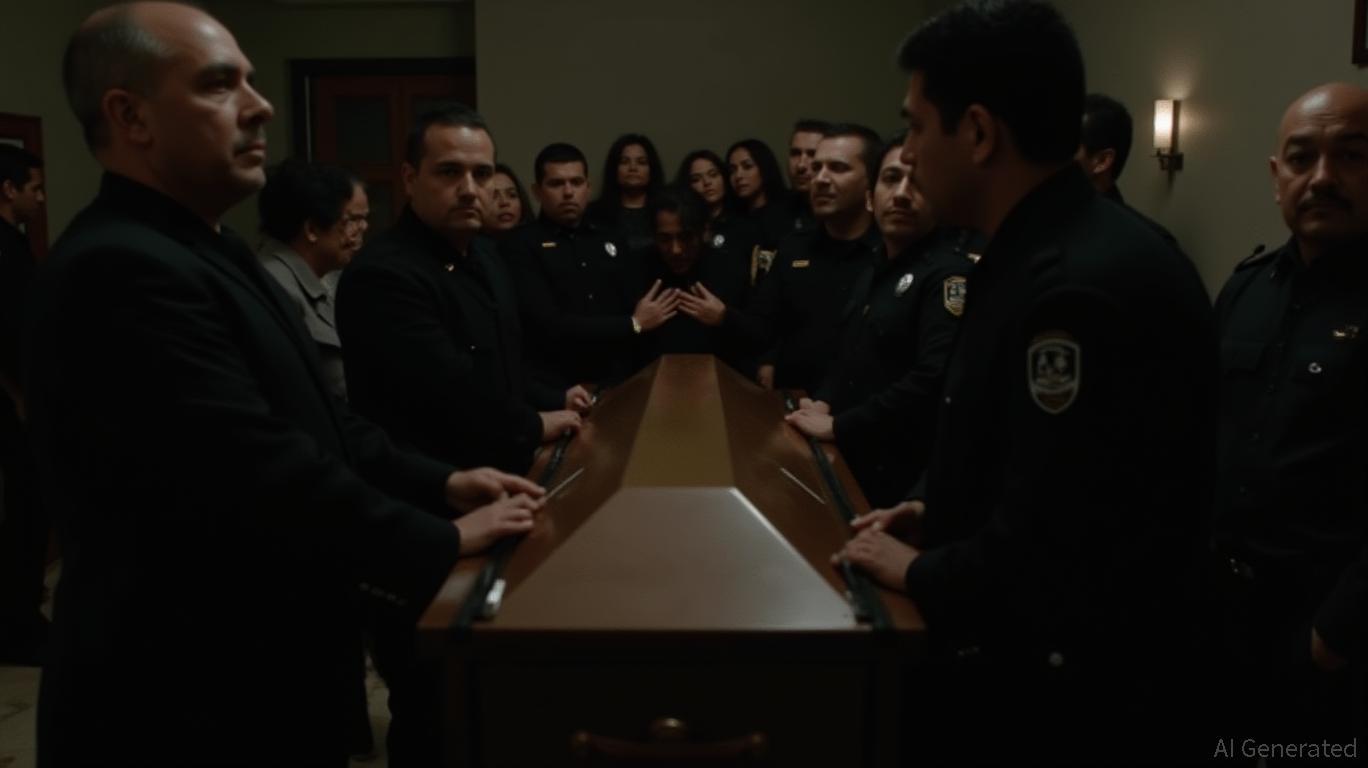
Mexican authorities returned the body of cartel boss Nemesio Oseguera, alias 'El Mencho', to his family, AG's office says
TL;DR
Mexican authorities returned the body of cartel boss Nemesio Oseguera 'El Mencho' to his family after genetic identification, following a military operation that killed eight cartel members. The transfer adhered to legal protocols, with concerns raised about potential retaliatory violence and instability due to the CJNG's influence.
Mexican authorities returned the body of cartel boss Nemesio Oseguera, alias 'El Mencho', to his family, AG's office says
Mexican Authorities Return Body of CJNG Leader Nemesio Oseguera to Family, AG’s Office Confirms
Mexican authorities have confirmed the transfer of the body of Nemesio Oseguera Cervantes, alias "El Mencho," leader of the Jalisco New Generation Cartel (CJNG), to his family following standard legal procedures. The Attorney General's Office (FGR) announced that the remains, genetically identified after an autopsy, were handed over to relatives, as is customary in such cases.
The FGR stated that Oseguera's body, along with those of two injured bodyguards who died during a February 22 military operation in Tapalpa, Jalisco, was transferred to Mexico City for processing. The operation, which resulted in eight cartel member fatalities and two arrests, involved tracking Oseguera's security detail to tourist cabins. The wounded were evacuated by helicopter but succumbed to injuries during transport.
A legal representative for Oseguera's family formally requested the body's release, adhering to protocols requiring documentation such as death certificates, official IDs, and CURP records. The process aligns with Mexico's legal framework, which grants families the right to claim remains, even for convicted criminals.
Security officials emphasized the sensitivity of the operation, noting the decision to reroute the bodies to Mexico City to mitigate risks of retaliatory violence in Jalisco. Defense Secretary Ricardo Trevilla cited concerns about the CJNG's symbolic ties to the region.
Experts, including journalist Lolita de la Vega, have raised concerns about potential instability. Historical precedents, such as the 2017 burial of Tláhuac Cartel leader "El Ojos," highlight risks of cartel retaliation or public disturbances during funerals. De la Vega noted uncertainties about how Oseguera's family might handle the remains, including cremation, discreet burial, or ceremonies that could provoke violence.
The FGR also reported prosecuting two captured cartel members for possessing military-grade weapons. Both face charges under the Special Attorney General's Office for Organized Crime and are detained at Altiplano maximum-security prison.
While the handover underscores Mexico's adherence to legal rights, it also reflects broader challenges in balancing justice, public safety, and cartel dynamics. The CJNG's international drug trafficking networks and Oseguera's prominence amplify concerns about post-incident stability, with analysts urging caution as the situation evolves.