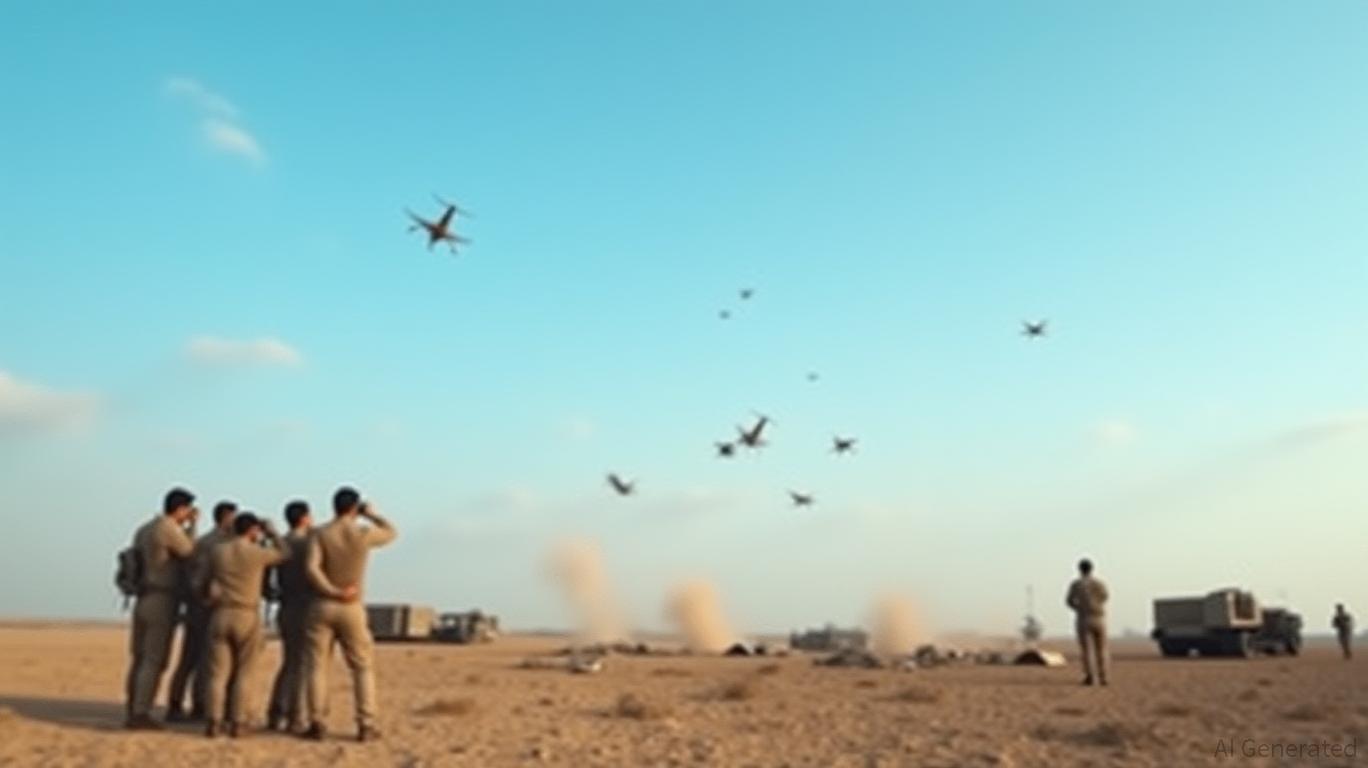
US air defences intercept drones over Iraq's Erbil: AFP
TL;DR
U.S. air defenses intercepted drones over Erbil, Iraq, launched by Iran in retaliation for U.S.-Israeli strikes, escalating regional tensions and raising economic concerns.
Tags
US air defences intercept drones over Iraq's Erbil: AFP
US Air Defenses Intercept Drones Over Iraq’s Erbil: Regional Tensions Escalate
U.S. air defense systems, operating under a multinational coalition, intercepted multiple drones over Erbil, Iraq on March 1, 2026, near the U.S. consulate and Erbil International Airport. The drones, reportedly launched by Iran as part of retaliatory strikes following joint U.S.-Israeli military operations, were neutralized before reaching their intended targets. This incident underscores the expanding scope of the conflict, which has shifted from direct confrontations between Israel and Iran to broader regional engagements involving U.S. military infrastructure.
The U.S. and Israel launched preemptive strikes on Iranian military sites earlier in the day, prompting Tehran to respond with missile and drone attacks targeting U.S. bases across the Middle East, including locations in Bahrain, Kuwait, the UAE, and Iraq. According to Al Jazeera, the conflict has seen escalating retaliatory actions.
Kurdish security forces confirmed the interception of drones and missiles over Erbil, part of a coordinated effort to defend coalition assets in the region. Meanwhile, Jordan, Qatar, and Saudi Arabia also reported intercepted attacks, with limited material damage but no casualties.
The conflict’s escalation raises concerns about its economic and financial implications. Geopolitical instability in the Middle East often disrupts global energy markets, with Iraq and Iran serving as critical nodes in regional oil and gas trade. Additionally, increased military spending by the U.S. and its allies to bolster air defenses could strain defense budgets, potentially diverting resources from other economic priorities. For investors, heightened volatility in Middle Eastern markets and shifts in global commodity prices remain key risks.
The U.S. military presence in the region, including bases in Iraq and Gulf states, highlights the strategic importance of maintaining operational readiness amid rising tensions. While current intercepts have mitigated direct damage, the prolonged conflict could lead to broader economic ripple effects, including inflationary pressures and disrupted supply chains. Financial professionals are advised to monitor developments closely, as regional stability remains a critical factor influencing global markets.
Institut Kurd: Institut Kurd
Ynetnews: Ynetnews
Al Jazeera: Al Jazeera
Kurdistan24: Kurdistan24
France 24: France 24