NGC 1898: Globular Cluster in the Large Magellanic Cloud
AI Summary2 min read
TL;DR
NGC 1898은 대마젤란 은하에 위치한 구상 성단으로, 허블 우주 망원경이 적외선에서 자외선까지 다양한 빛으로 촬영했습니다. 이 성단의 별들은 소마젤란 은하와 우리 은하와의 고대 충돌 직후에 형성된 것으로 보여, 구상 성단이 여러 단계에 걸쳐 별을 형성했음을 시사합니다.
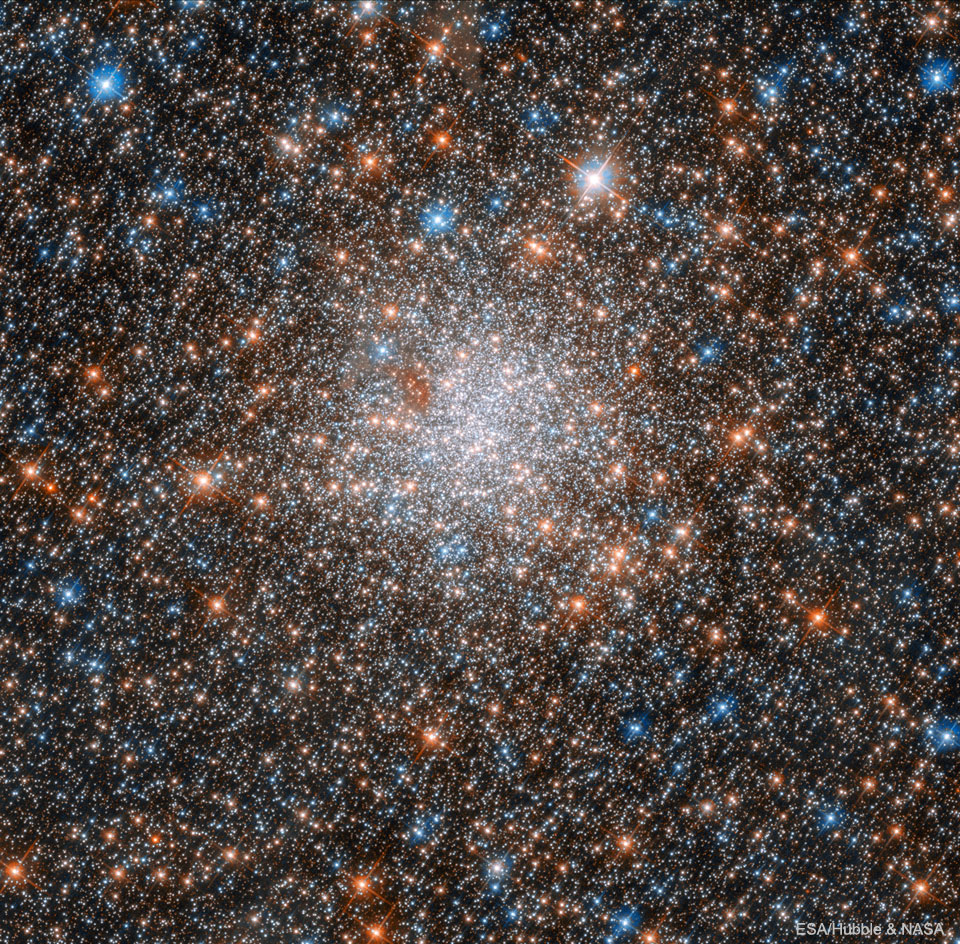
NGC 1898: Globular Cluster in the Large Magellanic Cloud
Image Credit: ESA/Hubble & NASA
Explanation: Jewels don't shine this bright -- only stars do. And almost every spot in this jewel-box of an image from the Hubble Space Telescope is a star. Now, some stars are more red than our Sun, and some more blue -- but all of them are much farther away. Although it takes light about 8 minutes to reach Earth from the Sun, NGC 1898 is so far away that it takes light about 160,000 years to get here. This huge ball of stars, NGC 1898, is called a globular cluster and resides in the central bar of the Large Magellanic Cloud (LMC) -- a satellite galaxy of our Milky Way Galaxy. The featured multi-colored image includes light from the infrared to the ultraviolet and was taken to help determine if the stars of NGC 1898 all formed at the same time or at different times. There are increasing indications that most globular clusters formed stars in stages, and that, in particular, stars from NGC 1898 formed shortly after ancient encounters with the Small Magellanic Cloud (SMC) and our Milky Way Galaxy.