Zoox plans to put its robotaxis on the Uber app in Vegas this year
TL;DR
Zoox plans to integrate its robotaxis into the Uber app in Las Vegas later this year, pending federal approval for commercial deployment. The partnership is part of a multi-year strategy, with expansion to Los Angeles planned for 2027.
Key Takeaways
- •Zoox and Uber announced a partnership to make Zoox's robotaxis available on the Uber app in Las Vegas later this year, pending federal regulatory approval.
- •Zoox needs exemptions from Federal Motor Vehicle Safety Standards (FMVSS) for its steering wheel- and pedal-free robotaxis, with NHTSA currently taking public comments on the application.
- •This is Zoox's first third-party platform partnership, while Uber has over 25 autonomous vehicle partnerships globally, including with Waymo, Baidu, and others.
- •Zoox plans to launch its own commercial robotaxi service first before integrating with Uber, and is expanding to eight other U.S. cities including Dallas and Phoenix.
- •NHTSA is working on clearer regulations for autonomous vehicles, with the agency chief emphasizing the need to balance safety oversight with innovation.
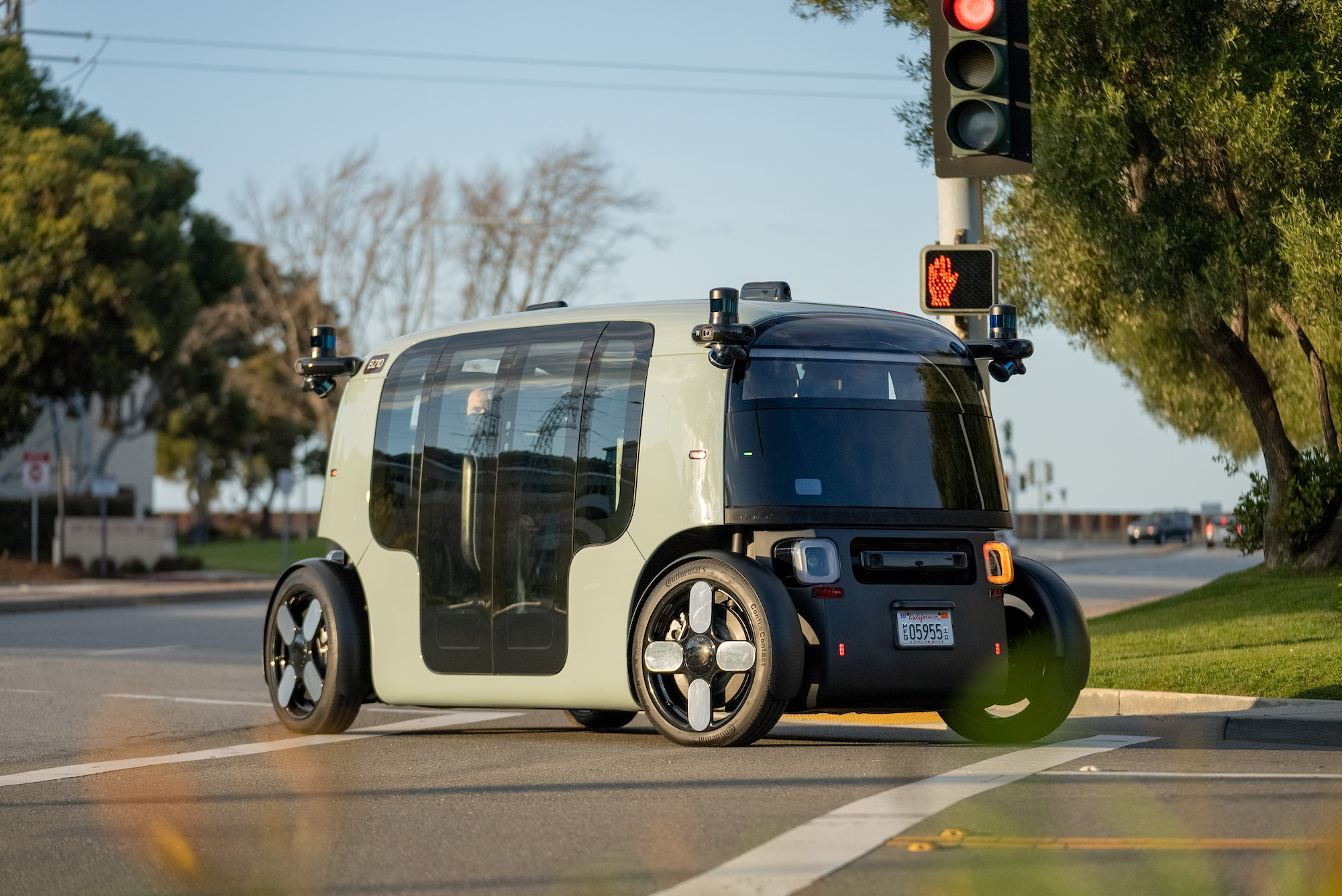
Amazon-owned Zoox plans to make its robotaxis available to hail on the Uber app in Las Vegas later this year, the two companies announced Wednesday.
Before that happens, though, Zoox still needs approval from the federal government to commercially deploy its robotaxis, which don’t have a steering wheel or pedals. That requires exemptions from the Federal Motor Vehicle Safety Standards (FMVSS). On Wednesday, the National Highway Traffic Safety Administration (NHTSA) began taking public comment on Zoox’s application for those exemptions. (Zoox currently has an exemption that allows the custom-built robotaxis to operate as a demonstration, and not commercially.)
If and when Zoox gets approval, the company plans to launch its own commercial robotaxi service first, and before making the vehicles available on Uber in Las Vegas, it told TechCrunch. Zoox currently offers free rides in Las Vegas and in San Francisco. It’s also mapping and building up a presence in eight other U.S. cities, including Dallas and Phoenix, which were announced earlier this week.
Zoox and Uber described this as a “multi-year strategic partnership,” that includes plans to launch in Los Angeles in 2027.
This is Zoox’s first third-party partnership with a platform like Uber. But it’s certainly not Uber’s first partnership with an autonomous vehicle company. Uber has partnerships with more than 25 different autonomous vehicle companies around the world. Its most notable deal is with Waymo, which makes its robotaxis available on the Uber platform in Austin and Atlanta. Uber has also partnered with China’s Baidu and announced it would start testing those self-driving cars in London this year. The ride-hail giant has AV partnerships with Volkswagen, May Mobility, and Pony AI, too.
Uber has also been building out new offerings for these robotaxi partners. In January, TechCrunch revealed the company started up an “AV Labs” division dedicated to collecting real-world driving data to reinforce its partners’ autonomous systems. Last month, Uber announced it had created a division called Uber Autonomous Solutions that can provide operational, software, and support services.
Zoox is seeking exemptions from eight of the FMVSS, including the standards that require a vehicle to have windshield defrosting systems and windshield wipers. NHTSA will take public comments for 30 days, but it’s not clear when the federal safety agency will make a ruling.
Disrupt 2026: The tech ecosystem, all in one room
Your next round. Your next hire. Your next breakout opportunity. Find it at TechCrunch Disrupt 2026, where 10,000+ founders, investors, and tech leaders gather for three days of 250+ tactical sessions, powerful introductions, and market-defining innovation. Register now to save up to $400.
Save up to $300 or 30% to TechCrunch Founder Summit
1,000+ founders and investors come together at TechCrunch Founder Summit 2026 for a full day focused on growth, execution, and real-world scaling. Learn from founders and investors who have shaped the industry. Connect with peers navigating similar growth stages. Walk away with tactics you can apply immediately
Offer ends March 13.
At an autonomous vehicle safety hearing held on Tuesday, NHTSA chief Jonathan Morrison sounded eager to move forward with a more explicit regulatory scheme for self-driving cars.
“We think it’s past time to get past the hand-waving and hype, and are finally doing the necessary, hard policy work to provide appropriate and robust oversight over this sector while removing unnecessary and unintended barriers to innovation that currently exists,” he said. “This will not be easy, but I firmly believe that it is within our grasp, and we at NHTSA are moving with a great sense of urgency to get it done.”