Coffee Prices Stay at Record Despite Drop in Market for Beans
TL;DR
Coffee prices remain at record highs despite a drop in bean futures, as supply chain delays and earlier tariffs keep consumer costs elevated. The lag between market changes and retail prices means relief may not come until 2027, with consumers adapting by brewing more at home.
Key Takeaways
- •Record coffee prices persist due to supply chain snarls and past tariffs, even as futures have fallen, with consumer costs up 31% year-over-year.
- •A significant time lag means lower futures prices won't reach consumers until early 2027, as roasters work through high-cost inventories.
- •Consumers are shifting to more economical home brewing, but still pay for cafe treats, with coffee and beef driving stubborn food inflation.
- •Producers in countries like Brazil are holding back supplies, limiting price declines and maintaining high costs for exporters and roasters.
Tags
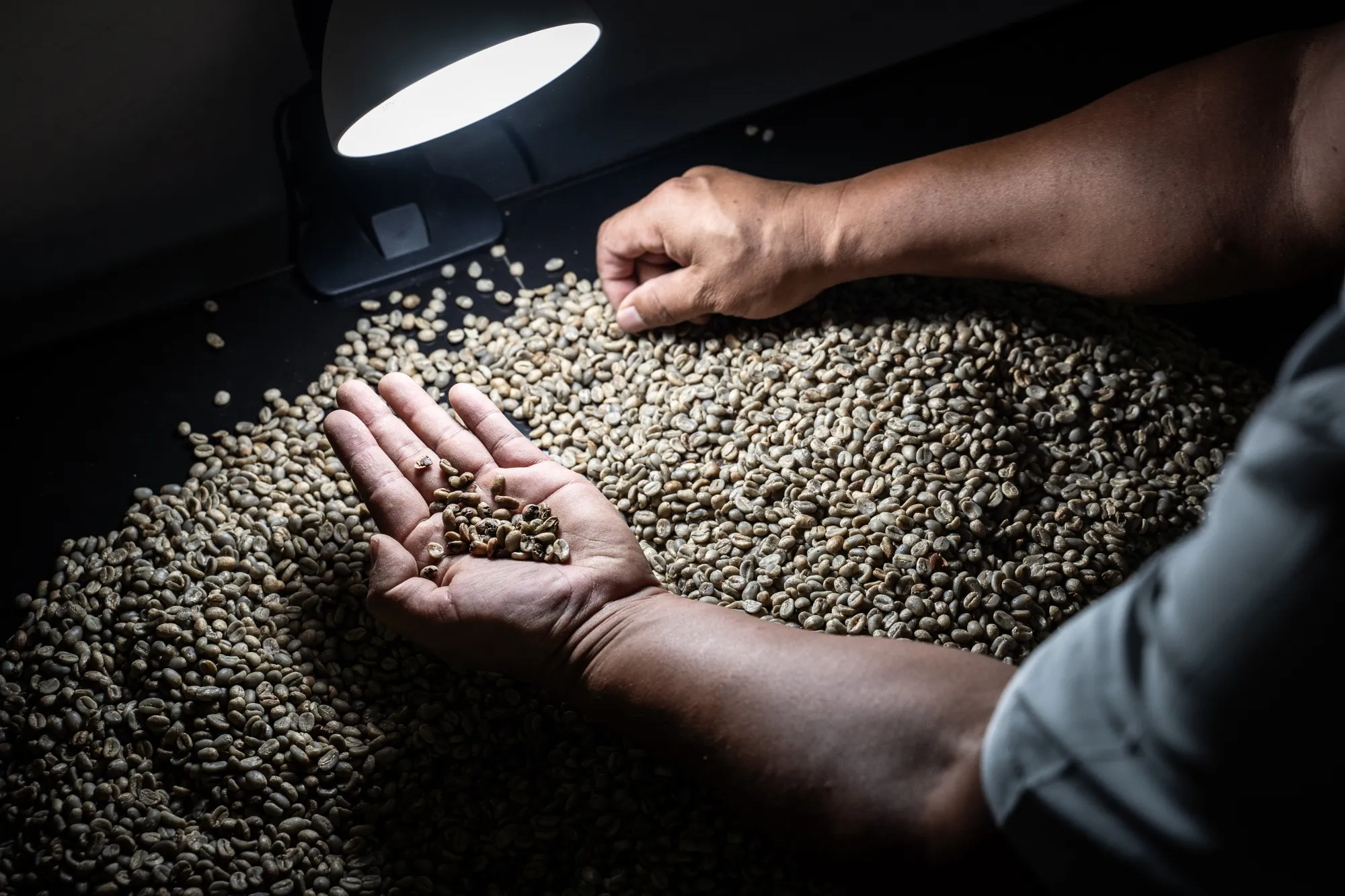
Record coffee prices aren’t easing anytime soon despite a sharp drop in the commodity market for beans — a sign of how long supply chain snarls can upend food prices.
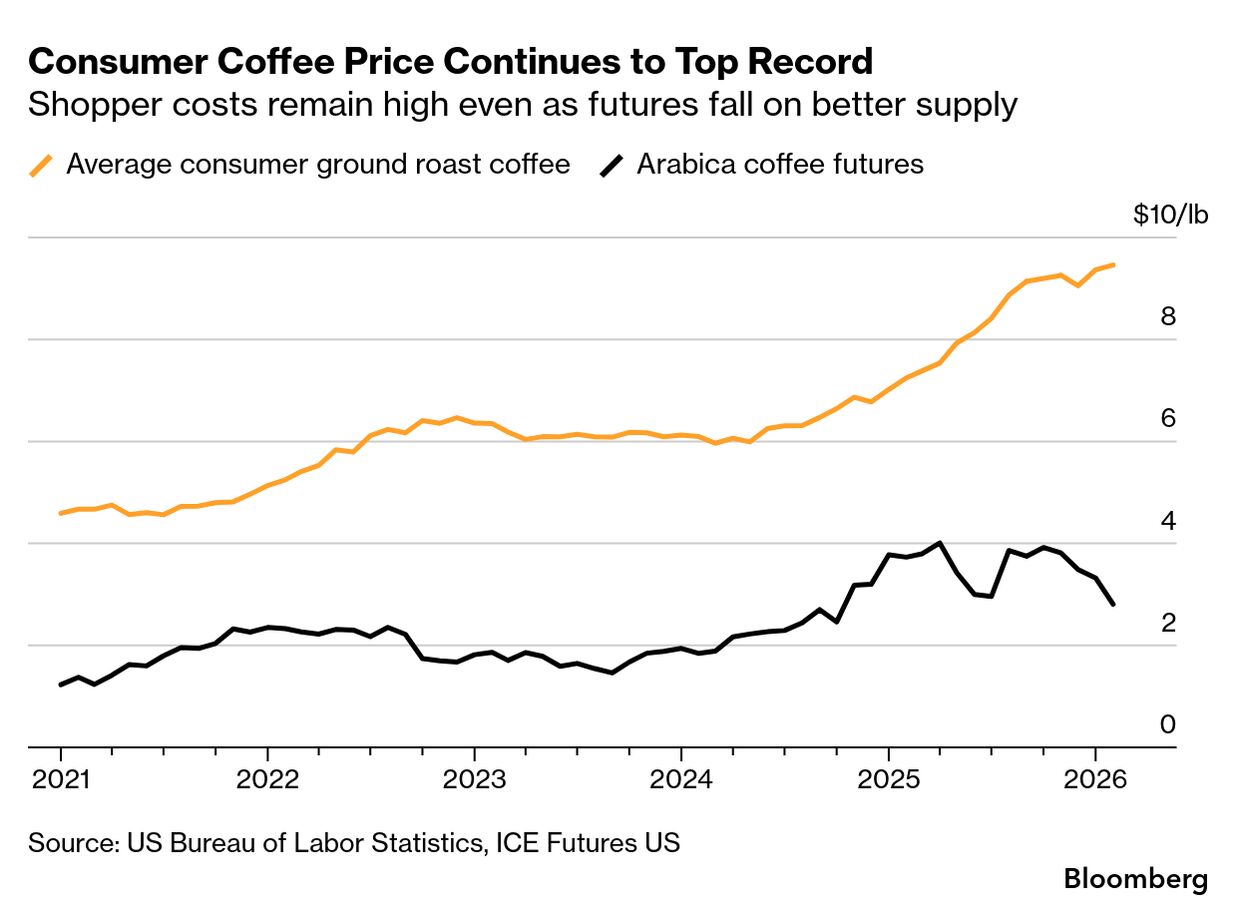
Average US consumer prices for coffee were $9.459 a pound in February, reaching a new record, according to the Bureau of Labor Statistics. The 31% surge from a year earlier made it one of the biggest drivers of food inflation last month, and the impact from earlier production shocks and tariffs is expected to linger.
Commodity prices for America’s favorite morning beverage started surging in 2024 as poor weather hurt harvests in top growers Brazil and Vietnam. The rally intensified last year amid the Trump administration’s sweeping tariffs. Futures have since plummeted, falling about 17% so far this year as supplies improve and some tariffs are lifted.
But for consumers and US coffee roasters, whose supplies were locked in months ago at far higher rates, the pain is far from over.
“There weren’t any magical deals to be found that were going to bring in coffee costs” at 2025 levels, said Katie Carguilo, director of coffee at Counter Culture Coffee. The specialty roaster, which sources beans globally, is paying about 20% more this year for green, unroasted beans.
Tariffs are compounding the strain. Counter Culture expects a $200,000 hit from levies this year as it works through higher-cost inventories, adding to the $1.9 million cost from last year.
Shopper costs remain high even as futures fall on better supply
Coffee, along with beef, remains one of the more stubborn pockets of food inflation even as broader consumer price pressures eased in February. That stickiness underscores the political sensitivity of grocery bills as the Trump administration vows to bring down costs for Americans. Many consumers haven’t turned away from coffee but are searching for more economical ways to consume it at home, while seeing the cafe experience as a treat.
Median prices for a drip coffee and a cold brew in February — $3.65 and $5.58, respectively — were both up about 4% from the prior year, according to Toast, a payment provider for restaurants. Sales for those kinds of beverages fell in the fourth quarter of 2025, but consumers still kept purchasing espresso-based beverages like lattes that are harder to make at home, Toast data shows.
Read More: High Coffee Prices Reshape How Americans Get Their Daily Fix
Part of the disconnect in pricing comes down to timing, as there is a significant lag between moves in the futures market and the beans that ultimately land in US warehouses. After Counter Culture purchases coffee, shipments take four to six months to arrive, and the beans are typically used over the following six months. That means lower futures prices would only filter through in early 2027, Carguilo said.
Even then, savings may be modest. Consumers are still paying for their daily caffeine fix, while better returns to farmers over the past year have given them greater leverage to hold onto supplies in wait of more favorable prices.
Brazil shipped 27% less unroasted coffee in February than it did a year earlier, as producers limited offers due to lower prices and a weaker Brazilian real, the country’s exporter group Cecafé said in a Tuesday report. That restraint has limited the downside for exporters and roasters alike.
“The crazy thing is, this is the most expensive coffee has ever been for our company, for our customers,” said Carguilo, whose company raised prices about 10% last February. “And yet the industry is still growing.”