HORMUZ TRACKER: Iranian VLCCs, China-linked Ships Transit Gulf
TL;DR
While Western shipping remains largely suspended in the Strait of Hormuz due to security risks, recent tracking shows increased Iran-linked traffic, including sanctioned VLCCs and China-affiliated vessels. Electronic warfare and AIS deactivation complicate monitoring as hostilities escalate.
Key Takeaways
- •Iran-linked VLCCs and China-affiliated ships show increased transit activity in the Strait of Hormuz despite widespread Western shipping suspensions.
- •Security risks remain high with incidents like the Mayuree Naree attack and electronic warfare tactics affecting real-time vessel tracking.
- •Data accuracy is compromised by AIS deactivation and spoofing, leading to potential upward revisions in historical transit numbers.
Tags

While mainstream Western shipping remains largely suspended through the Strait of Hormuz, recent 24-hour observations reveal a slight increase in Iran-linked traffic, specifically involving two sanctioned VLCCs.
There were eight commercial transits on Tuesday and four more were identified early Wednesday, most of which have ties to Iran or have Chinese commercial links, according to vessel-tracking data compiled by Bloomberg.
This slight increase in activity comes during an escalation in hostilities in the region. The cargo ship Mayuree Naree was hit by an unknown projectile, while transiting the Strait of Hormuz. Another bulk carrier signaling ‘China Owner&Crew’ u-turned away from the strait following the incident, underscoring the heightened security risks.
On Tuesday, US President Donald Trump confirmed the destruction of 10 Iranian mine-laying vessels.
Iranian VLCCs lead outbound fleet while China-linked bulker slips in

Note: Daily count of visible commercial ships based on AIS signals. Total transits in both directions observed until early Mar. 11
Widespread electronic warfare tactics, including spoofing and signal jamming, have made real-time monitoring of traffic increasingly difficult. With several vessels opting to deactivate AIS transponders in high-risk areas, data accuracy is expected to lag, leading to an eventual upward revision of historical transit numbers.
Two sanctioned Iranian VLCCs, were seen exiting the Persian Gulf for Asia early Wednesday. Their drafts suggest both supertankers are fully laden. As much as 13.7 million barrels of Iranian crude has been shipped through the strait since the war began on Feb. 28, according to Tankertrackers.com, a company that specializes in the use of satellite imagery to track vessels.
A convoy of five bulkers, a container-ship, and an LPG carrier—all linked to Iran or China—departed on Tuesday.
Commercial ships seen transiting the waterway out of the Persian Gulf
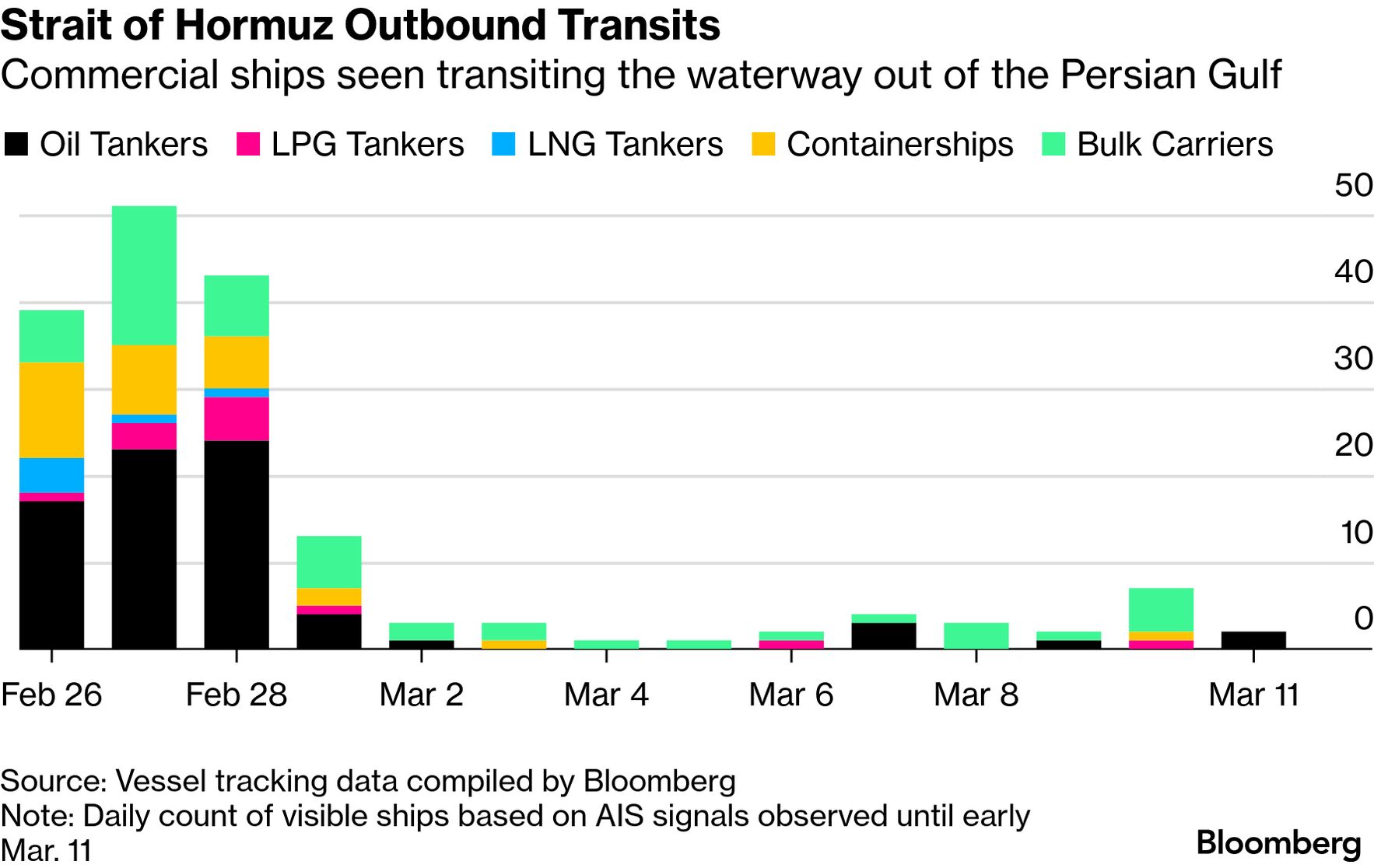
Note: Daily count of visible ships based on AIS signals observed until early Mar. 11
One Iran-affiliated container-ships entered the Persian Gulf on Tuesday and another on Wednesday. In addition, a bulk carrier also entered the Gulf Wednesday signaling ‘China Owner All Chinese.’
Commercial ships seen transiting the waterway into the Persian Gulf
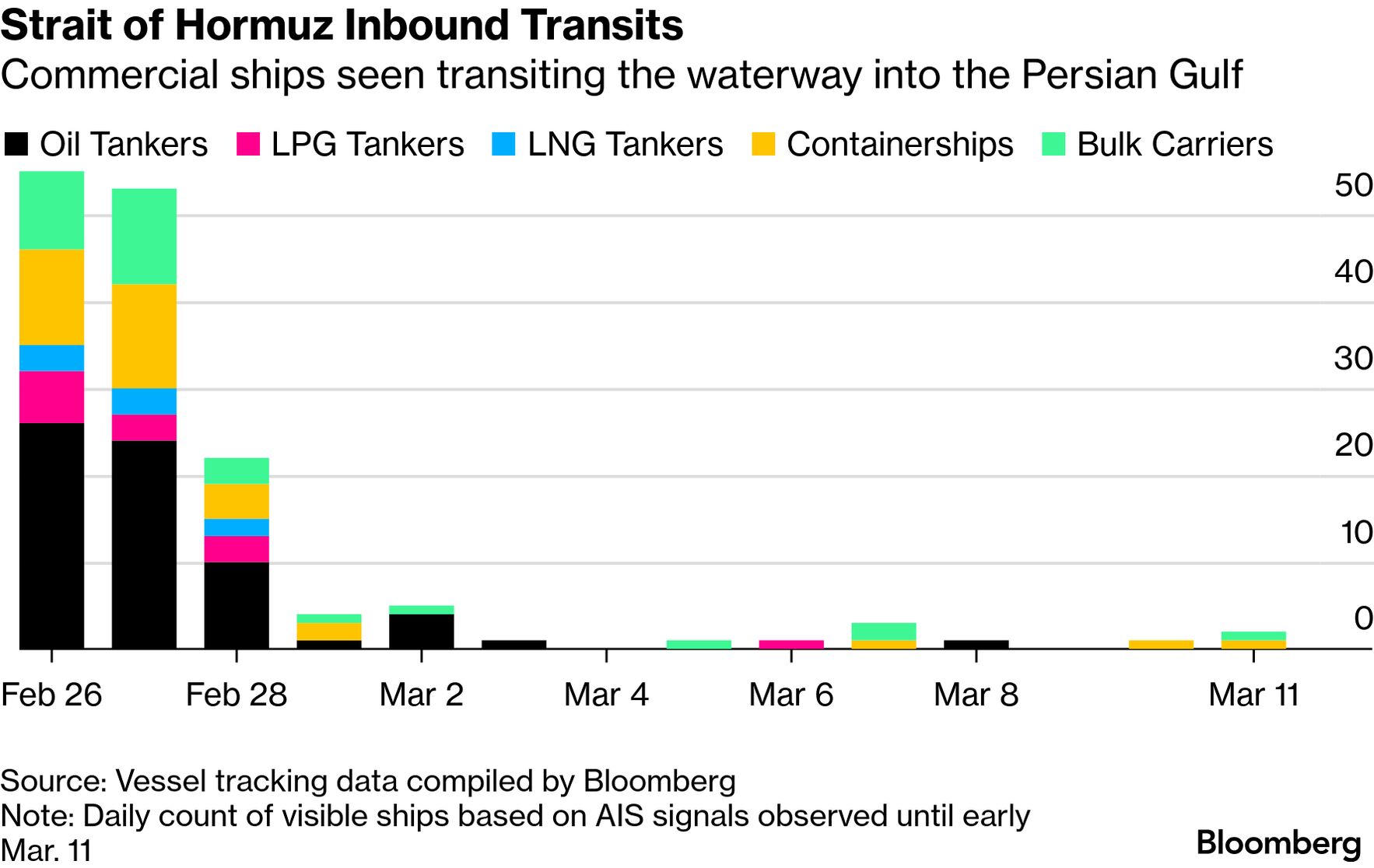
Note: Daily count of visible ships based on AIS signals observed until early Mar. 11
Despite the occasional successful crossing, the bulk of the industry’s tonnage remains stuck on either side of the strait until maritime security is restored. Traffic through the channel was effectively halted following several attacks on merchant ships as Iran retaliated against US and Israeli strikes. Missile and drone activity continues to pose a critical risk to all vessels in the vicinity.
NOTE: Because vessels can move without AIS signals until they are well away from Hormuz, automated position signals were compiled over a large area covering the Gulf of Oman, the Arabian Sea and the Red Sea to detect those that may have departed or entered the Persian Gulf.
When potential transits are identified, signal histories are examined to determine if the movement appears genuine, or is the result of spoofing — where electronic interference can falsify the apparent position of a ship.
Some transits may not have been detected if vessels’ transponders haven’t been switched back on. Iran-linked oil tankers often steam from the Persian Gulf without broadcasting AIS signals until they reach the Strait of Malacca about 10 days after passing Fujairah. Other ships may be adopting similar tactics and won’t show up on tracking screens for many days.
NOTE: This Hormuz tracker will be published during heightened tensions involving Iran, and aims to capture traffic for all classes of commercial shipping.