Anthropic, OpenAI Dial Back Safety Language as AI Race Accelerates
TL;DR
Anthropic and OpenAI are softening their AI safety commitments as competition intensifies. Anthropic removed a key pledge to halt training without safeguards, while OpenAI dropped 'safely' from its mission statement. These changes reflect shifting priorities amid rapid industry growth and geopolitical pressures.
Key Takeaways
- •Anthropic has revised its Responsible Scaling Policy, removing a commitment to stop AI training if risk mitigations aren't fully in place.
- •OpenAI also changed its mission statement, eliminating the word 'safely' while maintaining its goal to benefit humanity with AGI.
- •The policy shifts signal AI companies are prioritizing commercial competitiveness over strict safety frameworks as the industry race accelerates.
- •Anthropic's stance contrasts with its refusal to grant the Pentagon full access to Claude, highlighting complex relationships with government contracts.
- •Experts suggest the language changes reflect evolving political dynamics and investor signaling rather than solely Pentagon business considerations.
Tags
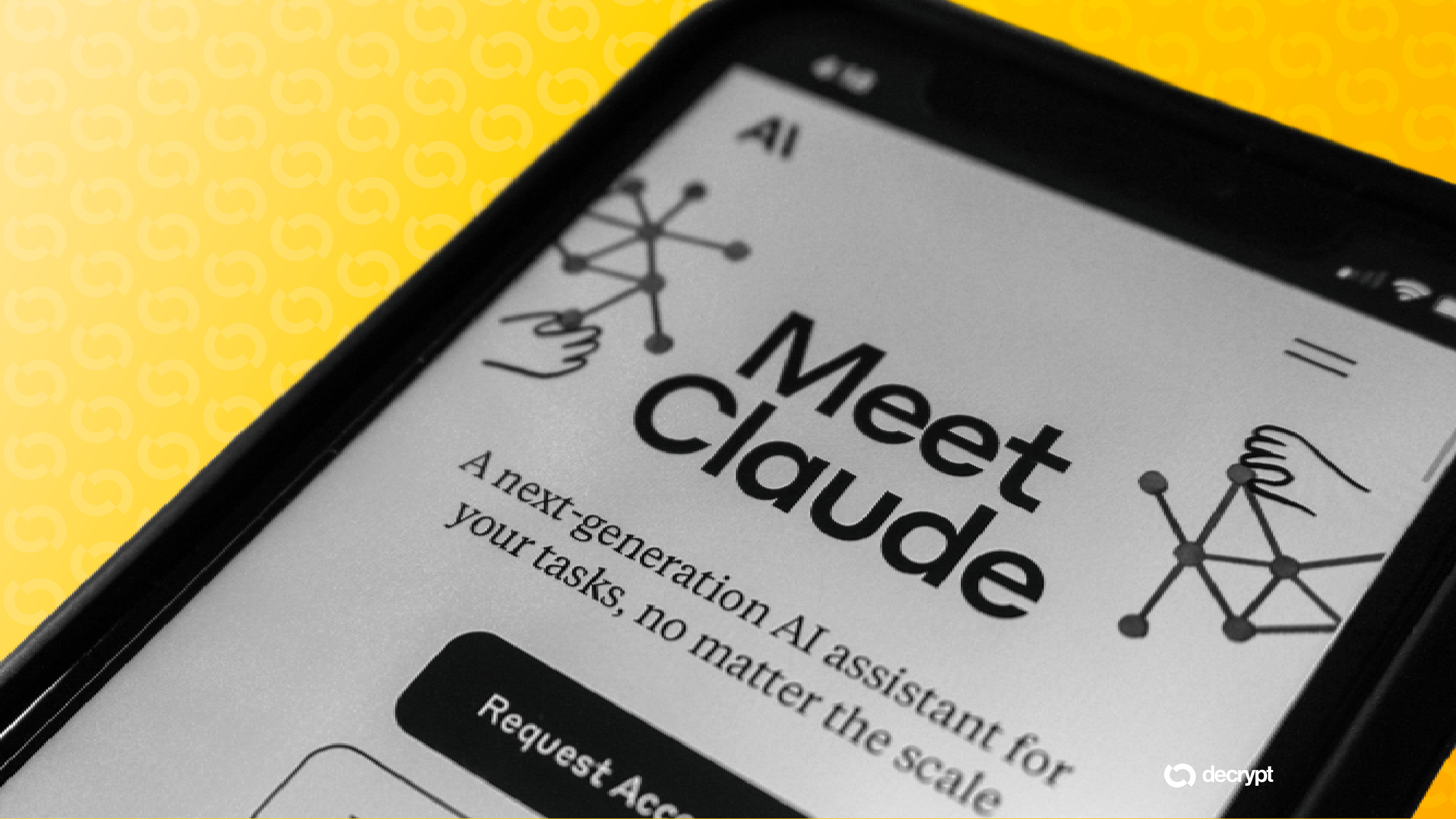
Anthropic has dropped a central safety pledge from its Responsible Scaling Policy, according to a report by TIME. The changes loosen a commitment that once barred the Claude AI developer from training advanced AI systems without guaranteed safeguards in place.
The move reshapes how the company positions itself in the AI race against rivals OpenAI, Google, and xAI. Anthropic has long cast itself as one of the industry’s most safety-focused labs, but under the revised policy, Anthropic no longer promises to halt training if risk mitigations are not fully in place.
“We felt that it wouldn't actually help anyone for us to stop training AI models,” Anthropic’s chief science officer, Jared Kaplan, told TIME. “We didn't really feel, with the rapid advance of AI, that it made sense for us to make unilateral commitments … if competitors are blazing ahead.”
The change comes as Anthropic finds itself embroiled in a public dispute with U.S. Defense Secretary Pete Hegseth over refusing to grant the Pentagon full access to Claude, making it the only major AI lab among Google, xAI, Meta, and OpenAI to take that stance.
Edward Geist, a senior policy researcher at the RAND Corporation, said the earlier “AI safety” framing emerged from a specific intellectual community that predated today’s large language models.
“As of a few years ago, there was the field of AI safety,” Geist told Decrypt. “AI safety was associated with a particular set of views that came out of the community of people who cared about powerful AI before we had these LLMs.”
Geist said early AI safety advocates were working from a very different vision of what advanced artificial intelligence would look like.
“They ended up conceptualizing the problem in a way that, in some respects, was envisioning something qualitatively different from these current LLMs, for better or worse,” Geist said.
Geist said the language change also sends a signal to investors and policymakers.
“Part of it is signaling to various constituencies that a lot of these companies want to give the impression that they are not holding back in the economic competition because of concerns about ‘AI safety,’” he said, adding that the terminology itself is changing to fit the times.
Anthropic is not alone in revising its safety language.
What defines AI safety?
A recent report by the non-profit news organization, The Conversation, noted how OpenAI also changed its mission statement in its 2024 IRS filing, removing the word “safely.”
The company’s earlier statement pledged to build general-purpose AI that “safely benefits humanity, unconstrained by a need to generate financial return.” The updated version now states its goal is “to ensure that artificial general intelligence benefits all of humanity.”
“The problem with the term AI security is that no one seems to know what that means exactly,” Geist said. “Then again, the AI safety term was also contested.”
Anthropic’s new policy emphasizes transparency measures such as publishing “frontier safety roadmaps” and regular “risk reports,” and says it will delay development if it believes there is a significant risk of catastrophe.
Anthropic and OpenAI’s policy shifts come as the companies look to strengthen their commercial position.
Earlier this month, Anthropic said it raised $30 billion at a valuation of about $380 billion. At the same time, OpenAI is finalizing a funding round backed by Amazon, Microsoft, and Nvidia that could reach $100 billion.
Anthropic and OpenAI, along with Google and xAI, have been awarded lucrative government contracts with the U.S. Department of Defense. For Anthropic, however, the contract appears in doubt as the Pentagon weighs whether to cut ties to the AI firm over access complaints.
As capital pours into the sector and geopolitical competition intensifies, Hamza Chaudhry, AI and National Security Lead at the Future of Life Institute, said the policy change reflects shifting political dynamics rather than a bid for Pentagon business.
“If that were the case, they would have just backed down from what the Pentagon said a week ago,” Chaudhry told Decrypt. “Dario [Amodei] wouldn't have shown up to meet.”
Instead, Chaudhry said the rewrite reflects a turning point in how AI companies talk about risk as political pressure and competitive stakes rise.
“Anthropic is now saying, ‘Look, we can't keep saying safety, we can't unconditionally pause, and we're going to push for much lighter-touch regulation,’” he said.