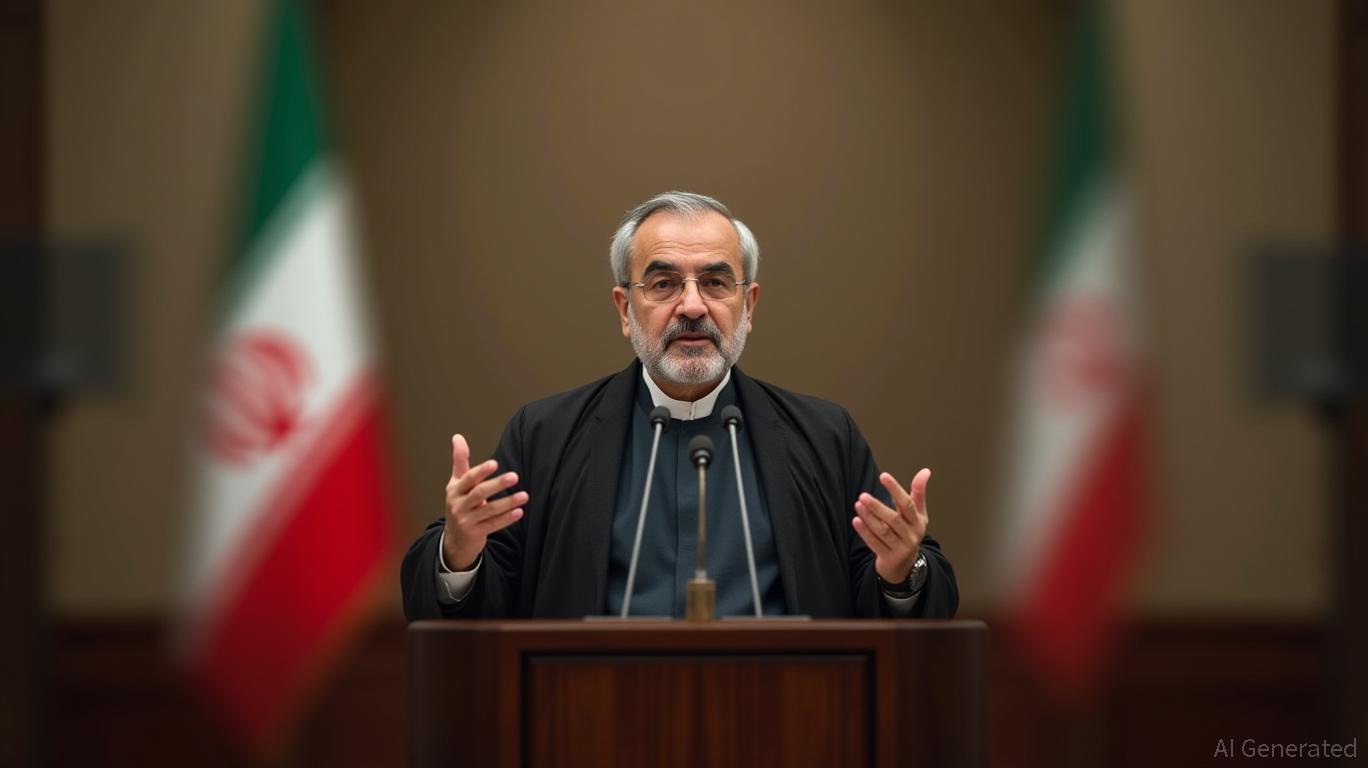
Iranian president: We will overcome these disturbances, and the final victory will be the share of the Iranian people.
TL;DR
Iranian President Masoud Pezeshkian vows to overcome domestic unrest and foreign pressures, emphasizing national unity amid protests, sanctions, and geopolitical tensions. The crisis has resulted in significant casualties and economic challenges, with Iran accusing the U.S. and Israel of interference while preferring dialogue over conflict.
Iranian president: We will overcome these disturbances, and the final victory will be the share of the Iranian people.
Iranian President Vows to Overcome Unrest Amid Escalating Geopolitical and Economic Pressures
Iran’s President Masoud Pezeshkian has emphasized national unity as a cornerstone for addressing ongoing challenges, including recent anti-government protests and external pressures from the United States and Israel. Speaking in Golestan province on February 12, 2026, Pezeshkian accused foreign powers of exploiting Iran’s domestic instability, stating, “Their hearts are not with Iran,” while acknowledging the need to “heal the great wound” caused by recent unrest according to a statement.
The protests, which began in late January 2026 over economic grievances, escalated into widespread violence, with armed groups reportedly infiltrating demonstrations. Iranian authorities attributed the chaos to foreign-backed conspiracies, citing U.S. and Israeli involvement in funding, training, and media support for the perpetrators as reported. A government report revealed 3,117 deaths, including 2,427 civilians and security personnel, underscoring the crisis’s human and economic toll according to official figures.
Internationally, the European Union and United States have imposed sanctions targeting Iranian officials and entities linked to human rights violations, while the UN Human Rights Council condemned the crackdown as documented. Meanwhile, the U.S. military has heightened its regional presence, with the USS Abraham Lincoln carrier group entering the Middle East—a move seen as a direct signal to Tehran according to military reports. Despite these tensions, Iranian officials have reiterated a preference for dialogue over conflict, with government spokesperson Fatemeh Mohajerani stating, “We have previously endured a multi-stage war,” referencing the 1980–1988 Iran-Iraq War in a public address.
For investors, the situation highlights risks to Iran’s economic stability, including potential military escalation, sanctions, and domestic volatility. Pezeshkian’s focus on unity and resilience contrasts with ongoing challenges such as frozen transactions, blocked projects, and foreign-backed dissent as noted. While the government asserts its commitment to “serving the people despite all pressures,” the path to recovery remains uncertain amid geopolitical crosscurrents and internal divisions.
Source: Presstv.ir, February 12, 2026
Source: Facebook/YeniSafakEnglish, February 2026
Source: Council on Foreign Relations, February 2026