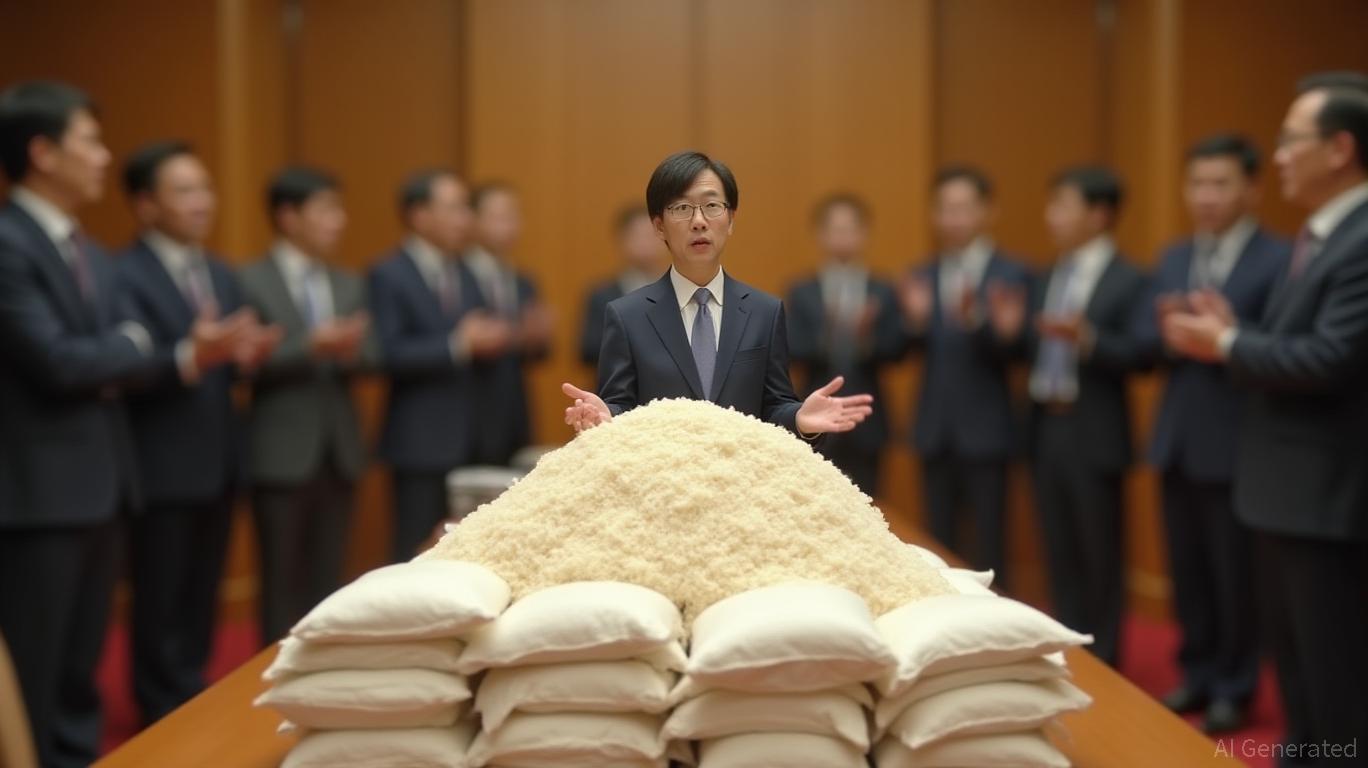
South Korea announces release of 150,000 tons of rice from state reserves to stabilize supply and prices
TL;DR
South Korea releases 150,000 tons of rice from state reserves to combat rising prices and supply shortages, using a lending mechanism to stabilize the market without depleting reserves.
Tags
South Korea announces release of 150,000 tons of rice from state reserves to stabilize supply and prices
South Korea Releases 150,000 Tons of Rice from State Reserves to Stabilize Supply and Prices
In response to persistent inflation in rice prices, the South Korean government announced on February 27, 2026, the release of 150,000 tons of rice from its strategic reserves to address supply shortages and curb rising costs. The Ministry of Agriculture, Food and Rural Affairs (MAFRA) emphasized that this measure is part of a broader "rice supply and demand stabilization plan," with an initial focus on distributing 100,000 tons of 2025-crop rice. The remaining 50,000 tons will be deployed contingent on market conditions.
Farm-gate rice prices have surged 21% year-over-year, reaching 57,630 won (approximately $39) for a 20-kilogram bag as of February 15, according to the Ministry of Data and Statistics (MODS). This marks a continuation of a trend that began in August 2024, defying the typical seasonal pattern of price peaks in October followed by declines. Analysts attribute the sustained upward pressure to supply-side factors, including farmers withholding harvests in anticipation of further price increases.
To address the imbalance, the government will employ a "lending" mechanism, wherein state-held rice is temporarily provided to private milling companies. These companies are expected to return equivalent quantities of newly harvested rice after the upcoming harvest season, effectively injecting supply into the market without permanently depleting reserves. This approach follows earlier interventions, including the release of 60,000 tons in January 2026 and a temporary halt to planned purchases of 100,000 tons of 2025 rice.
Retail prices have also risen sharply, with a 20-kilogram bag averaging 63,000 won ($44) as of February 20, a 15% annual increase, according to government data. MAFRA noted that current rice inventories held by cooperatives and processors are approximately 110,000 tons below levels from the previous year, exacerbating supply concerns.
While the government aims to restore market equilibrium, some experts caution that price-support policies risk distorting market signals and encouraging speculative behavior. MAFRA has pledged to monitor the impact of the intervention and adjust measures as needed.
This action underscores South Korea's proactive stance in managing food security amid global inflationary pressures and domestic supply challenges.
Source: Ricenews Today, Chosun Biz
Source: Kyodo News