US Stocks Churn as Inflation Data Takes Backseat to War, Oil
TL;DR
US stocks were mixed as Middle East conflict and oil price spikes overshadowed tame pre-war inflation data. The S&P 500 edged up slightly, while energy and AI stocks gained amid volatility. Investors are looking past the CPI report, focusing on upcoming Fed decisions and geopolitical risks.
Key Takeaways
- •US stocks showed mixed performance, with the S&P 500 up 0.05% and small-cap stocks falling, as Middle East war and oil price spikes dominated market sentiment over tame inflation data.
- •Pre-war CPI data indicated easing inflation, but investors largely ignored it due to concerns over rising energy costs potentially pushing inflation higher in coming months.
- •Geopolitical tensions, including Iran's military actions and oil reserve releases, contributed to market volatility, with energy stocks up 1.2% and sectors like AI infrastructure gaining.
- •Individual stock moves included Oracle surging 12% on strong AI demand, while Campbell's and AeroVironment fell on profit and revenue forecasts, highlighting sector-specific impacts.
- •Attention is shifting to the upcoming Fed meeting and PCE inflation data, with expectations for rate holds and focus on long-term inflation trends amid ongoing economic uncertainties.
Tags
US stocks struggled for direction on Wednesday as the war in the Middle East continued and tame inflation data from before hostilities began failed to shift sentiment.
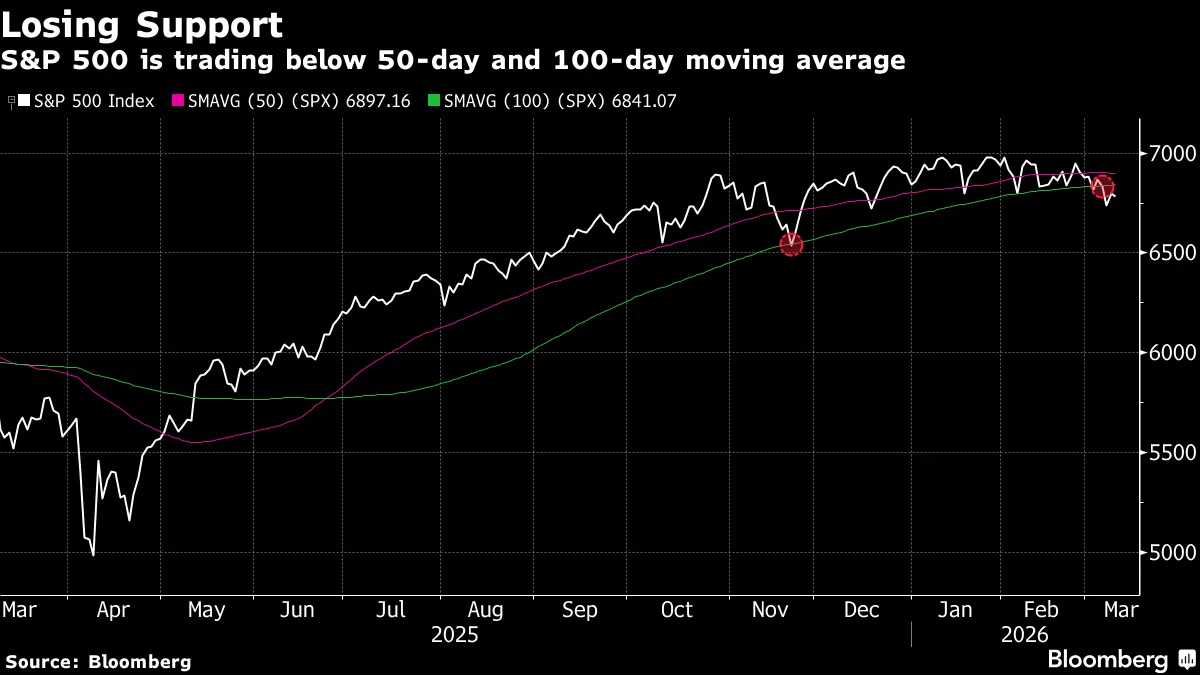
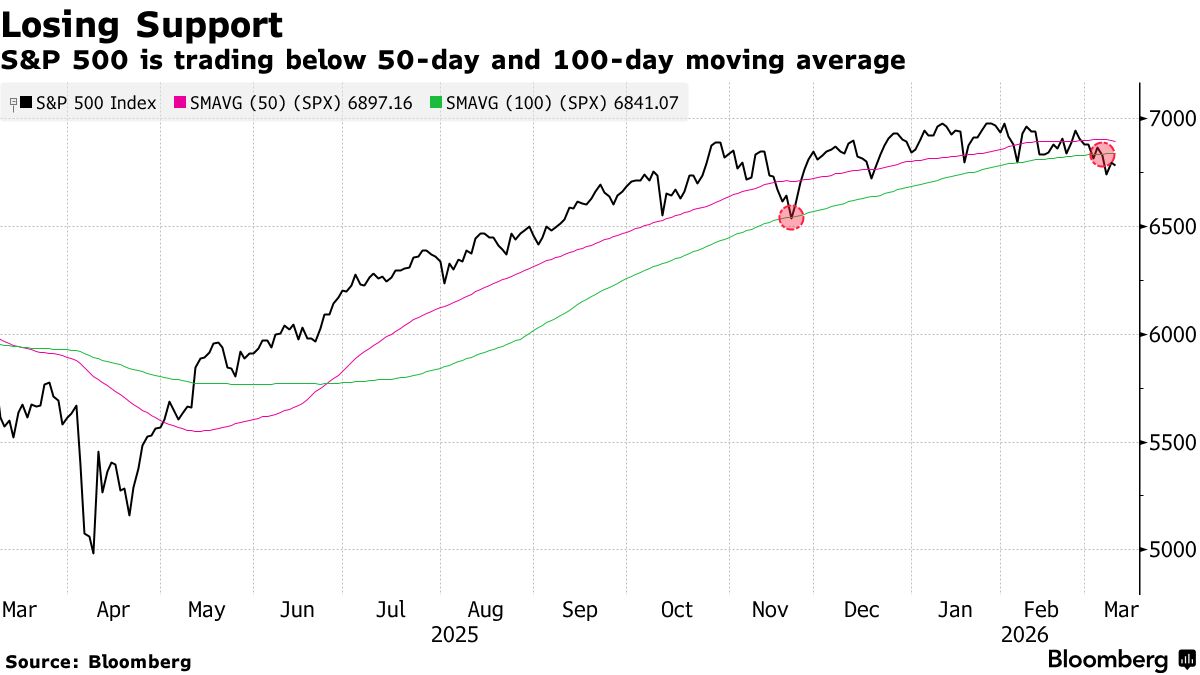
The S&P 500 Index was 0.05% higher at 10:16 a.m. in New York, while the Nasdaq 100 Index rose 0.4% and small-cap and blue-chip stocks fell. Brent crude rose 3.3% to $90.71 a barrel. The S&P 500 is still below both its 50- and 100-day moving averages, with Wall Street traders poring over charts to determine how much further the gauge could fall.
Consumer price index data showed underlying inflation slowed in February from a month earlier, which suggests price pressures had eased before the war in Iran. Due to the timeframe of the data, investors are likely to look past it.
“Reading too far into today’s CPI in most respects amounts to arguing over the dinner menu on the Titanic, since the economy has struck an energy-cost iceberg,” said Brad Conger, chief investment officer at Hirtle Callaghan. “In our view, it confirms that underlying inflation is tracking with employment — which is to say — downward trending.”
The data comes amid investor concerns over spiking oil prices and fear it could lead to higher inflation as well as a hawkish turn from the Federal Reserve.
Skyler Weinand, chief investment officer at Regan Capital, said this could be the last year-over-year CPI print that is around 2.4% “for a while,” as the reading may move back toward 3% or above.
“Tariff refunds when they come, along with the spike in energy prices will show up over the next few months and create a move higher in year-over-year inflation,” said Weinand.
Also expected this week is a readout on the Federal Reserve’s preferred inflation gauge, the personal consumption expenditures price index. After that traders will turn their focus toward next week’s Fed meeting.
“Regardless of today’s figures, the Federal Reserve is widely expected to hold rates next week,” said Quilter’s Lindsay James. “Markets are working on the assumption that no further cuts will take place during Powell’s tenure as Chair, and attention is instead turning towards the arrival of Kevin Warsh later in the spring.”
War Continues
The conflict in the Middle East raged on, with a report that Iran is shifting from reciprocal to continuous strikes. The International Energy Agency approved its largest-ever release of emergency oil reserves. The agency said member states will release 400 million barrels. Earlier, the UK Navy said three vessels were struck with suspected projectiles in the Strait of Hormuz and Persian Gulf.
Stocks have endured wild swings over the last few sessions as jittery traders reacted to headlines. Confusion swept across markets on Tuesday after an erroneous social media post claimed the US Navy had escorted an oil tanker through the Strait of Hormuz. Shares soared before turning negative.
“The next few weeks should be volatile as investors assess Iran’s ability to keep oil prices high to pressure the West,” Brian Reynolds, chief market strategist at Reynolds Strategy, wrote in a note.
In individual stock moves, Oracle Corp. surged 12% after posting strong results and giving an outlook that suggested there is little letup in artificial-intelligence computing demand. Campbell’s Co. declined 8.3% after cutting its profit outlook. AeroVironment Inc. tumbled 6.2% as the defense contractor and drone maker gave a third-quarter revenue forecast that missed consensus estimates.
Sectors to Watch
- Energy stocks are currently up 1.2% as Brent crude prices continue to hover around $90 per barrel amid the continuing war in Iran
- Artificial-intelligence infrastructure stocks like CoreWeave Inc., Advanced Micro Devices Inc. and Nvidia Corp. are rising following Oracle’s results
- Financials stocks slip as worries around private credit continued; JPMorgan Chase & Co. is restricting some lending to private credit funds