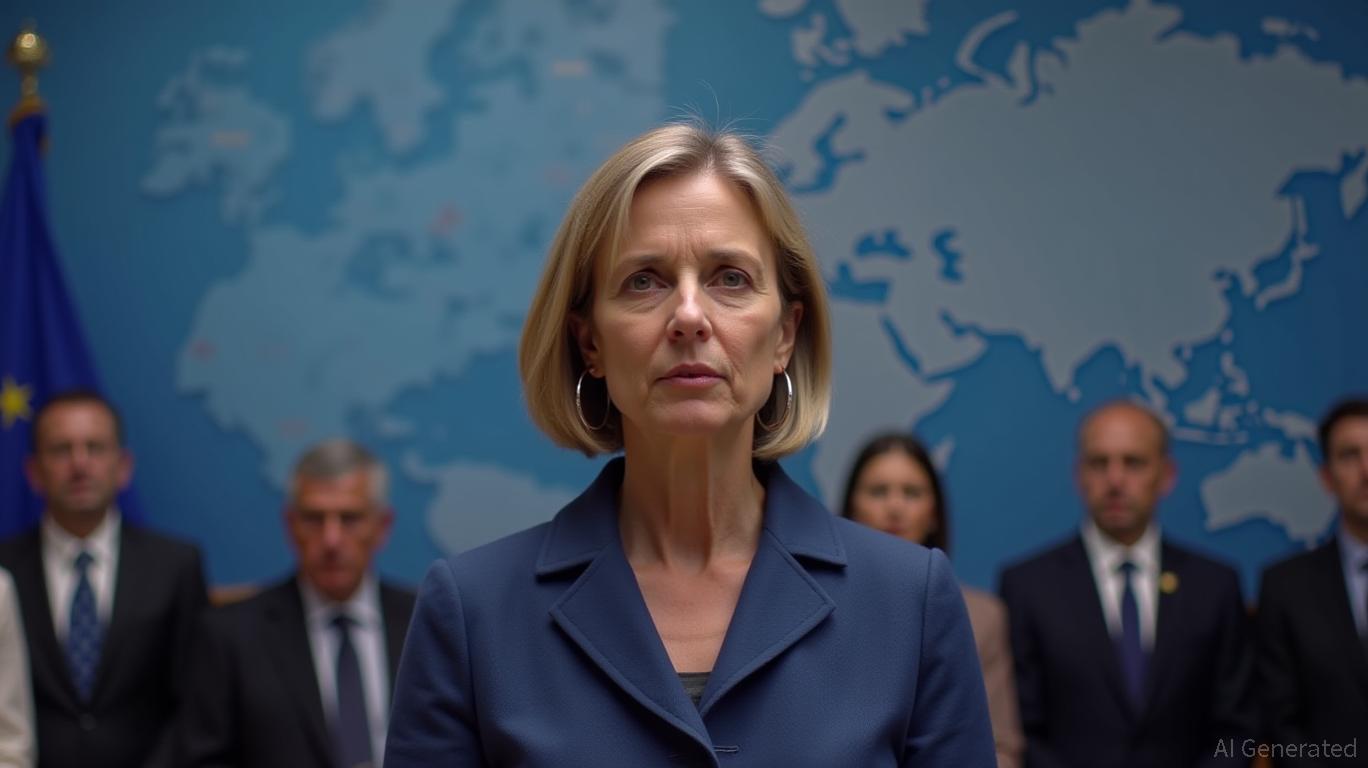
The EU's Kallas says that anyone using force must explain why they are doing so according to international law.
TL;DR
EU's Kaja Kallas emphasizes that force must be justified under international law, citing self-defense or UN authorization. This stance applies globally, from Caribbean tensions to Middle East conflicts, to uphold stability and protect economic interests.
Tags
The EU's Kallas says that anyone using force must explain why they are doing so according to international law.
The European Union’s High Representative for Foreign Affairs, Kaja Kallas, has reiterated that the use of force must align with international law, emphasizing that self-defense or UN Security Council authorization are the only legally recognized justifications. This stance has been consistently applied across multiple geopolitical contexts, including recent tensions in the Caribbean, the Middle East, and ongoing conflicts in Eastern Europe.
At the CELAC-EU summit in Colombia, Kallas addressed U.S. military strikes on alleged narco-boats, stating that such actions must adhere to the UN Charter's strict criteria for the use of force. Similar calls for restraint were echoed during the EU’s response to escalating hostilities between the U.S., Israel, and Iran, where Kallas stressed the need to avoid actions that could destabilize global supply chains or disrupt critical waterways like the Strait of Hormuz according to EU statements. The EU’s position underscores concerns about economic fallout, particularly for energy markets and trade-dependent economies.
Kallas has also highlighted the broader implications of violating international law, citing Russia’s invasion of Ukraine as a direct challenge to the rules-based order. The EU has reinforced its commitment to collective security through defense investments and partnerships with Indo-Pacific nations, framing adherence to legal norms as essential for long-term stability.
For investors, the EU’s emphasis on legal accountability signals a focus on mitigating risks from unilateral military actions, which can disrupt markets and increase systemic volatility. By prioritizing multilateral frameworks, the EU aims to balance geopolitical tensions while safeguarding economic interests.