Elon Musk: Nvidia’s Self-Driving Tech Is Still Years From Challenging Tesla
TL;DR
Elon Musk claims Nvidia's new self-driving technology is 5-6 years from challenging Tesla, citing the gap between partial autonomy and fully safe self-driving. Nvidia's CEO praised Tesla's tech as 'the most advanced AV stack' while highlighting their own decade-long development.
Key Takeaways
- •Elon Musk believes Nvidia's autonomous driving software won't seriously compete with Tesla for 5-6 years due to the long development timeline from partial to full autonomy.
- •Nvidia CEO Jensen Huang praised Tesla's self-driving technology as 'the most advanced AV stack in the world' while discussing Nvidia's own decade-long development efforts.
- •Tesla's advantage comes from its existing fleet with standardized cameras and AI hardware, using a vision-only approach without lidar, radar or ultrasonic sensors.
- •The autonomous driving industry faces ongoing challenges, as demonstrated by Waymo's recent software recall and service suspension due to safety and reliability issues.
- •Legacy automakers face additional delays in deploying self-driving technology due to the time required to integrate cameras and AI computers into production vehicles at scale.
Tags
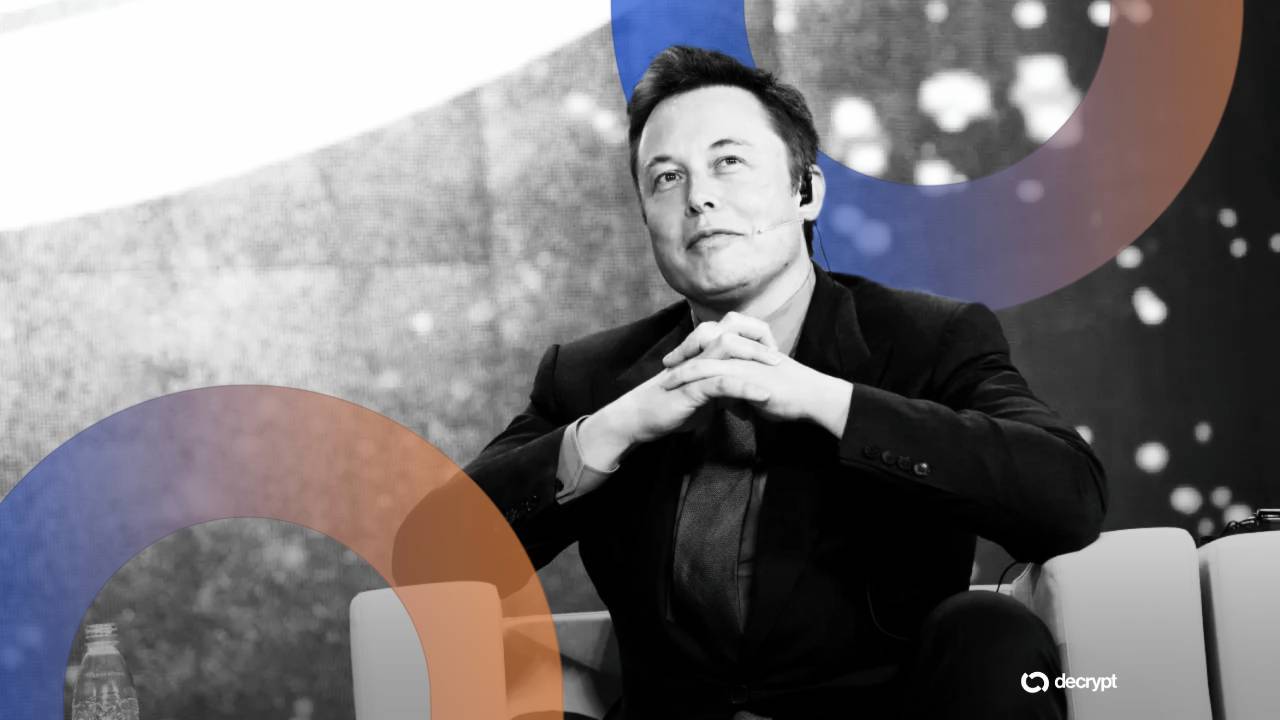
Tesla CEO Elon Musk said Nvidia’s latest autonomous driving software will not pose serious competitive pressure on Tesla for several years.
Nvidia showed off its new self-driving technology at CES 2026 on Monday.
The software centers around Alpamayo, an open-source family of AI models designed to handle complex urban driving using camera-based video input. The company demonstrated the system navigating a Mercedes car through city streets in Las Vegas.
But Musk said the software remains five to six years from posing a real threat to Tesla, citing the long gap between partial autonomy and a safer-than-human driving, fully self-driving vehicle, as well as slow hardware deployment by automakers.
“The actual time from when [a self-driving car] sort of works to where it is much safer than a human is several years,” Musk wrote. He added that legacy automakers face an additional delay because of the time required to design and integrate cameras and AI computers into production vehicles at scale.
Despite Musk’s comments, Nvidia CEO Jensen Huang praised Tesla’s self-driving technology as “the most advanced AV stack in the world.”
“I think Elon’s approach is about as state-of-the-art as anybody knows of autonomous driving and robotics,” Huang told Bloomberg. “It’s a stack that’s hard to criticize. I wouldn’t criticize it. I would just encourage them to continue to do what they’re doing.”
During a Keynote speech at CES, Huang said the chip manufacturer's work on self-driving cars goes back nearly a decade.
“We started working on self-driving cars eight years ago, and the reason for that is because we reasoned early on that deep learning and artificial intelligence were going to reinvent the entire computing stack,” he said. “And if we were ever going to understand how to navigate and how to guide the industry towards this new future, we have to get good at building the entire stack.”
Progress stalls
However, advances in autonomous driving have not reduced the challenges for the budding industry.
Waymo, which operates fully driverless robotaxis in several U.S. cities, recently issued a voluntary software recall in December after vehicles failed to stop for school buses.
That same month, the company also temporarily suspended service in San Francisco after a power outage caused vehicles to stall at intersections and block traffic.
During the outage, Musk said on X that Tesla’s limited robotaxi service, which operates with a human safety monitor, was unaffected.
Musk first hinted at the idea of self-driving cars in 2013, with the first version of Autopilot launching two years later.
Tesla’s advantage lies in its existing fleet and vision-only system, with vehicles already shipping standardized cameras and onboard AI hardware.
Under its “Tesla Vision” approach, the company relies primarily on cameras rather than lidar and has removed radar and ultrasonic sensors from many vehicles and markets.
Tesla’s autonomous driving ambitions have drawn scrutiny, with critics questioning the safety and reliability of its Autopilot and Full Self-Driving features following a series of high-profile crashes, some of which resulted in fatalities and federal investigations.