Fed Brings Goldilocks Outcome for Asia Markets, Strategists Say
TL;DR
Analysts say the Fed's less-hawkish-than-expected meeting provides relief for Asian markets, boosting currencies, bonds, and cyclical stocks. The outcome supports risk appetite but leaves assets sensitive to future data.
Key Takeaways
- •The Fed's decision avoids a hawkish cut scenario, easing financial conditions and supporting Asian risk assets.
- •Asian currencies, particularly high-beta ones like KRW and IDR, are expected to strengthen due to dollar weakness.
- •Short-dated bonds and high-grade credit benefit most directly from Fed liquidity injections.
- •Equity gains will be selective, favoring cyclical stocks and exporters rather than broad-based rallies.
- •Markets remain data-dependent, with attention shifting to upcoming US CPI, NFP, and BOJ meetings.
Tags
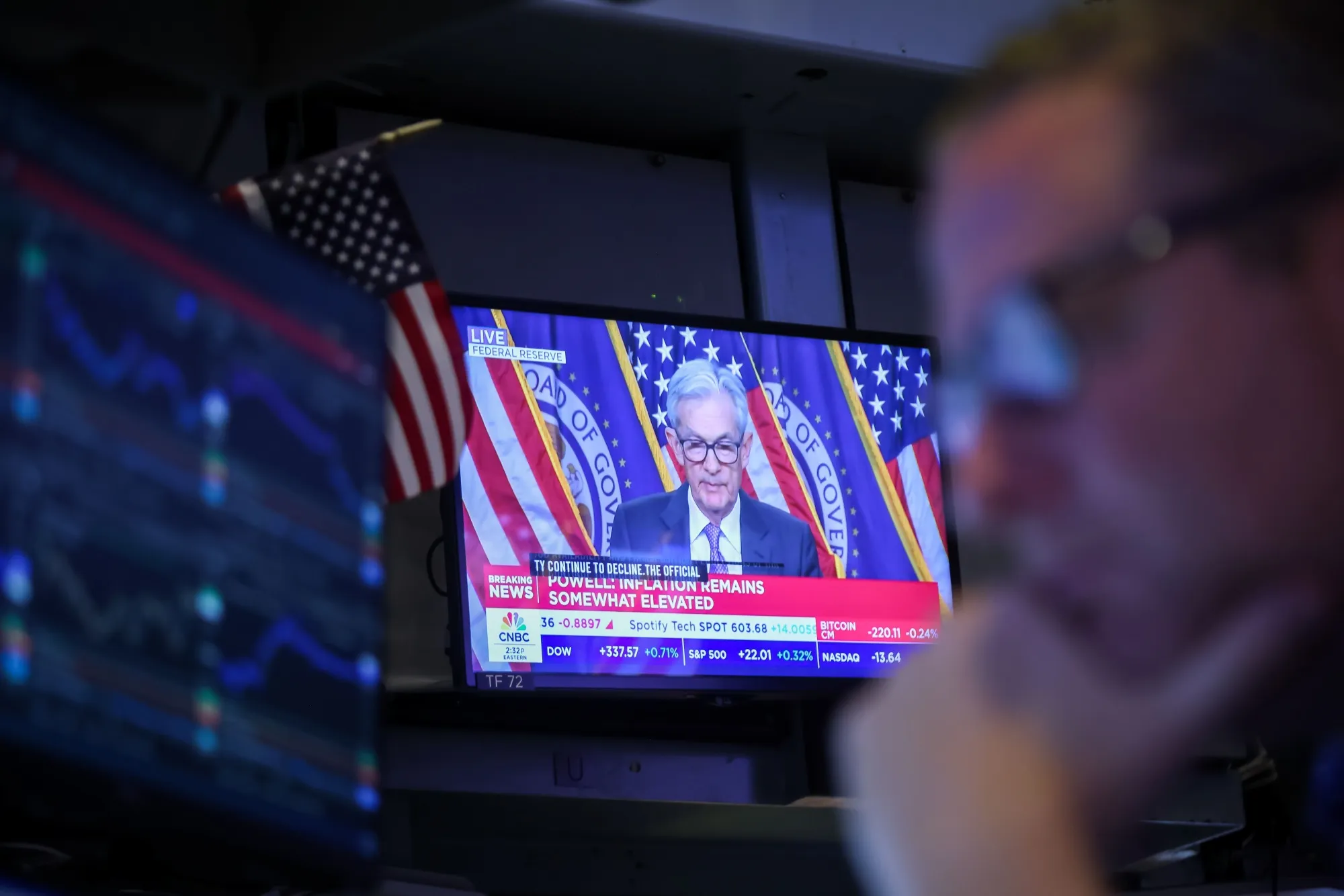
A less-hawkish than expected Federal Reserve meeting will bring a degree of relief to Asia’s markets across asset classes, according to analysts.
The region’s currencies should get a boost from weakness in the dollar, with short-dated bonds and high grade credit benefiting from the US central bank’s liquidity injections, strategists said. Cyclical stocks and the shares of exporters are also seen benefiting.
Here are a selection of comments from market watchers:
Nick Twidale, chief analyst at AT Global Markets
“I think Asian markets will kick off understandably on the front foot today after the Fed cut rates as expected and US markets rallied.”
“I am however hesitant on how much momentum that last nights cut will bring to global markets as the forward guidance was probably less dovish than most investors were hoping for. I think we may see some fairly choppy markets in the sessions ahead as the market digests what Jerome Powell had to say.”
“It feels like the Fed and Powell have taken a very ‘middle of the road’ call as far as markets are concerned. Overall I think that it’s slightly hawkish as the Fed are indicating 1 more cut in 2026 and the market wants 2 at least. But they have left it so open that’s why we will see choppy markets in the days ahead.”
Takashi Ito, a senior strategist at Nomura Securities
“FOMC meeting passing without major concerns, along with upward revisions to the 2026 GDP forecast and downward revisions to inflation projections is positive for the stock market. In Japan, this provides tailwinds for auto stocks, and over time, housing-related stocks may also attract buying interest.”
“The improved outlook for the US economy indicated by the FOMC also makes it easier for the Bank of Japan to decide on interest rate hikes and allows the market to better anticipate Japan’s monetary policy, which is also positive for the market.”
Rinto Maruyama, rates strategist at SMBC Nikko Securities
“Markets are betting on further US rate cuts as even Powell, who remains upbeat on the economy, signaled another cut. This also stems from Trump’s criticism that the Fed should have cut by 50 bps, and growing expectations that Kevin Hassett could become the Fed’s next chair.”
“With US interest rates falling, a broad range of currencies is likely to strengthen against the dollar. Beyond the rate outlook, many investors are increasingly focused on the question of the Fed’s neutrality. As Trump continues to pressure the central bank, there is a risk that the Fed could cut rates while overlooking inflation concerns. That could push up inflation expectations and undermine confidence in the dollar — a theme that may dominate markets next year.”
Tomo Kinoshita, global market strategist at Invesco Asset Management Japan Ltd.
“The combination of stronger growth expectations and softer inflation forecasts has increased market expectations for Fed rate cuts, fueling a rally in US equities, reinforcing expectations for deeper cuts in 2026, and pushing US long-term yields lower.”
“In Asia, I anticipate a positive tone for equities and currency appreciation. Export-oriented stocks should benefit from improved US growth prospects, while the perception that the Fed is leaning more toward easing could be viewed as a supportive factor for rate cuts by Asian central banks. This, in turn, may provide a tailwind for domestic demand-related stocks.”
Masayuki Koguchi, executive chief fund manager at Mitsubishi UFJ Asset Management
“The rate cut was less hawkish than anticipated, pushing down US long-term interest rates, and this decline is likely to spread to Japanese long-term rates as well.
“However, views on future rate cuts and the economic outlook remain divided. US economic indicators are unclear. This outcome reflects the difficulty in predicting whether the stance will shift toward hawkish or dovish in the future.”
Phillip Wool, head of portfolio management at Rayliant Global Advisors Ltd.
“I think it’s modestly bullish for the yen, though a cut at this meeting was largely priced in, as is a BOJ hike on Dec. 19th, so I don’t expect a big move.”
Yuya Yokota, a foreign-exchange trader at Mitsubishi UFJ Trust and Banking Corp. in New York
”The FOMC was not as cautious about future rate cuts as had been feared, and its announcement of new purchases of shorter-term Treasury securities came as a surprise, leading to dollar selling. Attention now turns to whether buying will emerge below the 156 yen level, though upside is capped around the mid-157 yen range.”
Christopher Wong, a strategist at Oversea-Chinese Banking Corp. in Singapore
“The hawkish cut outcome was well anticipated and managed by markets all week (as dovish expectations were pared). Hence post-market reaction has been positive for non-dollar currencies. We should expect Asian FX to trade supported given that the FOMC event risk contained no major surprises but further dollar momentum would likely depends on US CPI and NFP next week.”
“The yen may well see some support with the BOJ likely to hike next week while FOMC risk fades. But any meaningful recovery in the yen would require not just the BOJ to follow through with stronger guidance but also for policymakers to demonstrate fiscal prudence and for the dollar to stay soft. If we can break below 155.70/80 levels, then yen bulls may find some courage to bring it down to 154.40/60 levels again.”
Tony Sycamore, market analyst at IG Australia
“The results of the less-hawkish-than-feared FOMC meeting have been obvious to see. US equity markets, gold, and silver have rallied strongly, while the VIX and yields have tumbled.”
“We expect these trends to broadly continue now into year-end, starting with today’s session in Asia, where regional equity markets are expected to hit the turbo chargers.”
Dilin Wu, research strategist at Pepperstone Group Ltd.
“I think the first and clearest winners are short-dated Asian bonds and high-grade credit. When the Fed injects liquidity at the front end, dollar funding immediately becomes less tight, and that usually pulls down short-tenor yields across the region.”
“Asian FX also gets some support from a softer dollar, but Korea and Japan will remain the exceptions. For equities, I believe the beneficiaries will be selective. Cyclicals and exporters tend to react first to easier short-term funding and a weaker dollar, but financials sit in a more complicated spot: cheaper money helps loan demand, yet curve compression caps the upside for margins. In other words, this is not a broad-based equity moment — it’s a rotation story.”
Felix Ryan, a strategist at ANZ Group Holdings Ltd
“Near term the AUD/USD can consolidate post the FOMC, but that does rely on the November labor force survey data supporting the RBA‘s more cautious view on monetary policy. Aside from local developments, the AUD remained tethered to developments in global sentiment and risk assets to remain above 0.66 - though expectations of more FOMC easing, contrasted with the more hawkish outlook for the RBA, can certainly keep the AUD/USD around current levels for now.”
Brendan McKenna, emerging markets economist and FX strategist at Wells Fargo
“I expect EM Asia FX to plat catch up to the rally across EM we saw during the NY session. The hawkish cut from the Fed that so many market participants had been expecting was not delivered, which combined with bigger T-bill purchases, should place further depreciation pressure on the dollar”
“I think EM Asia FX strength will be broad based, but the high beta names like KRW and IDR can outperform. KRW has been on the backfoot a little bit, so valuations look a little more attractive there and can lead to a bit more upside. Similar kind of dynamic for IDR as well”
“Asia may experience both a relief rally and prolonged gain, he said. “Relief comes from the hawkish cut scenario being avoided, but I think the prolonged dollar depreciation and EM FX rally can come from Powell leaving the door open to more cuts in 2026. Data dependence is what he communicated, but he was asked many times whether the easing cycle was over and he said nothing to suggest rate cuts were over”
Hebe Chen, senior market analyst at Vantage Markets in Melbourne
“The Fed delivered what is essentially a Goldilocks outcome for Asian markets — a semi-hawkish cut that eases financial conditions while quietly shifting expectations from a pure rate-cut cycle toward a broader economic-recovery story. That new balance should support risk appetite across Asia, with softer yields lifting equities and currencies and giving regional central banks a little more breathing room.”
“But the message is equally clear: this is controlled normalization, not an all-clear, and Asian assets will stay highly sensitive to any data that challenges the Fed’s optimistic ‘transitory inflation’ narrative.”
Yujiro Goto, chief FX strategist at Nomura Securities Co.
“That only two members voted to keep rates unchanged, that participating members’ outlook remains tilted toward rate cuts, and that the decision to purchase shorter-term government bonds helped “avoid the hawkish shift anticipated by the market.” This suggests the dollar/yen pair is likely to face resistance on the upside heading into next week’s Bank of Japan meeting.”