The Candor of Jerome Powell
TL;DR
Fed Chair Jerome Powell publicly resists Trump's pressure, facing a criminal investigation over Fed independence. This threatens central bank autonomy, risking global economic stability.
Key Takeaways
- •Jerome Powell openly challenges Trump's attempts to influence Fed decisions, highlighting a fight for central bank independence.
- •The criminal investigation into Powell is seen as retaliation for not lowering interest rates, undermining Fed's non-partisan role.
- •Trump's actions, including firing a Fed governor, signal efforts to control monetary policy, with potential long-term economic risks.
- •Erosion of Fed independence could lead to hyperinflation and global financial instability, as warned by economic experts.
- •Powell's future is uncertain, but bipartisan support and market calm suggest resilience in defending Fed autonomy.
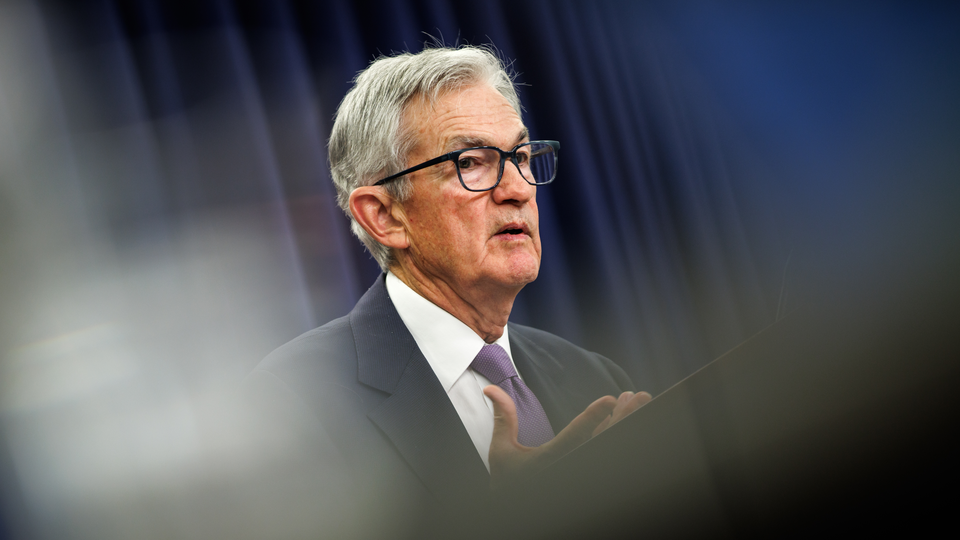
Jerome Powell isn’t known for his expressiveness. The chair of the Federal Reserve has kept quiet over the past year as President Trump has repeatedly attacked him—often with crude language (think moron, numbskull, dumb, and loser). That changed yesterday, when Powell announced that he is under criminal investigation by Trump’s Justice Department. In a video statement, he responded to the threat of indictment with remarkable clarity. “This unprecedented action should be seen in the broader context of the administration's threats and ongoing pressure,” he said. “The threat of criminal charges is a consequence of the Federal Reserve setting interest rates based on our best assessment of what will serve the public, rather than following the preferences of the president.”
For the first time, Powell plainly articulated the Fed’s fight to retain independence from a president seeking to sway it. The investigation itself has to do with whether Powell misled Congress last year about the Fed’s renovation project—now estimated to be about $700 million over budget. The White House Office of Management and Budget began looking into those statements last July; Powell has said that under his leadership, the Fed has “made every effort” to keep Congress informed about the project. It’s hard to ignore the irony here: The administration that demolished the White House’s East Wing without congressional approval is now cracking down on construction oversight.
Asked by NBC about the investigation into Powell, Trump said, “I don’t know anything about it, but he’s certainly not very good at the Fed, and he’s not very good at building buildings.” Yet, as Powell notes, evidence suggests that this move is the culmination of Trump’s monthslong campaign to pressure him into lowering interest rates. Lowering rates would boost the economy in the near term but risk a bust in the longer term. It is the job of the Fed’s Board of Governors, with Powell at the helm, not to accede to any pressure here. The governors are meant to carefully raise and lower the cost of borrowing over time according to jobs and inflation data. The Fed makes these decisions based on what it thinks is best for the American money supply—not what the president wants.
Trump seems to disagree. In August, he made the unprecedented (and probably illegal) decision to fire one of the Fed’s governors, Lisa Cook. The stated reason for Cook’s firing was mortgage fraud, although she has not been charged with any crime and has denied the allegation; the Supreme Court will hear arguments in her case next week. He also elevated a new governor, the MAGA loyalist Stephen Miran, who has been pushing for more dramatic rate cuts than his peers.
Cook’s firing was Trump’s most significant attempt to exert control over the Fed until last night. Even if Powell survives this investigation and serves his full term as chair, which is up in just four months, Trump may still gain access by way of a handpicked successor. The smart money is now on Kevin Hassett, whom my colleague Rogé Karma has called a “Trump propagandist.” But the GOP, including some members of Congress whose votes could one day confirm Trump’s pick, has been expressing alarm over the investigation into Powell. Senator Thom Tillis said he would oppose the confirmation of any nominee until “this legal matter is fully resolved.” And markets were mostly calm today, suggesting that traders think Powell—and central bank independence—will ultimately win out, the Columbia Law professor and former New York Fed economist Lev Menand told me.
Powell’s future is uncertain, and the broader erosion of the Department of Justice has made it hard to trust the idea of an objective investigation. But the probe itself is a clear threat to the long-standing independence of the Fed. The past three Fed chairs—Janet Yellen, Ben Bernanke, and Alan Greenspan—alongside a bipartisan coalition of top economic officials released a statement today decrying the move against Powell. “This is how monetary policy is made in emerging markets with weak institutions, with highly negative consequences for inflation and the functioning of their economies more broadly,” it read.
To better understand their concern, look to Turkey, Zimbabwe, or any other country where central-bank credibility has been undermined. When faith in central banks fails, so can faith in the value of money, leading to hyperinflation. But unlike the Turkish lira and the now-defunct Zimbabwean dollar, the U.S. dollar anchors the global economy. Any sense from the international community that the Fed no longer pulls the strings could be catastrophic. “The central bank is critical to the functioning of the entire financial system,” Menand said. The Fed’s powers are essential tools in moments of instability, but in the wrong hands, they could do far more than weaken the dollar. All major banks hold accounts at the Fed, and those accounts can be cut off at its discretion. Anyone who uses an American bank, and who finds themselves on the president’s bad side, could be affected.
Powell’s prerecorded video statement distills our current moment in less than two minutes. The Fed’s freedom from partisanship is at the core of its mission; it was created in service of the country’s long-term interests. Now under siege by a sitting president, it has become an unlikely site of resistance.
Related:
Evening Read
How Bad Bunny Did It
By Spencer Kornhaber
A few years ago, I visited my childhood home and heard a surprising sound: the bright and bouncy music of the Puerto Rican rapper Bad Bunny. My parents are white Baby Boomers who speak no Spanish and have never shown a taste for hip-hop, but they’d somehow gotten into Benito Antonio Martínez Ocasio, whose sex-and-rum-drenched lyrics they couldn’t begin to decipher. The vector of transmission appeared to be the streaming service hooked to their smart speakers. When in need of a pick-me-up, Mom would shout, “Alexa, play Bad Bunny,” and make her Southern California kitchen sound like a San Juan nightclub.
Read the full article.More From The Atlantic
Explore. The Golden Globes tried to have it both ways, Shirley Li writes. The night’s two big film winners reflected a ceremony uncertain of its own message.
Remember. Bob Weir, who died Saturday, was crucial to shaping the sound of the world’s greatest jam band, David A. Graham writes.
Play our daily crossword.
Rafaela Jinich contributed to this newsletter.
When you buy a book using a link in this newsletter, we receive a commission. Thank you for supporting The Atlantic.