‘America Doesn’t Want My Children or Grandchildren’
AI Summary29 min read
TL;DR
The Cruz family, after years of struggling with Irvi's undocumented status and fearing Trump's mass deportation policies, reluctantly leaves their New York life for Mexico. Despite building careers, a home, and community, they choose family unity over an uncertain future in a country that no longer feels welcoming.
Key Takeaways
•Mixed-status families face impossible choices between staying in the U.S. with constant fear of separation or leaving everything behind for family unity.
•Immigration policies and political rhetoric directly impact families' sense of safety and belonging, forcing them to make life-altering decisions.
•The emotional and psychological toll of undocumented status affects every family member, including U.S. citizen children who lose their home and community.
•Even successful integration—careers, homeownership, community ties—doesn't guarantee security without legal status.
•Return migration involves significant loss and adjustment challenges, with families caught between cultures and grieving what they left behind.
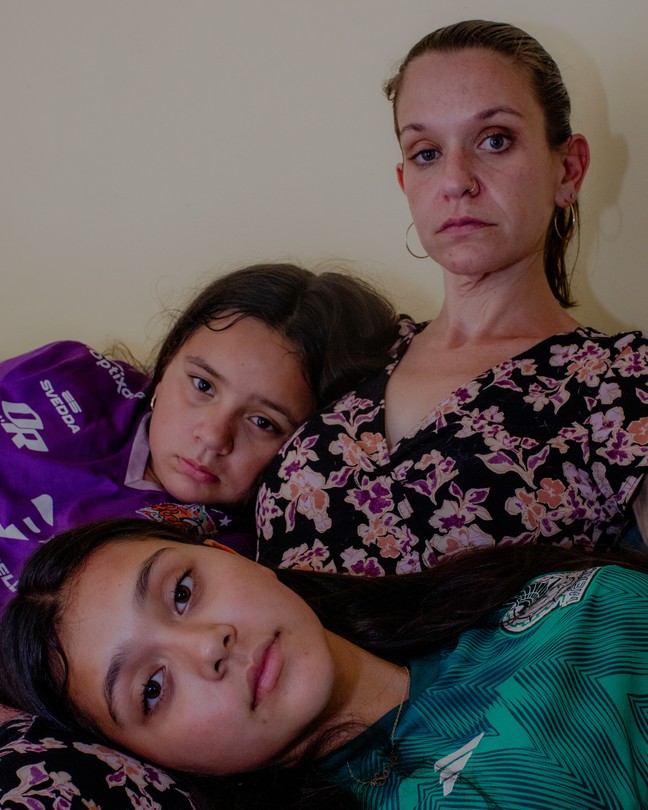
The Cruz family spent years building a life in New York. Then the risks of staying became too great. The Cruz family was exhausted. It was two days before Christmas 2024, and Rachel was coughing from bronchitis, her body once again crashing into the holiday break as she finished her 17th year teaching public high school in New York City. Irvi, her husband, was sleeping after his day shift at an upscale bistro on the Upper West Side, which had followed an overnight shift at a Latin dance club farther uptown, in Inwood. Between the two jobs, he’d dropped their daughters—Sara, 12, and Ana, 10—at their schools for gifted students, then rushed home to the Bronx to cook and do laundry.
For years, Rachel and Irvi had been hustling to make this routine work, hoping that American immigration policy would evolve and allow Irvi, who had spent half his life in the United States, to become a citizen. Raising two children in New York City was expensive. Each day felt like a marathon they didn’t think they could finish. But the girls were thriving, and Rachel and Irvi were beloved at work. Every few years, they met with lawyers who urged them to hang on, so they did.
I met the Cruz family in late 2016, when Donald Trump’s election, and his contempt for immigrants, first made them think of moving to Irvi’s hometown, in rural southern Mexico. But their daughters were just 2 and 4 then, and uprooting them was daunting. Four years later, Joe Biden’s win made the Trump years seem like an aberration, and Rachel and Irvi thought, once again, that a solution to their problem was within reach. Then came 2024, when 77.3 million Americans voted for Trump. His campaign signs had called for MASS DEPORTATION NOW! To the Cruzes, the message was clear: Irvi should give up and go home.
The family had never been apart for long. The four of them linked arms or held hands when they walked down the street together, without seeming to notice they were doing it. Separation was not an option. So they would go, all of them.
“We no longer have the faith that things will always be better here in the United States,” Rachel told me that night in December, sitting at their dining table, cupping a Zabar’s mug full of tea.
Drained from work, Irvi shuffled down the stairs in sweatpants. He had dark bags under his eyes but greeted me with his squinty smile. He sat down and said he was excited to live freely for the first time in his adult life. He was also scared. The only story he’d known about his family—that they were proud New Yorkers—was about to end. Sara, who had been standing behind him, playing with his salt-and-pepper hair, ran into the kitchen to cry. Rachel hurried after her.
“What do you want?” Rachel asked softly. “Do you want to give Papá a hug?”
“No, I just want to go to my room,” Sara said. “I don’t want to talk about this. I don’t want to be here.”
“Well, if we get it out now, maybe it’ll make you feel better later,” Rachel told her, unsure if that was true.
Their tentative plan was to sell the house and move in with Irvi’s parents, 2,100 miles away. Irvi would go first, so he’d be out of the country before Trump took office. Rachel and the girls would join him seven months later, in August 2025, after finishing the school year and summer camp. They didn’t know what they’d do for income in Mexico, or where the girls—who knew only a little Spanish—would go to school.
Friends thought they were overreacting. Some were upset. After all, New York was a sanctuary city and Irvi was married to an American citizen. Rachel and Irvi found these reactions maddening. They saw their American friends as stubbornly naive about the system they had been battling for decades, and their undocumented friends as deluded for clinging to hope instead of reason.
Rachel’s mother, Susan McCormick, had heaved and sobbed when she learned that the granddaughters she was helping to raise would be leaving New York. She and Rachel’s father, Doug, were furious with the country for putting them in this situation. Their daughter was one of nearly 4.2 million American citizens and permanent residents in the United States with an undocumented spouse, and Sara and Ana were among 6.3 million children with an undocumented parent. How many were also choosing family over country? And what was the United States losing in the process?
By Christmas 2024, the McCormicks were trying to be stoic, to give Rachel and Irvi strength and to show the girls that everything was going to be okay. Doug had become a genealogy nerd in retirement and was reminding himself that their ancestors had made a move like this every few centuries: Irish farmers running from famine, Germans displaced by war, and Russian and Ukrainian Jews escaping pogroms. He even found ancestors aboard the Mayflower.
But all of these prior generations had found refuge here. “After 400 years in this country,” Doug told me, “suddenly America doesn’t want my children and grandchildren.”
Rachel, Irvi, and their daughters would be the first in their family to run from—rather than to—the United States.
On September 11, 2001, Irvi was 19 years old and had recently arrived in upstate New York. He was working on a construction crew, remodeling a Chinese restaurant, when the Spanish music on the radio was interrupted by grave English he didn’t understand. Terrorists had flown jets into the World Trade Center. George W. Bush’s administration would soon abandon negotiations to grant legal status to undocumented Mexicans and instead create the Department of Homeland Security, with a mission to deport them.
But on September 12, Irvi’s employer still wanted him to come to work as if nothing had happened. It was the kind of mixed message that would characterize his life in the United States. After a few more years of construction work, he felt homesick and returned to Mexico. But as soon as he touched down there, he felt he’d made a mistake. He had grown up in a one-room house without running water, dreaming of riding a motorcycle—a luxury that he could never afford if he stayed. He started making plans to go back to New York right away.
Irvi’s parents, Lulu and Martín, were leery of his decision. Both were the children of peasant farmers and had grown up in homes made of adobe and sticks. But they never thought of joining the more than 8 million Mexicans who’d moved north, starting with their parents’ generation and the U.S. government’s Bracero Program for temporary workers. American farmers got hooked on cheap labor and, after the program ended in 1964, continued to recruit Mexican workers, who now had to cross the border illegally.
Lulu, a street vendor, was afraid that discouraging Irvi would backfire. Martín, a bus driver on Mexico’s dusty rural highways, couldn’t hold back. “That country will eat you,” he said of the United States. “Of course, here it’s more work and less money, but you get used to it.”
When Irvi told them he was going back, his parents knew they might never see him again. Martín thought to himself: I don’t have a son anymore.
With his 16-year-old cousin, Irvi tried to sneak back across the border somewhere in Arizona. They got lost in the desert, and Border Patrol agents found them. Irvi’s cousin started crying, and one of the agents gave them water, peanuts, and cookies. “Don’t worry; you’re safe now,” the agent said in Spanish. “Tomorrow you can try again, and maybe you’ll make it.” After a few attempts, they were successful.
Back in upstate New York, Irvi returned to working in construction. He was determined to learn English, so he immersed himself in American music and television, especially Chappelle’s Show.
Around that time, Rachel, who grew up in a wealthy suburb of Philadelphia, graduated from Vassar. She had studied abroad in Mexico and taken a class with the geographer Joseph Nevins, who gave lectures about the American government’s complicity in a system that exploits immigrants for their labor but denies them the dignity of legal residency.
She and Irvi met on a sunny afternoon in 2006 while they were watching an outdoor soccer game in Poughkeepsie. She was hobbling around on crutches because of a sprained ankle, and he jumped up to help her. Rachel was swept away by Irvi’s sweetness and exuberance. Irvi loved Rachel’s intelligence and empathy. They talked about everything—their different upbringings, their jobs, their roommate drama. Soon he was visiting her on the weekends in Philadelphia, where she had gotten a job. On one trip, a police officer stopped him, saw that he was undocumented, and let him off with a warning. To avoid the risk of driving for visits, Irvi moved in.
Around 2009, they went to see the first of many lawyers, who said that Irvi wasn’t eligible to apply for legal status, even if he married Rachel, because he had gone back and forth across the border after living for more than a year in the United States. The only work-around was for him to spend 10 years in Mexico and then apply for a waiver. But a Democratic Congress, with Barack Obama in the White House, appeared to be on the precipice of passing immigration reform.
Eventually, Rachel got a teaching job in New York, and they found an apartment in Harlem. Irvi started busing tables at the bistro on the Upper West Side, while Rachel taught overcrowded classrooms of low-income students. Despite the pressure and burnout, she felt like she was offering kids a chance at the American dream. No matter where you come from, she believed, if you land in a public school, and if you get a teacher like me, you can make it. On their third anniversary, Irvi proposed in a rowboat in Central Park.
Sara was born in 2012, Ana in 2014. Irvi was their full-time caretaker, toting them by subway to museums, the aquarium, the zoo, and story time at the public libraries. On weekends, he squeezed in five shifts as a busboy. He and Rachel made enough money to cover the essentials, and Rachel’s parents helped with child care, but they went years without paying for a haircut or buying new clothes. They sometimes fought when they were tired and felt like they hadn’t seen each other in weeks, or when Irvi’s spontaneity clashed with Rachel’s need for order. But they could never stare each other down for long without cracking a smile.
Irvi’s unresolved immigration status trailed them, usually from a distance. ICE agents once entered their apartment building looking for a neighbor; Rachel stood guard at the peephole while Irvi hid in the bedroom. A few years later, Irvi borrowed his in-laws’ car to take the girls to Coney Island. As they approached the park, he spotted a police checkpoint at the entrance. He pulled over and had a panic attack, then tried to play it off by telling the girls that the car was breaking down.
Rachel and Irvi talked about what to do if ICE ever tried to arrest him while she was at work. Irvi would have to persuade the officers to wait long enough for Susan and Doug to pick up the girls. “You have to fight to make sure that our kids are safe,” Rachel told him.
For years, Congress debated changes to the immigration system, including ones that would have helped Irvi. When Sara was old enough, she joined Rachel at protests with a sign that said Don’t deport my dad. As part of a campaign called Dream Across America, Rachel rode a bus to Washington, D.C., where members of Congress admitted to activists that they hadn’t known that so many mixed-status families were in limbo.
Rachel was stunned by Trump’s first election, but Irvi had expected it. Up to this point, Sara and Ana had only a vague understanding that their father was different from them, but they began to realize that he was in danger. Ana lost interest in playing with other children and asked her parents why the president hated her. She had nightmares and panic attacks, and had to see a therapist. Irvi distracted her and Sara with bedtime stories about Eddie Spaghetti, a caricature of himself, who fought battles against dragons and monsters inspired by rude customers at his restaurant.
As they did their best to block out national politics, their community embraced them. Rachel’s students nominated her for a Big Apple Award, which recognizes the best teachers in the city, and she became the head of the department at her school that teaches English as a new language. Ana and Sara became fixtures in their school plays and joined a children’s choir that rehearsed at Riverside Church. At the bistro, Irvi was promoted to server and then manager. He took night shifts at the club in Inwood, and began bringing home more money than Rachel—enough to buy the motorcycle he had dreamed of.
They borrowed against Rachel’s retirement savings for a down payment on a bright-blue townhouse in the Bronx’s Little Italy. The house was far from a subway stop but had a spacious front porch that looked out onto a maple tree. The plumbing didn’t work and some rooms had no windows; Irvi paid his construction-worker friends to help him fix it up. The family turned hiding their home’s flaws into a giant art project, creating a mural out of postcards to cover up cracked walls and ornamenting the crooked old stairs with starburst wallpaper. Their American dream may have been spackled together with glue and construction paper, but it held.
Rachel was standing in the front yard with a rake in her hand when their next-door neighbor Cookie ran out and announced that the 2020 election had been called for Joe Biden. Rachel felt something new: optimism. She and Irvi daydreamed about finishing the basement and redoing the kitchen. They started to believe they would grow old together there.
During the summer of 2024, Biden announced a program, Keeping Families Together, that would finally allow people like Irvi to become citizens through their American spouse. Rachel holed up in their home office one Sunday with the application, attaching hundreds of documents that illustrated the life they had built together. She paid the government’s $580 fee and clicked “Submit.”
“It looks like Irvi might finally be getting legal protection,” she texted me at the time.
The next day, a federal judge put the program on hold after 16 Republican-led states sued. A few months later, Trump was reelected and the court terminated the program. Because of the application that Rachel had filed for Irvi, the incoming administration knew exactly who, and where, he was.
In January 2025, after the holiday break, Rachel stayed up late watching TV interviews with survivors of the Los Angeles wildfires. She found comfort in hearing people say that even though their home was gone, they still had their family, and that’s all that mattered. The girls picked 10 family activities to do before Irvi left the United States. Sara wanted to go ice skating in Central Park. Ana requested a day at the American Dream mall in New Jersey, which has a ski slope and a water park. They found discount tickets for Hairspray, Gypsy, and Annie.
On Irvi’s last day in New York, January 13, 2025, the whole family piled into the car for school drop-offs. Trump was planning to end a policy that made schools off-limits for immigration raids, so Rachel was carrying a trifold poster board explaining what to do in an encounter with ICE. Sara was finishing a homework assignment about the writers of the Declaration of Independence. “Let’s say, all of a sudden, you’re reading a story in English, and it’s about a dad, and all of a sudden you’re feeling really sad,” Rachel asked. “Do you have an adult that you can talk to?”
“Yes,” the girls said in unison.
Irvi bopped his head to La Mega, the Spanish-language radio station that he and the girls listened to each morning. For more than two decades, he had tried to be perfect—perfect at work, perfect in his marriage, perfect as a father and neighbor, as if playing a game that he could eventually win. He told me he had slipped, once, 22 years ago, when he was briefly charged with a misdemeanor for carrying a small amount of cocaine—a onetime mistake in his early 20s. Though the charge was dropped, and doesn’t even come up in a background check, Irvi said he didn’t want to hide anymore, in any respect. But honesty and character didn’t seem to matter to the incoming president, who was conflating all unauthorized immigrants with the people he called “illegal monsters”—the small number who had committed heinous crimes.
“That’s not what I’ve been working for,” Irvi said. “That’s not what I deserve.”
Irvi made a final visit to a Bronx bodega that served as a hangout for Mexican immigrants. He would go there when he felt homesick, or when he was tired of speaking English. His friends tried again to talk him out of leaving. Save more money first, they said, or talk to a lawyer—as if Irvi hadn’t been talking to lawyers for years. He left angry but arrived home sad, knowing he might never see those friends again.
He tucked the girls in that night and waited for Doug, Rachel’s father, to arrive. Around 3 a.m., the two men, along with Mango the cat, climbed into an SUV that Irvi had bought on Facebook Marketplace and then crammed with their belongings.
The three-day drive was smooth until they arrived at a gas station in South Texas that was swarming with Border Patrol agents. Irvi started panicking, and his face went gray. They stopped briefly at a family friend’s house, where they had planned to stay the night, but Irvi’s nervous system was telling him to get out of the country now. By Inauguration Day, he was in his hometown of San Lorenzo Cacaotepec. His parents had spent 20 years scraping together money to rebuild their house out of concrete and add a second structure—which meant there was now room for Irvi, his sister, and their families.
Irvi rose in the dark each morning and drove along a rocky dirt road to a small plot of land that his mother had inherited. There were no blaring car horns or subway trains roaring underground. Just birdsong and rustling leaves. Irvi was enchanted and unnerved by Oaxaca’s clear blue skies, unmarred by skyscrapers. He spent hours hunched over outside each day, digging in his family’s land, pruning and picking, and breaking a sweat as soon as the sun came up. Along with relatives, he planted tomatoes, peppers, and onions, and sold them at outdoor markets. He barely broke even. His father had been right—in Mexico, you work more for less—and Irvi was struggling to adapt. He had been able to get anywhere in New York City without a map, but in Oaxaca he felt lost. “I have to start over again,” he told me. “It’s like I wasted all that time in New York now that I’m here. Everything I learned doesn’t apply.”
He could not stand to watch the videos, flooding his phone, of armed ICE agents smashing car windows and wrestling fathers to the ground while their crying children watched from the back seat. The plan that he and Rachel had formulated all those years ago—for him to connect the girls with their grandparents before ICE could detain him—would never have worked. He would have been overpowered and dragged away. He hadn’t been in control then, he realized, and didn’t feel in control now.
It didn’t help that his relatives worried that Rachel and the girls might never join him. They couldn’t believe that U.S. citizens would trade the privileges of their home country just to be with Irvi. A cousin told him: “You’re going to have to find a new wife.”
Rachel never thought of abandoning Irvi—not since the rowboat in Central Park. But she often felt guilty that he had to bear the psychological burden of their relationship. Now she thought it was her turn to sacrifice to keep the family together.
Without Irvi to pick the girls up from school with homemade sandwiches, Sara and Ana learned to ride the subway, texting him regular updates in the family’s group chat. As their friends studied for entrance exams to the city’s competitive middle and high schools, Sara refused to talk about her feelings and retreated into her phone. Ana’s nightmares returned. She was valedictorian of her fifth-grade homeroom class and teared up during her speech when she mentioned Irvi, who was watching over FaceTime.
Once school let out for the summer—and as ICE agents stormed immigration courthouses downtown—Rachel and the girls took apart their New York lives. The postcards and pictures came down, revealing the cracked walls underneath. Rachel became engrossed in Facebook videos of other moms who were documenting their families’ self-deportation process and describing their relief to be out of the United States.
Sara had a final sleepover with friends. Two of them took her phone into a closet to record a message for her to listen to in Mexico. “You’re an amazing friend,” they said. “We’re gonna miss you so much.”
Rachel bought a trailer for the last of their belongings. Her co-workers threw her a surprise party. The goodbyes “were more like See you laters,” Rachel said. “They’re not the same goodbyes as Irvi’s.” Her assistant principal told me that replacing a teacher of her skill level would take years.
Rachel found a private school in Oaxaca for the girls and secured a job for herself, at an annual salary of $10,700—not nearly enough to live on, even in rural Mexico, and a pittance compared with her $120,000 salary in New York. They had accepted an offer on their house in the spring, but the deal still hadn’t closed by July. Rachel couldn’t afford the bills without Irvi’s income, and her debts were mounting. She told the girls they were leaving August 1, with or without the house money.
Rachel’s father still couldn’t believe it had come to this. “I’m heartbroken because I believe in this country in an almost religious way,” Doug told me. But as a country, he said, “we fucked up.”
Rachel and the girls—plus Coleslaw the cat and Pinto the dog—had planned to stop at tourist attractions to say goodbye to the United States. But Rachel was so frustrated and anxious by the time they left that they stopped only to sleep. She sped to the border, her adrenaline pumping.
Irvi flew to northern Mexico to finish the two-day drive with them. Rachel spent the first night at his parents’ house wide awake and in tears. She told Irvi she felt like she couldn’t breathe. They reminded themselves that if Oaxaca didn’t work out, they could try Mexico City. Or they could apply for visas to move to Spain or Canada.
As Doug had told them, “The whole world is open to you now, except for your home country.”
Ana, now 11, put up a few Broadway posters in her new bedroom. Sara, now 13, hung birthday cards from friends in New York. They stuck their favorite New Yorker covers on the walls.
When I arrived to visit them in early November, three months into their reunion, Irvi was still going to the farm before sunrise, and Rachel and the girls would leave home at 6 a.m. for the bumpy ride to school, which involved driving through a creek to reach a paved road. Ana said the hardest part about the move was leaving her New York friends, because it had taken her many years to make them. She made one friend at her new school whose family had moved from Canada that year; they sat together at lunch, talking about what it was like to start over somewhere new. Meanwhile, Sara sauntered across campus in a swarm of girls, who delighted in practicing their English skills on her. Though the school was technically bilingual, their teachers mostly spoke Spanish. In class, both girls’ eyes glazed over. They looked lost.
Sara and Ana did their best to hide their discomfort in front of Irvi. “I try to say to myself that I’m not the only one and I should be calm about this,” Ana told me, “because people have done it before and I’m pretty sure they’ve turned out fine.” Plus, she said, “I will have a great college essay.”
But sometimes their anguish spilled out. They were used to excelling in school, and now they felt like they weren’t learning anything. One night, when Sara was struggling with homework, she lashed out at her parents, yelling exactly what Irvi had been afraid to hear: “I didn’t choose to move here!” She ran up to her room. Irvi stayed on the living-room couch. They cried, separately.
Outside those emotional swells, the family was relieved to be together, and free of the dread that had hung over them in New York. They relished the meals that Irvi’s mother, Lulu, prepared for them: rich and tangy beef, chicken-and-vegetable stew, fluffy corn cakes piled with salsa and beans. With all of their children and grandchildren at home, she and Martín now felt that they could live out their lives in peace.
Sara and Ana told me they felt safer in Mexico. Rachel agreed, but worried about the friends and family they’d left behind. She thought they were too close to see what the United States was becoming.
Rachel taught English at her new school, mostly through songs. She had free time for the first time in her adult life, but felt bored. When their house in the Bronx finally sold, she bought a few luxuries to make their new home more comfortable: a refrigerator, an oven, and a washing machine, so they wouldn’t have to scrub their clothes on the concrete washboard Irvi’s mom used. They paid off their debts, and had surprisingly little money left over, even with Rachel tutoring children of wealthy Mexican families on weekends and after school.
They felt lucky to have had the freedom to immigrate to Mexico; no relatives in the United States relied on their care, and the sale of the Bronx townhouse funded the move. But it was still unclear how they would support themselves now that they were here. Rachel tried to be patient as Irvi figured out a plan. He had worked for so many years in the United States without a break, and he was clearly depressed. He knew he had to sell his motorcycle. He spent all day on the farm streaming Hot 97, an English-language radio station in New York. At night, he would scroll the social-media feed of the nightclub where he’d worked, telling Rachel which artists had performed and who had gotten into fights, until she snapped. “I don’t care,” she said, pleading with him to leave New York in the past.
They tried to distract themselves with excursions on the weekends, but every time they got in the car, Irvi would either go quiet or unravel, then beat himself up for days. Rachel was frustrated that he couldn’t let them have a good time, until she realized that the only travel Irvi had ever done had been unpredictable and dangerous. He didn’t know how to enjoy a trip with his family, because he’d never had the chance.
“I’m trying to be positive,” Irvi told me, but he felt like a disappointment. He began to pull away from the girls. He seemed to miss the United States more as time went on, not less. In Oaxaca, another American family invited them over to celebrate their first Thanksgiving in Mexico. He took one bite of stuffing and burst into tears. But that same month, he saw on Instagram that ICE had raided his bodega hangout in the Bronx. One of his friends—a father who worked as a bike messenger for a Chinese restaurant—was taken away.
Irvi tried to reconnect with his relatives by attending birthday and anniversary parties. (“Half the town are his cousins,” Rachel told me.) He took me along to one party, in a small house with a concrete floor. Plastic tables, with bowls of taco fixings, were set up in a long row that stretched from the kitchen into the living room.
I sat with two of Irvi’s aunts, Chela Santiago and Blanca Méndez, who are in their late 60s and have spent their whole lives in San Lorenzo Cacaotepec. Their fathers traveled back and forth to the United States, first as Braceros, then as unauthorized farmhands. Since then, dozens of relatives have followed. Chela’s brother went to New York in the 1990s and slept 10 to a room.
“What they say about the United States isn’t true,” he said when he returned. “They treat you like animals.”
Without poor Mexicans, Blanca told me, the U.S. would not exist. “I would like for all the Mexicans in the United States to come here,” she said, “and then let’s see what the United States really is.”
Though Irvi was only a few seats away, she offered another blunt assessment of those who choose to leave home: “Sometimes they go because they want a life that isn’t theirs. Here, we live authentically.”
Irvi was quiet. The United States was where he’d become a man, a husband, a father, a homeowner, a model citizen in every respect except the one that mattered to the U.S. government. Now he had done what his aunt wanted—what President Trump wanted—and he was beginning to live with that choice. Surrounded by family, he looked like a man without a home.
People who migrate across borders leave pieces of themselves behind—pieces that don’t fit neatly back into place, even upon return. Irvi had known this since he was 19. A year after the family decided to leave the U.S., Rachel and the girls were discovering it, too. They went to New York to visit Rachel’s parents this past Christmas; right away, Sara bought frosted strawberry Pop-Tarts to bring back to her classmates in Oaxaca. She giggled on the phone at night with her new Mexican boyfriend. But Rachel had to pry her and Ana away from playdates with their New York friends. She changed the subject when they asked about visiting again for spring break in a few months.
They ate traditional Chinese food in one friend’s home, Russian in another, Dominican in another—the kind of New York experience that they were all realizing they missed. During one visit in Harlem, Rachel asked to speak with me alone, at a coffee shop nearby. When we sat together, she finally broke down. She felt guilty every time she heard her daughters say they were happy to be “home” for the holidays. She saw them falling behind their New York friends academically, so she bought an algebra book to teach them herself. Her old fear of ICE was coursing through her body, even though Irvi was safe in Mexico. And she had been stifling these emotions around her parents all week, because none of them wanted to be the first to cry.
“We tried so hard to make it work,” she told me. “I can’t think of anything else we could have done. And that’s the hardest thing about being here. We’re nice people. My kids are amazing. New York City would have been so lucky to have my kids.”
She told me that a few days earlier, she had gone to visit an uncle in her old neighborhood in the Bronx, but avoided driving past the bright-blue house. Cookie, their neighbor, had reported that another family moved in but left within weeks. The house was dark and empty. The gardens were a mess. An old couch was outside, rotting.
The Cruzes had poured themselves into that house. Now it looked like they had never lived there. Rachel couldn’t bear to see it.
This article appears in the April 2026 print edition with the headline “Leaving the United States Behind.”