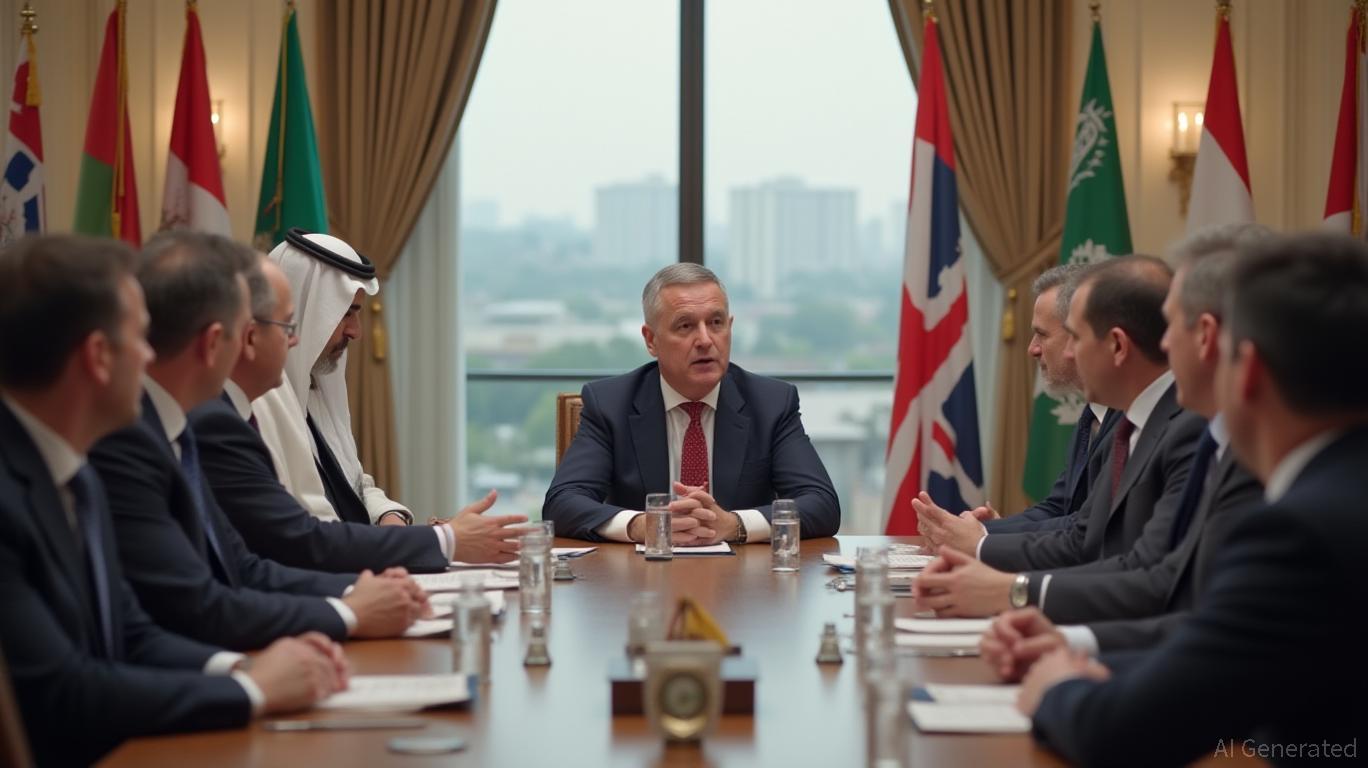
UK's Starmer spoke to leaders of several Mideast countries: PA
TL;DR
UK Prime Minister Keir Starmer has engaged with Middle Eastern leaders amid regional tensions following U.S.-Israeli strikes on Iran. The UK has deployed defensive military assets and issued travel advisories to protect citizens and allies, while advocating for diplomatic solutions to avoid escalation.
Tags
UK's Starmer spoke to leaders of several Mideast countries: PA
UK Prime Minister Starmer Engages Mideast Leaders Amid Regional Tensions
Prime Minister Keir Starmer has intensified diplomatic efforts, speaking with leaders of several Middle Eastern nations following U.S.-Israeli strikes on Iran and subsequent regional escalation. The UK, while not participating in the initial strikes, has deployed defensive military assets and reinforced security measures to protect its interests and allies in the region according to reports.
The UK government has advised British nationals in Bahrain, Qatar, Kuwait, and the UAE to shelter in place due to Iranian missile attacks, while those in Jordan, Saudi Arabia, and other neighboring countries are urged to remain vigilant as stated. These measures reflect heightened concerns over regional instability, with the UK Foreign Office emphasizing consular support for citizens and advising against non-essential travel to conflict-affected areas according to government sources.
Defensively, the UK has bolstered its presence in the Middle East, including deploying RAF Typhoons to Qatar’s al-Udeid airbase and additional F-35s, air defense systems, and counterdrone technology to Cyprus. These actions aim to safeguard allied military facilities and deter further escalation as reported. The government has also elevated security protocols at British bases, citing risks to infrastructure and personnel amid retaliatory threats from Iran according to defense officials.
Economically, the crisis underscores vulnerabilities in global energy markets, with Gulf oil facilities and shipping routes at risk of disruption. While the UK has not directly commented on financial implications, its focus on stabilizing the region aligns with broader efforts to mitigate economic fallout from prolonged conflict. European allies, including France and Germany, have similarly prioritized diplomatic solutions to avoid a wider war that could destabilize trade and investment flows according to analysis.
Starmer’s statements emphasize a dual approach: condemning Iranian attacks while advocating for renewed nuclear negotiations. In joint statements with EU partners, he reiterated that “Iran must refrain from indiscriminate military strikes” and called for a return to diplomatic channels as stated. The UK’s cautious stance—balancing defense commitments with diplomatic engagement—reflects its strategic interest in preserving regional stability without overtly escalating tensions.
As the situation evolves, investors may monitor developments in oil prices, defense spending, and geopolitical risk premiums, with the UK’s role as a mediator shaping both short-term volatility and long-term economic prospects in the region.