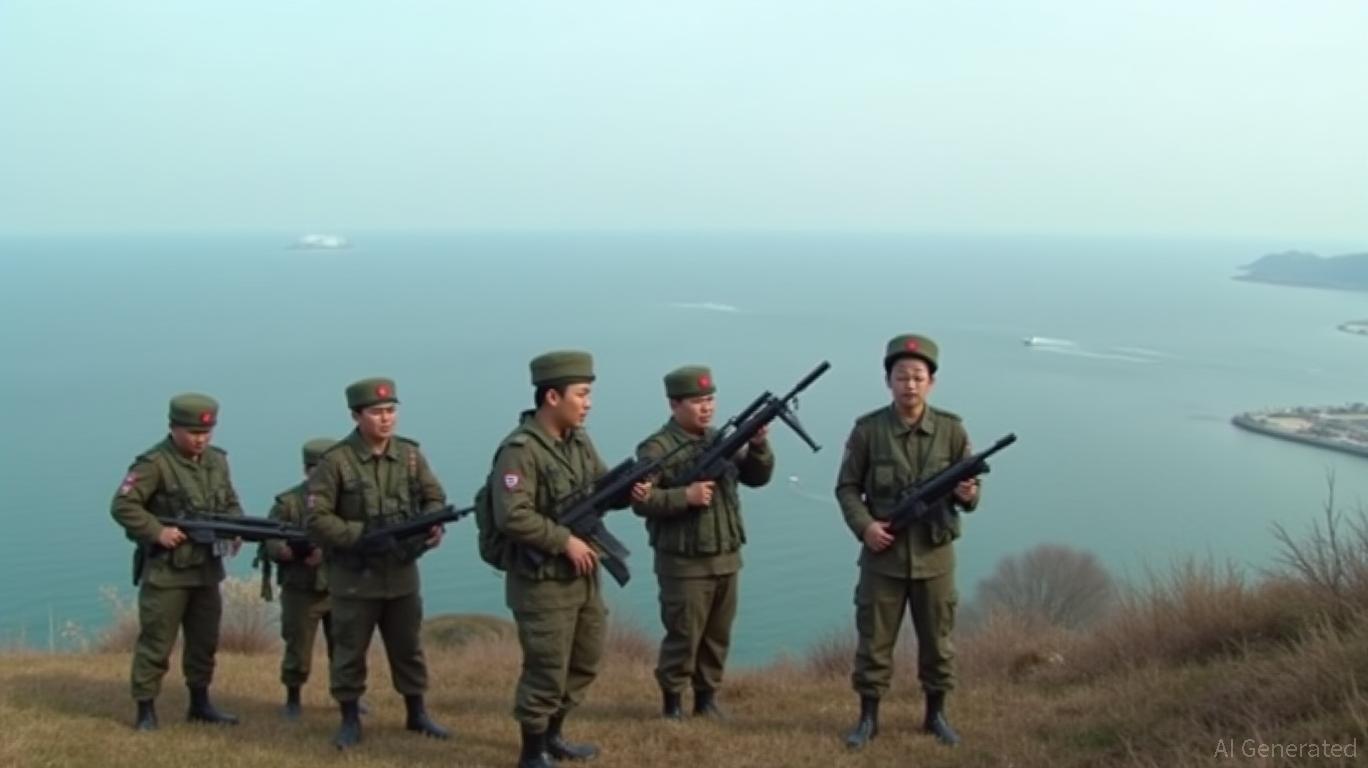
N. Korea fires ballistic missiles as S. Korea, U.S. conduct joint drills
TL;DR
North Korea fired a ballistic missile during U.S.-South Korea joint drills, escalating tensions as it condemns the exercises and demands recognition as a nuclear power for talks.
North Korea launched a projectile toward the Sea of Japan on March 9, 2026, as the United States and South Korea conducted their annual Freedom Shield joint military drills, according to South Korean and Japanese defense authorities. Japanese officials indicated the projectile may have been a ballistic missile, though details about its range or technical specifications remain unconfirmed. The launch occurred amid heightened regional tensions, with North Korea routinely condemning U.S.-South Korean exercises as "invasion rehearsals" and a provocation to its sovereignty according to reports.
The 11-day Freedom Shield drills, involving over 18,000 troops, are designed to test allied command and operational capabilities through computer-simulated scenarios and field training as reported. North Korea's Foreign Ministry has previously framed such exercises as part of a broader "Cold War" strategy by Washington, while deepening ties with Russia and China to counter perceived U.S. aggression according to analysis. Kim Yo Jong, sister of North Korean leader Kim Jong Un, warned that the drills risked triggering "unimaginably terrible consequences," emphasizing Pyongyang's commitment to bolstering its nuclear deterrent as stated.
Diplomatic efforts to resume dialogue between North Korea and the U.S. remain stalled. While South Korean President Lee Jae-myung and U.S. President Donald Trump have expressed openness to negotiations, Pyongyang insists on recognizing its status as a nuclear power as a precondition for talks. North Korea's recent missile activity underscores its strategy of leveraging military demonstrations to assert strategic leverage amid shifting global dynamics, including its support for Russia's war in Ukraine and expanding economic ties with China according to analysis.
The situation highlights ongoing challenges in stabilizing the Korean Peninsula, with regional security and diplomatic prospects contingent on balancing military posturing and renewed engagement.