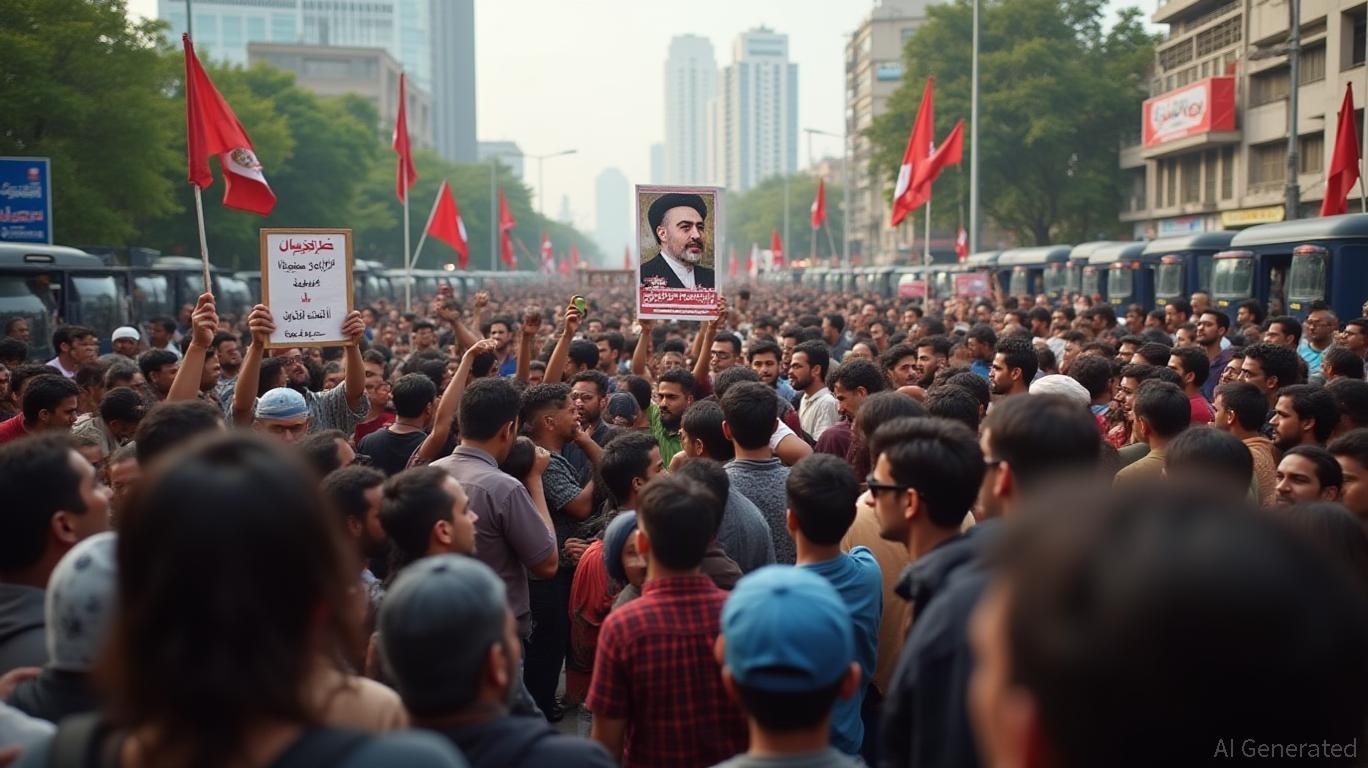
Large protest held in Hyderabad, India, condemning assassination of Ayatollah Seyyed Ali Khamenei by US and Israel
TL;DR
A large protest in Hyderabad, India, condemned the assassination of Iran's Supreme Leader Ayatollah Seyyed Ali Khamenei by the US and Israel, leading to regional economic disruptions including flight cancellations and oil price volatility.
Tags
Large protest held in Hyderabad, India, condemning assassination of Ayatollah Seyyed Ali Khamenei by US and Israel
Hyderabad Protests Condemn Khamenei’s Assassination Amid Regional Economic Uncertainty
A large-scale protest erupted in Hyderabad, India, on March 1, 2026, as Shia Muslim communities mourned the death of Iran’s Supreme Leader Ayatollah Seyyed Ali Khamenei, attributed to a joint U.S.-Israel strike. Demonstrators gathered in the city’s old quarters, chanting anti-American and anti-Israeli slogans while carrying portraits of Khamenei and black flags. The protest, organized by local religious groups like Tanzeem-e-Jafferi, featured traditional mourning rituals, including chest-beating and recitations of elegies, underscoring deep regional ties to Iran’s Shia leadership.
The assassination has intensified geopolitical tensions, with immediate economic ripple effects. India’s Ministry of Civil Aviation reported 444 flight cancellations nationwide on March 1 due to airspace restrictions over the Middle East, disrupting travel and trade routes. Major carriers, including Air India and IndiGo, rerouted or suspended services to Gulf destinations, citing safety concerns. The crisis has also raised fears of oil price volatility, as Iran’s warning to close the Strait of Hormuz—a critical global oil transit point—threatens to spike crude prices. India, the world’s third-largest oil importer, faces potential inflationary pressures and currency depreciation if tensions persist.
The Indian government has sought to balance diplomatic caution with security preparedness. Prime Minister Narendra Modi convened an emergency Cabinet Committee on Security meeting to assess the fallout, while the Ministry of External Affairs urged Indian nationals in the region to remain vigilant. Meanwhile, Shia community leaders in Hyderabad and across India have called for national mourning and solidarity with Iran, amplifying regional unrest.
As protests continue and global markets monitor the conflict’s trajectory, India’s economy remains vulnerable to further disruptions in aviation, energy, and trade. The situation underscores the interconnectedness of geopolitical events and financial stability, with investors closely watching for de-escalation efforts or further escalation in the Middle East.