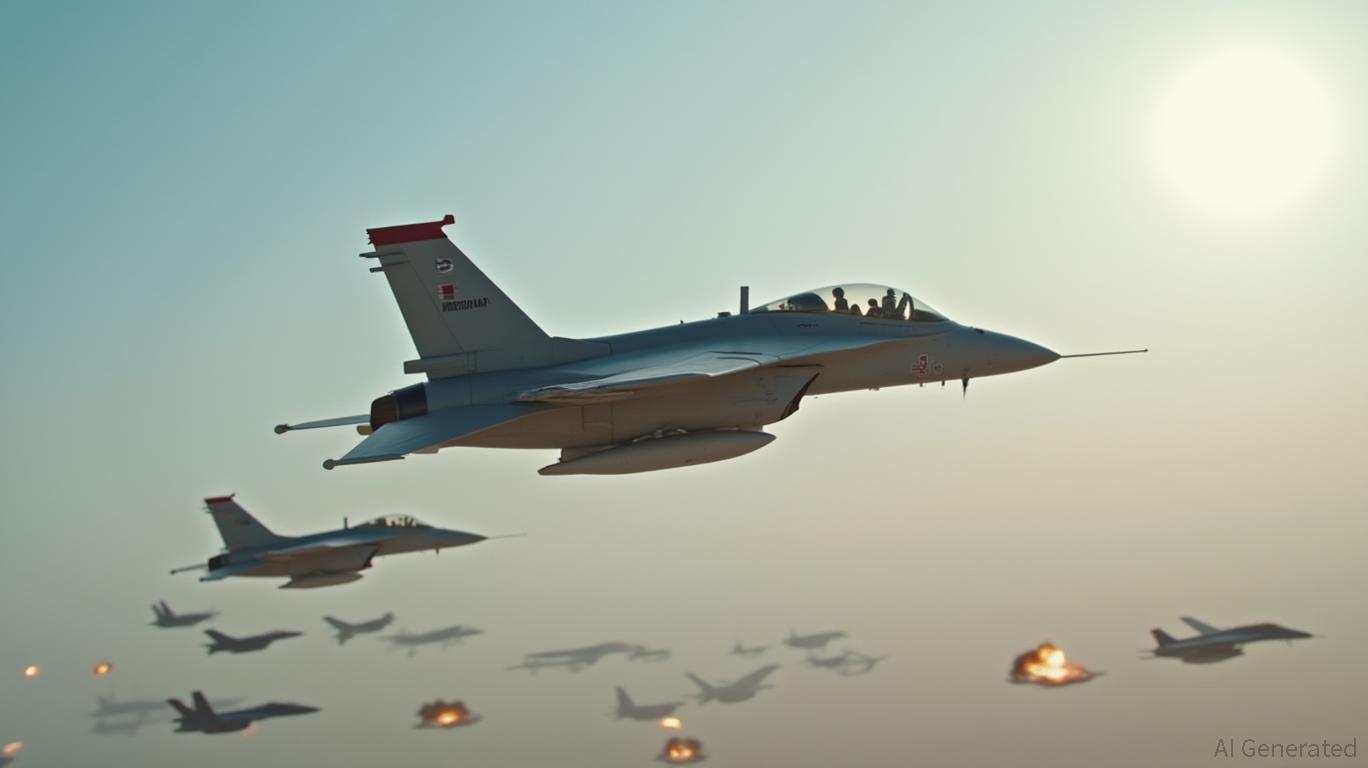
Qatari Defense: Our fighter jets intercepted Iranian drones and missiles
TL;DR
Qatar's air defense intercepted 65 missiles and 12 drones from Iran, targeting U.S. bases and infrastructure, with no fatalities but some injuries. The attacks followed U.S.-Israeli operations, prompting regional airspace closures and economic concerns.
Tags
Qatari Defense: Our fighter jets intercepted Iranian drones and missiles
Qatari Defense Systems Intercept Iranian Drones and Missiles Amid Regional Escalation
Qatar's air defense systems successfully intercepted 65 ballistic missiles and 12 drones launched by Iran in retaliatory strikes targeting the Gulf state. The attacks, which occurred overnight, focused on critical infrastructure, including the Al Udeid Air Base—a major U.S. military hub—and a long-range early warning radar facility in northern Qatar. While two missiles reached Al Udeid and one drone struck the radar site, no fatalities were reported, though eight civilians sustained injuries.
The strikes followed a joint U.S.-Israeli military operation against Iran, which Tehran has condemned as an unprovoked attack. In response, Iran targeted U.S. assets across the Gulf, including bases in Bahrain, Kuwait, and the United Arab Emirates. Qatar's Foreign Ministry emphasized that the attacks "cannot be accepted under any justification," reaffirming the country's commitment to defending its sovereignty.
Regional air defense systems faced significant strain during the assault. Qatar's successful interception efforts were supported by U.S. Patriot missile systems, though recent reports have highlighted concerns over the reliability of such defenses in high-intensity scenarios. The UAE also reported intercepting Iranian missiles, with one civilian fatality attributed to falling debris.
The conflict has disrupted regional aviation and trade. Qatar, along with Bahrain, Kuwait, and the UAE, temporarily closed its airspace, while the Strait of Hormuz—a critical global oil transit route—faced navigation advisories. These measures underscore the economic risks of prolonged military escalation, with Gulf Cooperation Council nations emphasizing the need for de-escalation.
As tensions persist, investors are monitoring the humanitarian and geopolitical fallout, alongside potential impacts on energy markets and regional stability. The Qatari government has not indicated further retaliatory measures but has reserved "the full right to respond" to future aggression.
(https://www.aa.com.tr/en/middle-east/qatar-says-65-ballistic-missiles-12-drones-intercepted-in-iranian-retaliatory-strikes-8-injured/3844496): Qatar Defense Ministry interception report.
(https://militarywatchmagazine.com/article/footage-us-patriot-fail-repeated): U.S. Patriot system performance analysis.
(https://www.foxnews.com/world/gulf-states-condemn-iranian-retaliatory-strikes-territories-following-us-israeli-operation): UAE Ministry of Defense statement.
(https://www.facebook.com/ChannelNewsAsia/posts/flares-lit-up-the-sky-as-qatars-air-defences-intercepted-iranian-missiles-and-dr/1353470686809314/): CNA coverage of Qatari strikes.
(https://www.aljazeera.com/news/2026/2/28/multiple-gulf-arab-states-that-host-us-assets-targeted-in-iran-retaliation): Al Jazeera and Fox News regional attack assessments.