The Giant, Voracious Sea Lions That Humans Cannot Stop
AI Summary10 min read
TL;DR
Despite numerous non-lethal efforts to deter sea lions from eating endangered salmon in the Columbia River, lethal removal has become the primary method. While effective in the short term, it raises ethical and practical concerns, highlighting the complex balance between protecting salmon and managing sea lion populations.
Key Takeaways
•Lethal removal of sea lions has become necessary to protect endangered salmon in the Columbia River, as non-lethal methods have largely failed.
•Sea lions are not the primary threat to salmon; human activities like overfishing, dams, and climate change have caused significant declines, but sea lion predation is more immediately visible and manageable.
•The process of euthanizing sea lions is cumbersome and costly, leading some to advocate for simpler methods like firearms, though this raises legal and safety issues.
•Salmon hold immense cultural and economic value in the Pacific Northwest, particularly for Indigenous tribes, making their protection a priority despite the ethical dilemmas of killing sea lions.
•Some scientists caution that sea lions may be scapegoats for larger environmental issues, and removing them could allow other predators to fill the niche or overlook systemic problems like habitat degradation.
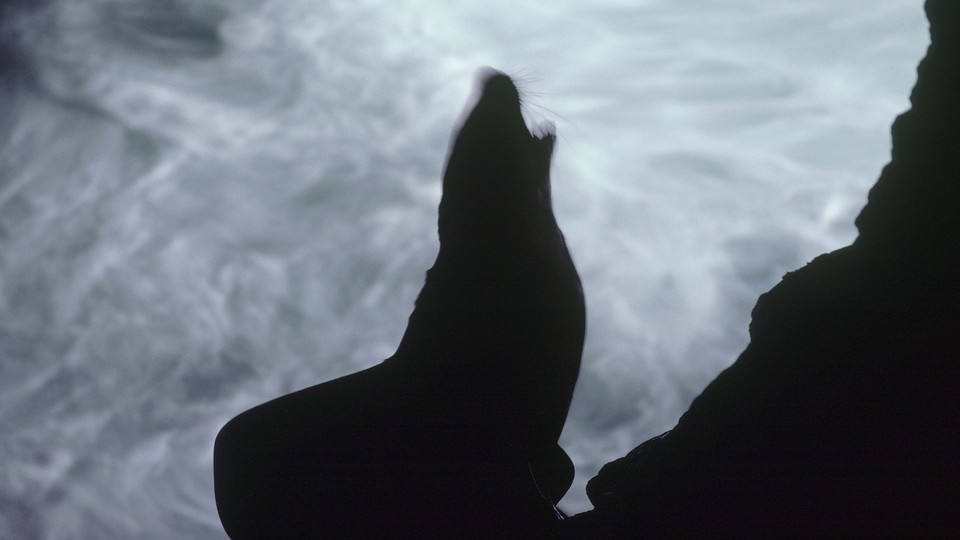
Killing the protected animals may be the only way to stop them from eating too many of the Pacific Northwest’s endangered salmon. Francois Le Diascorn / Gamma-Rapho / Getty Of all the schemes that humans have devised to keep sea lions from gorging on the salmon of the Columbia River basin, none has worked for long. Local officials and researchers have chased sea lions with boats and peppered them with rubber bullets; they’ve detonated noisy explosives. They’ve outfitted the docks where the animals like to rest with uncomfortable spinners, electrified mats, flailing tube men, and motion-activated sprinklers. (“Very surprisingly, they don’t like to get wet on land,” Casey Clark, a marine-mammal biologist at the Washington Department of Fish and Wildlife, told me.) At one point, the Port of Astoria dispatched a 32-foot fiberglass replica of sea lions’ primary predator, the orca, outfitted with real orca sounds, that almost immediately capsized. Scientists have captured sea lions and released them thousands of miles away, as far as Southern California. No matter the tactic, the result is largely the same: Within weeks, or sometimes even hours, the sea lions swim right back.
The waterways of the Columbia River basin, full of dams that corral salmon in tight spaces, are just too easy of a hunting ground for the sea lions to spurn. In especially hard-hit sections of the Columbia River, sea lions have eaten close to half of the spring Chinook run. “That’s a devastating amount of fish,” Jeremy Cram, the salmon-recovery coordinator at the Washington Department of Fish and Wildlife, told me—both for the region’s highly vulnerable fish and for the humans who want to catch and eat them.
So in recent years, officials made sea-lion removals more permanent, which is to say, more deadly. Since 2020, the states of Washington, Oregon, and Idaho, as well as a handful of local tribes, have trapped and euthanized more than 200 sea lions in and around the Columbia River—and have still fallen short of the limits allowed by federal law. With sea lions still eating thousands of salmon each spring at sites such as the Bonneville Dam, near Portland, some local fishers, tribal members, and politicians are pushing for the mammals’ body count to rise. “Ask yourself: Why? Why are these numbers so small?” Marie Gluesenkamp Perez, who represents Washington’s Third Congressional District, said at a hearing about the sea lions last month.
Not everyone agrees that more kills are needed. But at this point, all else has failed. To preserve the region’s salmon, more sea lions must go.
Sea lions have never been salmon’s primary threat: That honor belongs to us. More than a century of overfishing, industrialization, and hatchery mismanagement has brought several populations of salmon and their close relative the steelhead to critically low levels in the Pacific Northwest. To spawn, salmon must swim hundreds or even thousands of miles upstream from the ocean, and in the Columbia River and its many tributaries, their path is obstructed by a massive network of hydroelectric dams. Ladders can help fish circumvent these obstacles, but learning to navigate them can take the animals days. In a highly built world, salmon have a far harder time reproducing and surviving than they used to have.
Over the past 40 years, the United States has poured $9 billion into reversing the basin’s salmon and steelhead declines and currently spends more on those efforts than on any other endangered animal in the country. But efforts to mitigate human harms—restricting harvests, remodeling dams, breeding salmon in hatcheries—are yielding diminishing returns. Climate change has made habitat-restoration efforts more challenging, as have pollution from pesticides and even toxic tire dust. Conservationists aim to restore the annual number of returning adult salmon and steelhead to 5 million, but the population, on average, has been stagnant at around 2 million for decades.
Rehabilitating a river can take years to produce an effect, but cull a few sea lions from a dam, “and there’s a benefit the next day,” Clark said. In 2017, winter steelhead populations at Oregon’s Willamette Falls seemed almost certain to soon go extinct, Michael Brown, the marine-mammal program leader at the Oregon Department of Fish and Wildlife, told me. But after agency officials euthanized 33 adult male sea lions at the falls, the number of steelhead reaching their destination went from hundreds to thousands.
Plus, killing a handful of sea lions can steer many more away from a site. In the same way that they quickly deduce that tube men can’t hurt them (in fact, some animals end up simply cuddling the warm fans that power them), sea lions notice when their peers venture upstream and fail to come back. After the lethal removals at Willamette Falls and the Bonneville Dam began, far fewer sea lions returned to the sites than the number that researchers expected. Nathan Pamplin, the director of external affairs at the Washington Department of Fish and Wildlife, told me the department estimates that sea-lion removal costs $203 for each fish saved—pricey, but no more expensive than other salmon-recovery efforts.
Still, the process of lethal removal is cumbersome. Under the 1972 Marine Mammal Protection Act, sea lions must be euthanized by a trained professional—a process that requires trapping the animals, which can weigh up to 2,000 pounds, then herding them onto a barge for transfer to a nearby facility. Robert DeLong, a former National Oceanic and Atmospheric Administration researcher who has studied sea lions for decades, told me that removal teams, which must activate the traps manually, could at first snare the animals during daylight hours. But some sea lions began sneaking out before the sun rose, requiring teams to entrap and handle them under low-light conditions—“a human-safety issue,” he said. A crew of about eight people, working from around 4:30 a.m. until the early afternoon, might be able to trap, kill, and necropsy just two to five sea lions in this manner, Doug Hatch, a fisheries scientist at the Columbia River Inter-Tribal Fish Commission, told me.
Gluesenkamp Perez told me she thinks the sea-lion-removal process should be simpler. Her preferred alternative is firearms—“engaging with these animals as animals, and not treating it like a petting zoo,” she said. Currently, shooting sea lions is illegal, but that hasn’t stopped locals from trying. Of the many sea-lion corpses that DeLong has necropsied for research, “the majority of those animals have pieces of buckshot or bird shot or rifle slugs in their musculature,” he told me. In the mid-aughts, Hatch said, firearms were quickly dismissed as a removal method at the Bonneville Dam because using them would have meant shutting down the interstate highway that runs past the dam, as well as clearing people out of the site, which is open to the public. But some tribes in the Pacific Northwest have been discussing using firearms to harvest sea lions and other pinnipeds for subsistence, as Alaskan Natives do, Cecilia Gobin, a conservation-policy analyst at the Northwest Indian Fisheries Commission, told me. Ultimately, Gobin argues, like Gluesenkamp Perez does, “If we are going to take these animals, the most humane way seems to be not to trap them, remove them to some off-site location, and euthanize them, but to have more of a targeted kill.”
Before the Marine Mammal Protection Act passed, in 1972, sea lions were in trouble, too. Years of overfishing had depleted their prey, and humans killed them for sustenance or in disputes over fish. But over the past half century, many local populations have rebounded, in large part by chasing their favorite foods inland.
The fact that sea lions are faring better than salmon has made it easier for humans to side with the fish. But regardless, salmon seem to hold more intrinsic value to us. In the state of Washington alone, the annual salmon harvest is worth roughly $14 million. Many Pacific Northwest tribes have subsisted on the fish for millennia and have woven them into their religions and languages. The right to harvest fish is enshrined in their treaties, but “there’s no way that somebody can sustain themselves as a fisher anymore,” Aja DeCoteau, the executive director of the Columbia River Inter-Tribal Fish Commission, told me. Some tribes in the region that traditionally hold First Salmon feasts to welcome the arrival of spring salmon from the ocean have waited for their catch in vain, forcing them to ask other tribes to donate a fish, Gobin said.
Sea lions are also ecologically essential, but not as much as salmon are. Researchers estimate that roughly 140 other species depend on salmon for food; among them are the Pacific Northwest’s critically endangered southern resident orcas—making sea-lion removals “management of a protected species to benefit a protected species, which may then benefit a protected species,” Clark told me.
By law, the number of sea lions that can be lethally removed from the Columbia River basin is far below the number that researchers think would impede the animals’ recovery. But some scientists are hesitant to scale up to even those allowable levels. Although sea lions do appear to be measurably depleting salmon at some sites, including the Bonneville Dam and Willamette Falls, the evidence is shakier elsewhere in the region. Plus, removing sea lions from this delicate system may simply allow another predator to swoop in, including the many birds and other fish that also prey on salmon working their way through ladders. Alejandro Acevedo-Gutiérrez, a biologist at Western Washington University, told me he worries that pinnipeds have become an inadvertent scapegoat for salmon’s larger issues, simply because sea-lion-on-salmon predation events—loud, violent affairs in which the mammal beats the fish on the surface of the water, then noisily gnaws its flesh—are more visible than the effects of climate change.
Perhaps the sea lions’ greatest crime is indulging in salmon that humans would rather be feasting on. “We invested so much into all of this,” John North, the deputy fish-division administrator at the Oregon Department of Fish and Wildlife, told me. Decades of work and billions of dollars deep into salmon recovery, humans cannot allow the fish’s comeback to fall apart just because hungry sea lions have swum too far upstream. But salmon protection has never been only about keeping the fish safe. If salmon levels rebound, we can and will eat more of them, Cram said: “The real predator that those fish would go to is us.”