The article argues that true peace requires engaging with former enemies who have credibility within their communities, using Marwan Barghouti and the Irish peace process as examples. It critiques romanticized notions of peace, emphasizing pragmatic negotiations over symbolism.
Key Takeaways
•Peace is a hard, unsentimental process requiring engagement with enemies, not just symbolic gestures like doves or handshakes.
•Credible leaders who have participated in conflict (like Marwan Barghouti or Irish paramilitaries) are often necessary to negotiate and sustain peace agreements.
•The Israeli-Palestinian conflict lacks a viable peace process, and Barghouti's release could provide a pragmatic path forward due to his legitimacy among Palestinians and recognition of Israel.
•Historical examples (e.g., Northern Ireland, Israel-Egypt) show that peace is made with unsavory enemies, not friends, requiring compromises from both sides.
•Without the assent of war-makers, peacemaking is impossible, as only they can bring their communities to the table and enforce difficult agreements.
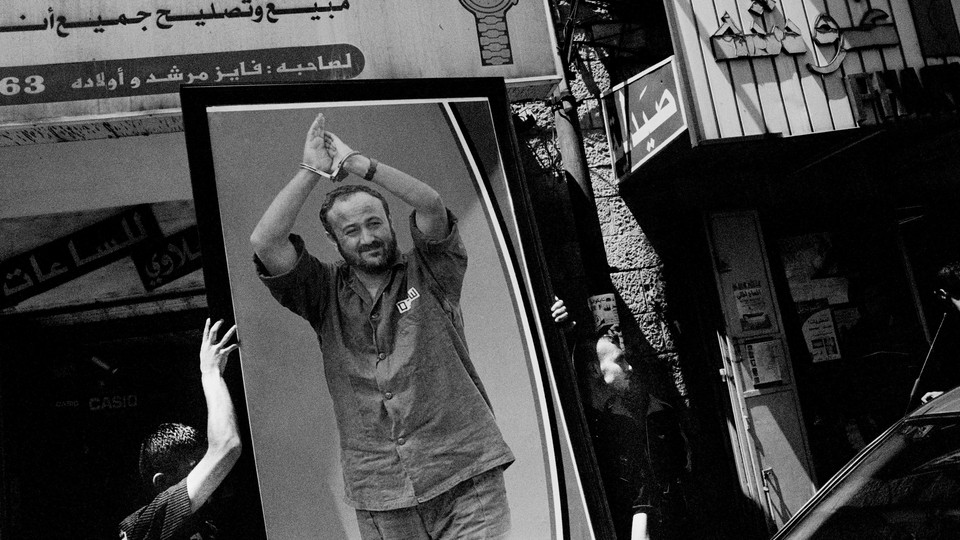
It requires the assent of the war-makers. Alex Majoli / Magnum Somewhere along the way, peaceniks like me got the wrong idea about peace.
We oversold the pageantry; the iconography is wrong. Doves, olive branches, handshakes, signing ceremonies … It’s a grab bag of cognitive dissonance, wildly at odds with the work, the hard labor, of peace. The contradiction becomes even more glaring as we start to let the word … peace … creep into conversations about Israelis and Palestinians. No white doves there. No romance, just relief, to the end (when we see the end) of hunger and disease, the end (when we see it) of killing, indiscriminate and otherwise.
I’ve been thinking, not for the first time, about the Irish perspective on this. There are reasons that, more than 25 years after the Good Friday Agreement, we are still talking about the “Irish peace process.” We may or may not be a sentimental people, but it is without question an unsentimental word, process. No one writes poems about process. No one sings ballads about it. The fact that we Irish continue to talk about peace through the prism of process is a sign of how hard it is not just to make it but to maintain it. One of the hardest parts—the hardest part—is engaging with your enemies. Even, or especially, the ones you consider most dangerous and have locked up, you thought permanently, in your prison cells.
This is the idea behind the “Free Marwan” campaign. Marwan Barghouti is the Palestinian leader who has been held in an Israeli prison since 2002, and is now serving five life sentences plus 40 years after being convicted of masterminding a murder campaign during the Second Intifada, which he denies. There were (and still are) grave concerns about the legitimacy of his trial—the Inter-Parliamentary Union found that it breached international laws—and a growing outcry about the horrific conditions of his captivity: reports of beatings, starvation, and long stretches in solitary confinement go back many years. In recent months, despite reports of a brutal beating that left him unconscious, Israeli officials still refuse to allow Marwan’s family or the International Committee of the Red Cross to visit him and verify his condition, only allowing his lawyer the rarest of visits. This is outrageous. The ICRC should be allowed to see him immediately.
It should not surprise us, then, that hundreds of artists and activists and others have called on the United Nations to help secure Barghouti’s freedom, or that the Elders—former world leaders who serve, unofficially, as a collective political conscience—are evoking Mandela and Tutu in urging his release. It would be justifiable on humanitarian grounds alone … but what is most interesting about these appeals is how pragmatic they are. The Elders, for example, insist that Barghouti be freed so he can play a “leadership role” in reviving a two-state solution and advancing “peace, dignity and security for both Israelis and Palestinians.”
No small hope to place on one man who has been locked up for more than 20 years. But it rests there, on his shoulders, because he might be the only man who could credibly claim to represent a broad coalition of Palestinians, who could speak for them at a negotiating table and within their own jagged borders.
Like Mandela, Barghouti is not a man of nonviolence, but he is a man who has recognized the legitimate existence of the Other. Marwan Barghouti is certainly not Hamas—it’s difficult to imagine that Israel could compromise with such a group, one that seeks its total erasure. What would compromise look like? Only half of you have to die?
But Barghouti is different, and this is why right-wing Israelis, including the prime minister, who fear a two-state solution see him as so dangerous. And why this week National Security Minister Itamar Ben-Gvir has gone as far as to suggest Marwan be executed. Let’s be honest … What he really wants is the peace process executed.
Many Israelis disdain Barghouti, but a pragmatic streak might currently be asserting itself. The former head of the Mossad, Efraim Halevy, called Barghouti “probably the most sane and the most qualified person” to lead the Palestinians. Ami Ayalon, the former director of the intelligence service Shin Bet, sees Barghouti as “the only leader who can lead Palestinians to a state alongside Israel. First of all because he believes in the concept of two states, and secondly because he won his legitimacy by sitting in our jails.”
It is not just Barghouti’s very un-Hamas-like view of the need for co-existence on the land between the river and the sea that speaks to his bona fides. In the 1990s Barghouti took his own government, the Palestinian Authority, to task for financial corruption. He continues, even from prison, to call for good governance and to volunteer for that hardship duty. “The PA,” he said in 2016, “can proceed in one of two directions today: to serve as an instrument of liberation from the occupation, or to be an instrument that validates the occupation. My task is to restore the PA to its role as an instrument of national liberation.”
Barghouti has a singular standing among his people. For years, polls have shown he would win any Palestinian presidential election by a wide margin. It is not only his living sacrifice in prison that makes him popular, though this idea—incarceration as qualification—is a powerful one, one with echoes in Ireland. Paramilitaries do not take marching orders, or even polite requests, from pacifists and think tanks. They do not lay down their arms at the suggestion of those who never took up arms themselves.
It’s a brutal fact but a fact all the same: Credibility accrues to those who stood at the barricades, who risked their lives for the cause, and—sorry to say it, but this is the world as it is—who committed or at least condoned acts of violence. For someone like myself, who condemns political violence even in the service of a seemingly just goal, it requires a painful leap—an extreme sort of transcendence—to agree that individuals like these have any role in the future, never mind a leading one. Without the assent of the war-makers, there is no peacemaking.
In Ireland, whether on the Republican or Unionist side, it was paramilitary leaders who had earned the authority to bring their people to the table or maintain their loyalty and patience through the many privations of peace—the difficulties of daily life, reconstruction and reconciliation, the building of new institutions and habits of mind. They became part of a brave and disparate group, led by John Hume and David Trimble, that brought peace to the island of Ireland. It’s a process that’s still in process.
Imported analogies are no guarantee of anything. Of course there are no guarantees. There are risks. There are good and bad bets for peace, and they can be hard to tell apart. What we know of Marwan is that he has described violence as a last resort in self-defense: “While I, and the Fatah movement to which I belong, strongly oppose attacks and the targeting of civilians inside Israel, our future neighbour, I reserve the right to protect myself, to resist the Israeli occupation of my country and to fight for my freedom.” But to those who say “It might go wrong,” my answer is it’s already very wrong. There’s no peace and no process. Despite decades of diplomacy, the killing continues: Bloodletting, by its own appalling logic, begets more bloodletting … fuels an endless cycle of violent oppression and violent reaction.
But it need not be endless. At a Chatham House talk in 2015, Jonathan Powell, Britain’s chief negotiator in Northern Ireland, said that over time, “Adams and McGuinness realized … that they could go on fighting forever, that they were never going to be wiped out by the British security authorities, but nor were they going to drive the Brits out. They could see their sons, daughters, cousins, getting killed, getting arrested. This could go on forever.”
Until they resolved that it shouldn’t. Until they committed themselves and their people to the long, hard, pragmatic process of peace.
Both sides had to accept that the point is not to deny past violence; it is to prevent future violence. And to do that, you have to find an enemy you can work with. The key to Marwan Barghouti’s cell holds the possibility of unlocking so much more than his door.
I don't know what is sufficient to secure an enduring peace between Israelis and Palestinians, but as we saw in the Irish peace process, both sides must be represented by leaders seen as legitimate within their own communities, because only such leaders can make the hard compromises necessary to get a deal done. This has happened before in the Middle East; the hard-line Menachem Begin made peace with Anwar Sadat, who led Egypt in its surprise attack on Israel in 1973. As the impossibly—and fatally—brave Yitzhak Rabin once said, “You don’t make peace with friends; you make it with very unsavory enemies.”
Barghouti stands to be a leader of vision, one with credibility among his own people, and among his adversaries. Both Israelis and Palestinians have an interest in having him take a seat at the negotiating table. Our prayer is that he is physically and mentally healthy enough to do so, and that he and Israel’s leadership are indeed committed to the idea that there is no future for Israel or Palestine alone.
Set him free. And let both sides finally begin again. Again.