15세의 하나는 어느 여름날 아침, 엄마 대신 침대 옆에서 자고 있는 낯선 여성 기미코를 발견한다. 엄마가 자주 집을 비우는 동안, 기미코와 함께 보낸 한 달은 하나에게 특별한 여름이 된다. 그러나 여름이 끝나고 기미코가 사라지자, 하나는 냉장고에 가득 채워진 음식을 발견하며 그녀의 배려에 가슴이 찢어질 듯한 감정을 느낀다.
Key Takeaways
•주인공 하나는 비정상적인 가정 환경에서 자라며, 엄마의 부재와 주변의 따돌림으로 고립감을 느낀다.
•기미코의 등장은 하나에게 따뜻함과 정리를 가져다주며, 그녀는 처음으로 진정한 자신을 발견하는 경험을 한다.
•기미코와의 여름은 하나에게 일시적인 행복을 주지만, 그녀의 갑작스러운 떠남은 다시 고독과 상실감으로 이어진다.
•기미코가 떠나기 전 냉장고를 가득 채운 음식은 그녀의 배려와 하나에 대한 애정을 상징적으로 보여준다.
•이 이야기는 가족의 부재, 사회적 낙인, 그리고 일시적이지만 강력한 인간 관계의 영향을 탐구한다.
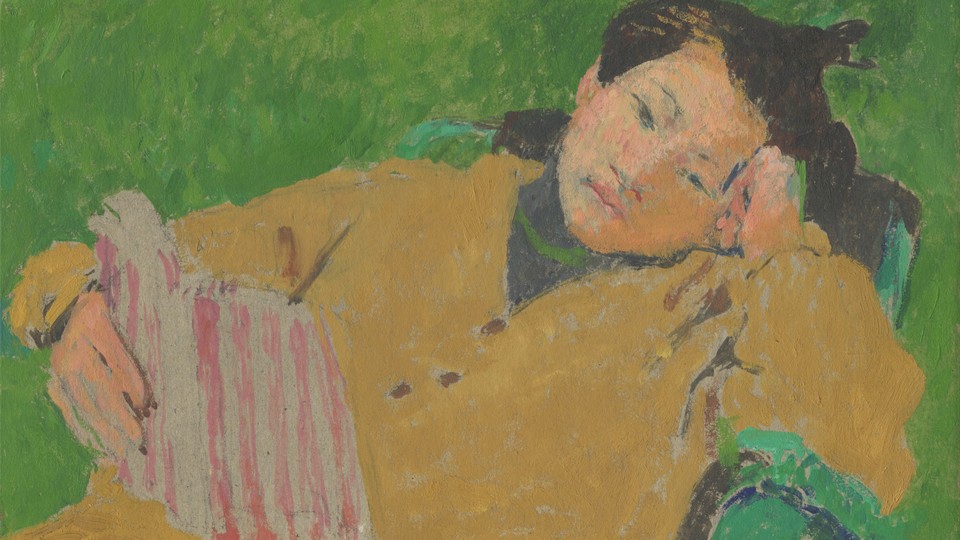
A short story Jean-Francois Debord / Bridgeman Images 1.
It was summer when I first met Kimiko. I was 15 at the time.
One morning, not long after the start of what was going to be my final summer vacation of junior high, I woke up to find a strange woman sleeping next to me on the futon where my mom was supposed to be.
I couldn’t see her face. She was wearing my mom’s pajamas, but I could tell right away that the woman snoring soundly with her back to me was not my mom.
Propping myself up on my elbow, I pulled away for a moment, then decided that it was no big deal and went back to sleep. My mom worked at a small bar not too far from where we lived, and this wasn’t the first time she’d brought home friends or some girls from work to stay the night.
The next time I woke up, the woman was nowhere to be seen. Instead, the pajamas she’d worn had been neatly placed on top of the futon, which had been folded up. They were the same old pajamas my mom had been sleeping in for years, but now they looked pristine, like they were on display at a store. I couldn’t take my eyes off them.
We always hung our clothes and underwear to dry on the curtain rod over the window, and we’d just grab whatever we wanted to wear when we needed them. Our room was messy and littered with junk, so the corner with the futon and the pajamas had a gravity all its own, like someone had taken a piece of pencil-smudged notebook paper and carefully erased one white spot.
My mom and I lived in a small town at the edge of Higashimurayama in a cramped, run-down tenement house hidden away from the main street.
In between a pair of detached houses facing the street was a gravel path about three meters wide. To find the entrance to our building, you had to head down that path and then turn left. The front was so old and dirty, you could barely make out the writing over the door: Evergreen Hills. The entryway always made me think of some ominous cave, and the hallway it led to was lit with nothing but a few dingy bulbs, so it was always dark, no matter how sunny it was outside.
Evergreen Hills was a two-story wooden building. Both floors had four identical rooms, but the only person living in the building, aside from my mom and me, was the middle-aged landlady, who occupied one of the back units upstairs. The sliding wooden doors separating the units were so flimsy, even a child could kick them down, and each unit had a small entryway. Beyond that was a kitchenette, and then two rooms one after another, each with four and a half tatami mats. At the end of the first floor was a communal bathroom, though my mom and I were the only people using it. We were surrounded by buildings on all sides, so even when we had the windows open, all we could see was a wall of concrete. We barely got any light.
Mom rented both units on the first floor: one to the right and one to the left as you entered the building. Most of the time, Mom and I were on the right-hand side.
The one to the left was supposed to be my dad’s, but it never felt like anybody lived there. Other than a TV set and some bedding, there was nothing in there—only some clothes hanging in the closet. After all, my dad never stayed with us for long, even when he was in town.
At the time, I had no idea what he did for work. He was tanned and well-built, so he must have been working construction or driving trucks or doing some sort of day labor that called him away for long stretches. (I remember one time in elementary school I heard him call my name from some big truck as I was walking home.) For a while, he brought friends over—men dressed in the same kind of work clothes—and they’d have yakiniku, or maybe hot pot, and drink sake. But those nights soon came to an end.
Whenever my dad did come around, he was always nice. He’d bring me things: a badminton set, stuffed animals he must have gotten at an arcade, things like that. Sometimes he’d come home in the middle of the night, wake me up, and say, “Hey, you’re gonna love this,” and feed me pieces of sushi.
I didn’t have anything against my dad. But I spent so little time with him that I never knew what to say—so when he was home, I’d get weirdly nervous and self-conscious. I couldn’t wait for him to leave again. I also worried that he could tell how I felt. I knew he wasn’t a normal father, but on some level, I felt like maybe it was unfair of me to think about him that way. The whole situation made me feel bad about myself.
By the time I was in my last year or two of elementary school, my dad came by less and less, then not at all. Where he went, what happened to him, to this day I have no idea. I only found out later on, but apparently he had another home, another family, somewhere else.
My mom was easygoing, so I could more or less do what I wanted, but she didn’t offer me much in the way of family life. She liked having fun and drinking, even though she couldn’t hold her liquor. She had lots of friends and always just went with the flow. Way back when, she went to a technical high school in the neighborhood, and after graduating, she started working full-time at a nylons factory. She used to brag about how she was the leg model when the higher-ups came from the main office to visit the factory. But she only stayed at that job for a few years. She found work at a hole-in-the-wall bar in town with some friends, then moved on to another, then another—that was when she had me.
Even as her daughter, I could tell she wasn’t a typical mom. She was petite and looked a whole lot younger than the other kids’ moms at school. There was something childlike about her face, and she was always smiling, optimistic, and upbeat, though every time she drank, it made her cry. Not for any real reason, though. I guess you could say she was an emotional drinker, somebody who couldn’t separate drinking, having a good time, and bursting into tears.
I never heard her complain or say anything bad about my dad. But she didn’t seem particularly attached to him either. Even after he disappeared, she didn’t seem fazed. Now and then, she’d tell me stories about how terrible her own mother had been before they stopped talking, but always in a lighthearted way, and only after she’d drunk enough to get sentimental.
What my mom liked was company. People were always hanging out at our place: hostesses from the bars where she worked, friends her customers had introduced her to, local friends she’d known for years. When nobody else was around, and it was just me and her, I always got nervous. As a rule, we didn’t see much of each other, though. My mom slept while I was at school, woke up in the afternoon, put her makeup on, and headed out to work in the evening, then came home in the middle of the night. There was only one other kid in the neighborhood whose home life was similar to mine, and we got along well. From the time we were in elementary school, the two of us didn’t have a curfew like the other kids. Other kids had to be home in time for dinner or weren’t allowed to go certain places—and their parents apparently didn’t want their children spending any more time with us than they had to. Other kids were definitely not allowed to come over to our houses to play. I had another close friend at school, but she was always running off with the other kids as soon as the last bell rang. I remember I asked her why one time. At first, she was reluctant, but then she told me, “My parents said weird grown-ups are always coming over to your house. They say I’m not allowed to go, because your family’s not normal.” Well, that wasn’t some baseless rumor or horrible lie—it was the truth. And there wasn’t anything I could do about it.
When I got to middle school, I started to notice things by my friends’ faces, by their attitudes. I could tell right away which kids were from normal homes and which ones weren’t. It was like we were wearing different-colored hats. In a normal home, you wouldn’t wake up in the morning to find a woman you’ve never seen before sleeping on the futon next to yours. The sight of neatly folded bedding and pajamas probably wouldn’t make you feel all warm inside. It wouldn’t leave you so spellbound, you wouldn’t know how to look away.
I folded up my own futon, doing it the same way the woman had, then set it next to hers. I was alone in the room, and there wasn’t anybody in the kitchenette either. I slipped into my sandals, hopped across the hallway, and opened the door to the other unit. Inside, the TV was on full blast. When I stepped in, I saw the woman sprawled out on the floor, back to the door, watching a talk show. The head of our ancient electric fan rotated slowly to the right, then back to the left, creaking loudly every now and then.
Noticing I’d come in, the woman turned her head and gave me a big smile, though she didn’t get up. Her expression was so natural that I wondered if she was somebody I’d met before. But she wasn’t—she’d apparently slept the whole night next to me, but this was the first time I’d seen her face. A second later, she went back to looking at the screen, her shoulders shaking as she laughed at the talk show. I stood still at the threshold between the kitchenette and the room, watching the TV, the fan, and the woman.
“Wanna eat something?” the woman asked me, stretching. The show was over. It had just gone to commercials. “I’m starving.”
We went over to the kitchenette to make some instant ramen. She was taller than I was, and her arms and legs were really long. Her wild, raven-black hair was gathered loosely behind her neck, and the ends fanned out over her giant white T-shirt, which had something written in English on it. Standing at a slight distance, I watched the water heat inside the aluminum saucepan.
The woman ripped into the packages, tipped the noodles into the water, and separated them with a pair of chopsticks. Then she poured in the seasoning packets, mixed everything together, and divided the meal evenly into the two bowls I’d set out. She tried to peel off a wonton stuck to the edge of the pan but couldn’t manage with her disposable chopsticks, so in a cheery voice she said, “Forget it. I’ll bring the whole thing over,” motioning toward the room. I pulled over the stripped kotatsu that had been resting against the wall, and we sat down across from each other and slurped.
“It’s summer vacation, right? You going anywhere?”
I hummed vaguely, not a real yes or no. I hadn’t been feeling the summer heat a moment ago, but suddenly I broke out in a sweat. I reached over and turned the air conditioner on to high.
“You and Ai aren’t going anywhere?” Ai was my mom’s name.
“Not really … We don’t go places.”
“Huh … Hey, what’s your name? Mine’s Kimiko.”
“I’m Hana.”
“Hana … Who gave you that name? Ai?”
“I … I don’t know,” I answered in a small voice.
“Oh, okay.”
“You’re, um, my mom’s friend, right?”
“Uh-huh.”
That’s where the conversation stopped, and we went back to eating our ramen in silence. There was a game show on TV, and the old AC unit wheezed away. I heard the faint sound of an ambulance outside, drawing closer for a moment, then fading into the distance.
“How do you write Hana? Do you have a Chinese character for that?
“Just the normal one. Flower.”
“For my name, it’s ki like yellow, mi like beauty, and the usual ko, like child.”
I nodded, as vague an answer as before, and lifted my bowl to drink the broth. Bowl in both hands, I looked over at Kimiko. She had already finished eating and was resting her elbow on the table. Our eyes met, and I had to turn away. But again, I stole a few more glances at Kimiko’s face over the top of my bowl. She didn’t look like any other woman I’d ever seen before.
Obviously, every person has a unique face, but there was something so captivating about hers, something I couldn’t quite explain with my middle-school vocabulary. Even though she’d just gotten out of bed and was barefaced, she looked striking: full eyebrows, defined double eyelids, long, thick eyelashes, eyes and brows close together. I was drawn to her prominent nose and the wisps of hair from her temples down to her ears, damp with sweat and curled up in little rings.
More than beauty or a pretty face, what I saw in her face was strength.
She reminded me of the hero from a popular girls’ manga series I’d loved to read in elementary school. Part of it was set in ancient Egypt, so the main character was a dashing young pharaoh. Watching Kimiko crack her neck and rearrange herself in front of the TV, I could almost see the pharaoh’s lines appearing in a speech bubble over her head, the whole scene contained within an inky-black frame. The thought made me smile.
“I could really go for a soda. Wanna come?” Kimiko asked when she came back from putting the bowls in the sink. We didn’t freshen up to head out, just walked down the street to the nearest convenience store.
“You guys have two units, but you still sleep in one, huh?”
“Where we ate the ramen, we call that the TV room. We keep the futons in the other one, and that’s where we sleep.”
“So you have a separate living room, nice.”
“It’s not that fancy,” I said, looking at the ground.
“Well, who wants to sleep alone, right?
The rays of the summer sun were so piercing, I had to squint, and I could sense the heat sinking deeper into my skin with every breath I took.
Evergreen Hills was right behind my middle school.
We followed the gray wall surrounding the school for a couple of minutes and turned left at the corner, toward the school’s main gate. The convenience store was right across the street. Students weren’t allowed to go into the store in our uniforms, but it was a rule that everybody at school broke. The bright leaves of trees planted inside the school grounds climbed over the wall and cast deep, blue shadows on the narrow strip of sidewalk asphalt.
As we got closer to the school gate, I could see a group of people there, talking and laughing. Some students came to school over the break—for clubs and things—but that wasn’t what these people were doing. They were the delinquents—the bad kids.
Two of them were third-years, same as me. There were a bunch of other juvies with them, too, including a guy in tobiwork pants with hair bleached the color of straw, and a girl who’d already graduated, her bleached hair shooting up from the top of her head like a fountain and her eyebrows as thin as insect antennae. I knew who she was. She was a famous rebel at our school, and the other kids were her usual crew.
The girl with the fountain hair hadn’t gone on to high school, instead apparently getting involved with a motorcycle gang and some local guys who worked construction. She was also known for wearing oversize socks—“loose socks,” we called them—all the time, no matter what. Loose socks with baggy tracksuits, loose socks with flip-flops. Some kids even said she wore loose socks to bed. She had the names of all the guys she’d ever been with tattooed on her arm and had an older sister who worked at a famous boutique at 109 in Shibuya. She was the kind of person people feared and respected.
I did what I could to avoid making eye contact with them, but one of the girls from my year saw me and started shouting. I didn’t say anything back, just kept my mouth shut tight and my eyes on the ground. Their lives at home weren’t that different from mine, but I hadn’t gone bad the way they had. At the same time, I was obviously nothing like the other kids who studied and went to cram school, who ate meals with their families and went on vacation. In school and out, I was the kind of kid everybody avoided and felt sorry for at the same time.
On top of that, our apartment was really close to school, so most of my classmates knew where I lived. Some of them even came to spy on me—just for fun—to see how old and dirty our building was. Of course, the kids at school weren’t all from families with money. Lots of them lived in huge housing complexes or cheap apartment buildings, but there weren’t any other kids who lived in a tenement house like mine, with a shared toilet and no baths or showers—at least not anybody in my grade.
“Friends of yours?” Kimiko asked with a smile.
“No, not really.”
“I think they’re talking to you.”
“No, they’re not.”
“Oh, okay.”
We went into the convenience store, and Kimiko picked out the soda she wanted, grabbed a basket, threw in some bags of potato chips and dried squid, then said to me, “Hey, get whatever you want. They’ve got ice cream.” I was only tagging along so she could get something to drink, so I hadn’t brought any money for myself. Besides, the heckling from the kids across the street had put me in a dark mood. I was surrounded by ice cream and juice, but I didn’t want any of it.
“Hey, did your mom tell you she might not come home for a bit?” Kimiko asked as she riffled through the plastic packages lining the baked-goods aisle.
“No.”
“How do you guys stay in touch? Pagers?”
“Yeah, but I can call her at work if I need to,” I said. “You mean she’s not going to be at work for a while either?”
“It sounded like she was going on a trip or something. She said she’d give you a call. Hey, what do you do for food?”
“Oh … um, there’s ramen, and …”
“What do you do for money?”
“We have a can at home, and I just use what my mom puts in there.”
“You don’t run out?”
“No.”
“You pay for electricity and everything out of that?”
“Yeah, when the bill comes in the mail.”
When we left the store, the sun was beating down even harder than it was when we’d gotten there.
There were more kids across the street now, and they were getting louder. For a second, I wondered if the scary guidance counselor was going to come out of the school and tell them to break it up, but it didn’t look like that was about to happen. Some of the scarier teachers weren’t afraid to rough up kids who got mouthy or gave them attitude, but even those teachers didn’t mess with the kids who had gang connections or who actually fought back. With those kids, the same teachers would act like they weren’t like other adults, like they got where the students were coming from.
When my classmates saw me again, they started jumping around and laughing even louder than before.
“Hey, Bibinba!” they shouted.
I squeezed my eyes shut. I was naturally melanated and dark all year round, even though I didn’t play sports and almost never went outside. Because of my tanned skin, some of the meaner kids at school called me Bibinba, after a Sanrio character that had been popular in elementary school. (It didn’t help that Bibinba sounded like binbo, which meant “poor,” and those kids knew it, too.) Whenever they saw me, in school or not, they’d hop up and down and act like they were holding spears as they gleefully chanted “Bibinba, Bibinba! Poor old Bibinbo!”
“Are they saying ‘bibimbap’? Like the food?” Kimiko asked me as she glanced in their direction.
I couldn’t answer her—I couldn’t even bring myself to shake my head. What they were doing was so immature, even elementary-school kids wouldn’t do it these days, but it still hurt me every time. In that moment, I was so embarrassed that Kimiko, somebody I’d just met, could see me for who I was, how I was treated, just like that. I was so ashamed that I wanted to vanish, right then and there. My face got hot, and I felt a prickle inside my nose. If I let go for even a second, the tears were going to come pouring out of my eyes. I walked on, staring at the toes popping out of my sandals, breathing out what I was holding inside, little by little.
“Bibinba! Hey, Bi-Bi-Bi-Bibinba!” One of them called, making a song out of it, and the rest of the kids burst out laughing. We lived in different worlds, and I didn’t exist to them except when they were teasing me. So when they insisted on coming after me that day, it was a real surprise, and I didn’t know what to do. I kept on walking, pretending I couldn’t hear them. I wanted to get away from them as quickly as I could.
When I finally reached the corner and snuck a look over my shoulder, Kimiko wasn’t there.
Lifting my head again to glance back, I saw her crossing the street with the plastic bag from the store swinging in her hand. I was so shocked, I almost jumped. What was she thinking? She walked right up to the group as naturally as if she’d been heading that way all along.
I gulped and craned my neck to try to see what was going on. While we were in the store, some other kids had shown up on motor scooters and custom bicycles with chopper handlebars. Some of them even seemed to be drinking or maybe huffing something and whooping excitedly. What if they beat her up? Or set her hair on fire with a lighter? How old was Kimiko anyway? My thoughts tangled up inside my head.
My heart was pounding so hard now that I was sure it was about to pop, but the kids, who appeared skeptical at first, started to smile as if amused. Somehow, Kimiko looked like she was having a normal conversation with them. I couldn’t see her face from where I was, but from the way she was standing, putting her weight on one foot, she seemed relaxed. A few minutes later, I even heard them laughing together. I started to wonder if maybe Kimiko knew one of them, but that couldn’t be true.
I stood there under the bright white heat of the sun, watching as Kimiko and the kids talked and laughed, apparently enjoying themselves. It looked to me like they were welcoming this strange visitor, like they were enjoying having an adult show up and take an interest in them. They even looked kind of excited. After maybe 10 minutes, Kimiko gave them a wave like she was saying, “See ya,” then made her way over to where I was, shopping bag swinging once again. Behind Kimiko’s back, I could see Loose Socks exaggeratedly thrusting her hands up, saying something that made everybody laugh. Kimiko smiled and waved back at them.
“Nice to be young,” Kimiko said once she’d walked up to me, a grin on her face. “My soda’s all warm now.” She laughed loudly. Stray strands of her dark hair clung to her sweaty forehead and the back of her neck.
2.
I spent the next month living with Kimiko. It was my entire summer break.
My mom called now and then. She came home every once in a while, two, maybe three times. When she did, the three of us would eat sukiyaki together, and then my mom would go off on another one of her trips.
She never really talked to me about it, but at the time she had a boyfriend, and she was staying at his place a lot. I didn’t know his real name, but I knew that his friends called him Snoozy because he spoke and moved so slowly.
My mom had never been the perfect mother. But she’d never left the house for days or weeks straight before, so it scared me when Kimiko told me that she might not be coming back for a while. Kimiko was with me, though, so I adjusted to my mom not being around.
I couldn’t tell if she had asked Kimiko to stay with me so she could go to her boyfriend’s place without having to worry about me, or if there was some other reason Kimiko was there. Neither of them said anything about it. Three days after she showed up, Kimiko said she’d be back later and returned that evening with a big, brown faux-leather bag. That night, the two of us made pork-belly rice bowls.
Kimiko and my mom had met out drinking a few years back, through Mama Junko, who ran the bar by the train station where my mom worked. Kimiko and Mama Junko, who was almost 60, had known each other for ages. I’d met Mama Junko a few times too, but she always made me feel uncomfortable. Recently, Kimiko and my mom had crossed paths again. Kimiko was 35—two years younger than my mom. They’d never worked together. I didn’t really understand the relationship they shared, but it seemed to me like Kimiko looked up to my mom, and my mom was always looking after Kimiko. But maybe I only thought that way because I knew my mom was older. When I actually saw them talking, my mom was the one who was always complaining, venting about whatever was going on in her love life, gossiping about customers from the bar and the hostesses she worked with. She’d go on and on while Kimiko sat there, listening patiently and throwing in supportive comments. When they got together, my mom looked and acted even more childish and helpless than usual.
“Ai’s the best, isn’t she?” Kimiko said one night after we’d turned off the lights and gotten into bed. We put our futons next to each other and slept in the same room, just like my mom and I did. “She’s so generous.”
Before Kimiko, whenever my mom’s friends and acquaintances came over and she wasn’t home, every single one of them said something critical about her. And they didn’t just gossip about my mom; the things they said always made it sound like they felt bad for me, too. You must be lonely, Hana. Ai’s so fun, but she’s not the most responsible person. It’s not fair to you, Hana … I never knew if these people had any kids of their own, but the lives they led weren’t that different from my mom’s. That’s why they kept turning up at our house. But they all seemed to want to tell me that my mom was failing motherhood. And I could tell they were genuinely sorry for me, so I never knew how to respond.
Which is why I was caught off guard when Kimiko actually had something nice to say to me about my mom that night. I perked up. “You … you think so?”
“Oh, yeah,” Kimiko said. “She’s such a good person.”
“A good person?”
“Yeah. And a good listener.”
“I guess she is.”
“Do you know what she’s calling herself at the bar now?”
“She changed her name again?”
“Uh-huh. To Airu. Ai is love, obviously, and ru is tears.”
“She’s so picky about her names. But, wait, if she’s going by Airu, that means people are still calling her Ai-chan, right? What’s the point of changing it?”
“You’re right, everyone’s still calling her Ai-chan. But her astrology lady said that the number of strokes in a name really, really matters. Ai never messes around when it comes to that kind of thing, you know?”
“Yeah … What about you, Kimiko? Do you believe in stuff like that?”
Kimiko took a few seconds to think, then said, “Feng shui, maybe?”
“Feng shui? What’s that?”
“It’s the idea that all the directions, like north and south, have colors that are supposed to go with them. South goes with green, I think, and north goes with white.”
“The colors have rules?”
“Yup.”
“What happens when the right color goes with the right direction?”
“You invite good luck into your home.”
“You do? To any home? What if it’s a really small one, and not a real house?”
“I don’t think it matters what kind of house it is,” she said with a smile. “As long as you keep your entryway clean—and any rooms with running water, too. Oh, and don’t forget yellow. When you put yellow in the west, that’s supposed to attract money.”
“The color yellow attracts money?” I asked, bewildered.
“Sure does.”
“Hey, Kimiko?”
“Yeah?”
“You have the character for yellow in your name, right? Do you think that gives you good luck with money?”
“I don’t know.” Kimiko laughed. “Maybe?”
“Do you think you’d be rich if you dyed your hair yellow and moved way out west somewhere?”
“I wonder.”
Now I had to smile. The Kimiko I was picturing in my mind wasn’t blond. She had hair as yellow as the yellow in a box of crayons—like a kid’s drawing of a lion, or maybe like a sunflower—and that made her eyes and eyebrows stand out even more.
In the dark, I tried to recall what colors we had around the house, but I couldn’t remember any. It did occur to me, though, that the place had gotten cleaner and brighter since Kimiko had come. Before, I washed the dishes only when the sink got full, and I left my dirty clothes on the floor until there wasn’t enough space for me to lay out my futon. The landlady took care of the shared bathroom, and we never bothered to sweep the hallway. That was how we’d always lived. Kimiko, though, folded the clean laundry as soon as it was dry, and she always washed the dirty dishes and put them away as soon as we were done eating. The entryway looked a lot nicer, too. Whenever I got home and saw our sandals neatly lined up inside the door, I felt happy in a way I couldn’t even express.
“Kimiko, do you think my mom and I should live somewhere else? Somewhere nicer?”
As I asked, I thought about the times kids from school had followed me home to see where I lived.
“What do you think?”
“Sometimes I think we should.”
“You do?”
“I know Mom’s on her own, but I feel like we could make it work, if we tried harder, we could live somewhere else, somewhere more normal … a real apartment or something.”
“Mmm.”
“But Mom is always spending money on other things. Like clothes. And drinking.”
“Mmm, yeah.”
“And her boyfriends.”
“Hmm …”
“She doesn’t care about where she lives. To her, a home is just a place to sleep. She hates moving, too. She doesn’t see the point. This is what we’ve always had, you know? So why would we want anything else? But, yeah, home is the last thing on her mind. The very last thing. Well, she’s never here anyway. She always has somewhere else to go. So I guess it makes sense for her, but …”
As I told Kimiko these things, things I’d never said to anybody, my cheeks grew hot.
Kimiko made a sound like she was waiting for me to continue, but I felt like I couldn’t breathe and had to stop. I was glad it was night and the room was dark, so she couldn’t see my face clearly. I fell asleep without saying another word. In the morning, when I woke up, I saw Kimiko’s folded futon and a wave of relief came over me. Then I closed my eyes and went right back to sleep.
The summer Kimiko and I spent together was like no summer I’d ever known before.
We fried karaage in the kitchenette, and she showed me how to add garlic to make it taste better. I’d learned how to make simple dishes so I could feed myself, but that was the first time I’d ever done anything with garlic. We held our fingers up to each other’s noses, laughing at how smelly they were.
We took a lot of walks, too. Kimiko said she’d never spent so much time in my neighborhood before, even though she’d been to the bar where my mom worked lots of times to see Mama Junko. We’d walk the 30 minutes to the station to look around the shops there, and when we were done, we’d keep going, down streets with nothing but houses on them, sweating away. No matter where we went, the summer sun was scorching, and if you were close enough, you could probably hear our skin sizzling under the heat. When we went out wandering like that, we’d stop by for a bath on the way back. We didn’t have one particular place we went, though. It was fun to go to bathhouses we found while we were walking around. Kimiko would nod along no matter what I said, and whenever I told a joke, no matter how bad it was, she’d crack up. I’d always thought of myself as a shy, boring person, but when I was with Kimiko, I became somebody else, somebody happier. New, unexpected thoughts would pop into my mind, one after another, and I’d just keep on talking and laughing. At first, I felt like I was pretending to be someone else, but the more Kimiko smiled and laughed with me, the more I started to feel like maybe this was the real me.
We ate somen noodles a lot, or got bento at the store and brought them home. Sometimes Kimiko would take me to the izakaya by the station and let me eat all theyakitori I wanted. Once, she fed me sea grapes, umibudo, for the first time in my life. Kimiko never kept her money in a wallet. She carried her bills and coins loose in her pockets, and I was always worried they were going to fall out without her realizing.
Sometimes, when we were walking back from eating out, we’d go by the bar where my mom worked. We never went inside, though. I could hear the karaoke music echoing through the walls, but I couldn’t tell if it was Mom singing or not.
One night, the local shrine had a night market. I didn’t feel like going, because I thought I’d run into other kids from school, but Kimiko wanted to check it out, so we went.
As evening fell and gave way to night, the heat of the day faded and everything around me began to sparkle and shine. The red splotches of goldfish swimming in rippling water, the neon of the glow-in-the-dark bouncy balls, the soft clouds of cotton candy as sweet and fragile as memories, the sound of the pop guns at the shooting gallery, the cheers from the crowd… The summer night filled the air with energy and a sense of wonder, and before I knew it, it had filled my heart, too.
Maybe because it was night and everyone was feeling carefree, kids from school were more friendly, coming up and actually speaking with me. All of us kids sat down on the stone steps together and ate shaved ice and other snacks we’d gotten from the stalls. When I first saw my schoolmates, Kimiko had nudged me to go talk to them and stepped away, but before long, she joined the group and started chatting with everybody like it was the most natural thing in the world. She bought the whole group juice and snacks and told everybody she and I were related. So you mean Hana’s your niece? You look more like a sister than an aunt … I always wanted a big sister like you. All the kids looked at me with admiration.
“Let’s go get some yakisoba.”When Kimiko made the suggestion, we headed over to the stall together. In the excitement of the moment, one of the girls hooked her arm around mine. Brimming with a pride I’d never known before, I laughed like I never had and told jokes that made them giggle and shriek. All I could think was how fun it was to have Kimiko there, and how I wished things could stay that way forever.
But that was just a dream.
When summer ended, on the first day of the new semester, I got home from school and Kimiko wasn’t there. Her big brown bag was gone, too. I waited and waited, but she never came back. Around midnight, when I couldn’t stand the hunger anymore, I went to the store to get something to eat. I kept an eye out on my way, thinking maybe I’d find Kimiko in the neighborhood. But I didn’t see her anywhere.
When I got back to the room with my bento, my appetite had disappeared. I couldn’t bring myself to touch the food.
Everything was in exactly the same place—the kotatsu, the unfinished walls, the lampshade, the TV, the electric fan—but it felt like everything had changed.
I got down in the corner and hugged my knees, listening for some sound, some sign—anything. Over and over, I imagined Kimiko opening the door and saying she was back. But that didn’t happen. Every time I blinked, the weight in my chest grew heavier. It was like the whole room was plunging deeper and deeper into darkness and taking me along with it.
I pressed my palms against my cheeks and took deep breaths. Then I shook my head, as if I could shake away the loneliness and fear that were dragging me down. After a while, I realized I was incredibly thirsty. I got up and walked to the fridge to get some water, but as soon as I put my hand on the door, I knew something had changed. When I looked inside, I expected to find almost nothing, but the fridge was stuffed full of ham and hot dogs and kamaboko, cans of tuna and peaches, melon buns and juice boxes.
Still holding the corner of the door, I crouched down and stared at the food, unblinking.
It was Kimiko. She’d sent me off to school, then gone to the store to buy a feast. All for me.
She must have decided that she was going to leave that day and bought everything so I wouldn’t be hungry. Item by item, she filled the fridge. For me. When I understood, my heart nearly burst. I stared into the faint yellow light from the back of the fridge, unable to move.
This excerpt was adapted from Mieko Kawakami’s novelSisters in Yellow, translated by Laurel Taylor and Hitomi Yoshio.
Laurel Taylor is the translator of Maiko Seo’s Someone to Cook For, and she has translated works by Kaori Fujino, Minae Mizumura, Yaeko Batchelor, and Aoko Matsuda. She is also a poet and scholar. She teaches Japanese language and literature at the University of Denver.
Hitomi Yoshio is the translator of Natsuko Imamura’s This Is Amiko, Do You Copy? and a co-translator of Mieko Kawakami’s Ashes of Spring. She has published translations of works by early-20th-century Japanese authors such as Ichiyō Higuchi and Midori Osaki. She received her Ph.D. from Columbia University and teaches Japanese literature at Waseda University.