RFK Jr.’s Next Move Is What Anti-Vaxxers Have Been Waiting For
AI Summary7 min read
TL;DR
Health Secretary RFK Jr. has unilaterally removed several vaccines from CDC recommendations, fulfilling anti-vaccine advocates' goals and potentially endangering public health by undermining immunization rates.
Key Takeaways
•RFK Jr. broke his promise to support CDC vaccine schedules by removing hepatitis A, rotavirus, and flu vaccines from universal recommendations.
•The move bypassed expert advisory boards and aligns with Kennedy's long-standing anti-vaccine views, potentially leading to decreased immunization rates.
•Public health experts warn this could cause preventable illnesses to resurge, while anti-vaccine groups see it as a first step toward eliminating all vaccine recommendations.
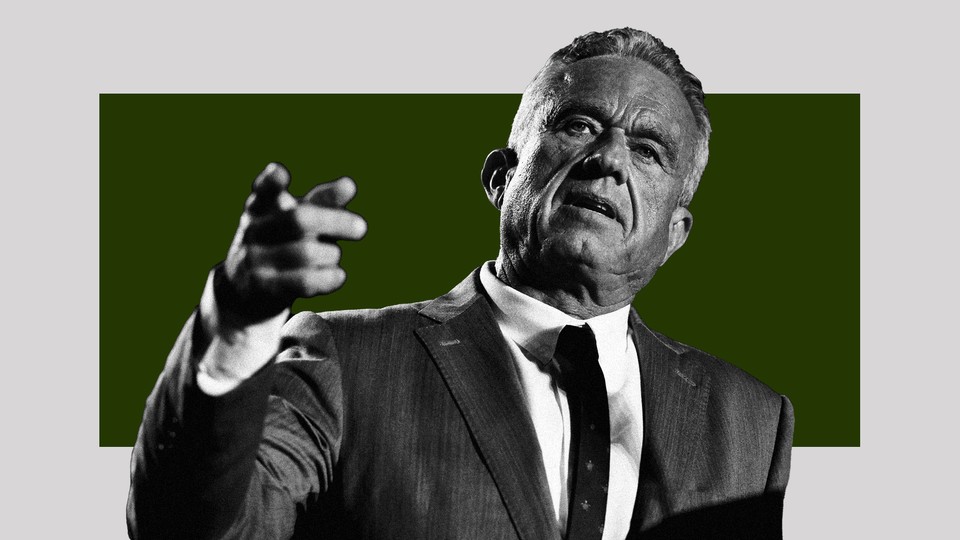
Nothing seems to be stoppingthe health secretaryfrom driving America over a vaccine cliff. Illustration by The Atlantic. Source: Chip Somodevilla / Getty. Nearly a year ago, Health Secretary Robert F. Kennedy Jr. pledged during his confirmation hearing to support the CDC’s childhood-vaccine schedule. Yesterday, he broke that promise. The Department of Health and Human Services has announced that the CDC will drop several vaccines from its recommendation list. With that move, Kennedy has shown that he can change the vaccine schedule by fiat.
Kennedy appears to have a clear road if he wants to do more. The acting CDC director, Jim O’Neill, who signed off on the plan, took over the position when the previous director was fired after defying Kennedy. The new recommendations were written by two Kennedy allies at HHS; the agency’s vaccine advisory board, which Kennedy remade in his own image last year, appears to have been cut out of the process entirely. Following this map, Kennedy could dispense with any recommendation he dislikes, issue whatever advice strikes him and those he’s hired as wise, and thereby remake public-health policy in the United States in accordance with the anti-vaccine arguments he’s been advancing for 20 years.
The move didn’t come as a surprise. Kennedy spent much of 2025 undermining confidence in vaccines and sidelining public-health officials who disagreed with him. The overhaul of the pediatric schedule followed a request last month by President Donald Trump to bring the United States in line with a set of other developed countries and had been hinted at for weeks, as well. The vaccines no longer universally recommended for children include those for hepatitis A, rotavirus, and the flu. Although these diseases can be serious—the CDC estimates that, before the vaccine, rotavirus killed dozens of children each year and sent hundreds of thousands to the hospital—they don’t represent the same level of threat as polio or the measles, each of which killed thousands of children in the 1950s and each of which, at least for now, remain on the vaccine schedule. An HHS spokesperson, Andrew Nixon, told me that the new list “maintains strong protection against diseases that cause serious harm or provide clear community benefit, while aligning U.S. guidance with international norms.” Whatever the pros and cons of any particular vaccine, this move is still the strongest evidence yet that the health secretary intends to unilaterally impose his will on an agency he has repeatedly assailed as corrupt.
Public-health experts are generally aghast at the new policy. Although Mehmet Oz, the chief of Medicare and Medicaid, said yesterday that insurers will still cover the vaccines that are no longer recommended, the onus will now be on doctors and professional associations such as the American Academy of Pediatrics to make the case for the demoted immunizations to parents. Daniel Jernigan, the former director of the CDC’s National Center for Emerging and Zoonotic Infectious Diseases, told me that revoking the recommendations for some immunizations “sends a message that those vaccines are of uncertain value.” That could prove dangerous: Vaccination rates have already fallen in many states in recent years, and Jernigan fears that the schedule change might lead parents to forgo certain shots, or perhaps not immunize their children at all.
Nixon said that the new schedule “returns decision-making to families,” and Kennedy has said that it is intended to rebuild trust in public health. (In a survey last fall, just over half of Americans said they considered the vaccine schedule safe.) But it seems guaranteed to contribute to greater confusion. In the short term, if the schedule change leads to fewer vaccinations, children in America will suffer through more diarrhea from rotavirus, nausea from hepatitis A, and fevers from the flu. In the long term, it could lead to an increased burden on American hospitals.
The schedule overhaul was hailed as a “victory for American children” by the Informed Consent Action Network, which has paid millions of dollars to attorneys challenging vaccine mandates. Del Bigtree, who was the communications director for Kennedy’s presidential campaign and is the CEO of ICAN, told me that the change is “setting our children on the same path to health that Denmark enjoys,” because the new recommendations mostly mirror that country’s. (The comparison is fraught: Denmark is far smaller and less diverse than the United States, and it has universal health care.)
Yet Bigtree and other Kennedy allies see the announcement as merely a first step toward eliminating all of the government’s vaccine recommendations. Aaron Siri, a lawyer who has sued states over vaccine mandates and has been a close adviser to Kennedy, told me that he is especially keen on removing the polio vaccine from the recommended list, along with DTaP, which protects against diphtheria, tetanus, and whooping cough. Bigtree wants an end to vaccine mandates, which he sees as a violation of the Nuremberg Code, he said. (The CDC’s recommendations are not mandates but are frequently used to justify states’ school-admission requirements.) Mark Gorton—who is best known as the creator of the file-sharing service LimeWire and has since become an anti-vaccine activist and a co-president of the MAHA Institute, a pro-Kennedy think tank—told me he would like to go much further. He favors pulling all vaccines from the market until they’ve undergone additional testing. (Decades of evidence have shown that the vaccines on the U.S. pediatric schedule are safe.) “Politically, we’re not there yet,” he told me. But if Gorton has anything to do with it, that’s where the U.S. is heading. (Nixon declined to comment on whether Kennedy and HHS are actively considering any of these moves.)
If more American parents opt out of the inoculations that the federal government no longer recommends, harm will inevitably come to pass. The high fevers, hospitalizations, and dehydration that these illnesses cause can be painful and disruptive—and, with vaccines, avoidable. This year’s brutal flu season is a reminder of just how devastating even routine infections can be. But the illnesses that the U.S. is now officially less concerned about preventing are not usually deadly or permanently debilitating. The World Health Organization does not recommend universal vaccination against any of them, with the exception of Hepatitis B. (As of last month, the U.S. recommends that vaccine only to children who are born to a mother who is positive for the virus or whose status is unknown.)
The same cannot be said of the immunizations the CDC still does recommend. If they were to be taken off the market or if more parents were to opt out of them, Americans could see diseases that most of us have never encountered—such as polio and diphtheria—return with a vengeance. The nation is getting a taste of that already with the resurgence of measles, which killed three people last year, and whooping cough, which claimed the lives of more than a dozen. Without the protection that widespread vaccination provides, the United States could become a nation that’s not only far sicker but also much less safe for children.