The U.S. intervention in Venezuela raises questions about democratic restoration and global repercussions. Context matters as failing dictatorships share traits but are harder to overthrow today due to refined repression and international support. External actions may lead to instability and backlash.
Key Takeaways
•The U.S. removal of Maduro highlights the challenge of restoring democracy in failing dictatorships, which often resist internal overthrow due to advanced repression techniques and international aid.
•Historical parallels show that dictatorships like those in Iraq, Libya, and Iran share commonalities such as corruption and economic decay, but modern ones can persist despite popular discontent.
•External interventions, like the Maduro raid, risk creating legitimacy issues and violent backlash, as seen in past cases where foreign involvement complicated post-dictatorship stability.
•Global reactions to the intervention include concerns from countries like Cuba, China, and Russia, and potential asymmetric responses from narco-trafficking groups or other actors.
•The aftermath may involve prolonged conflict or instability, emphasizing the need for careful strategic consideration before such actions to avoid unintended consequences.
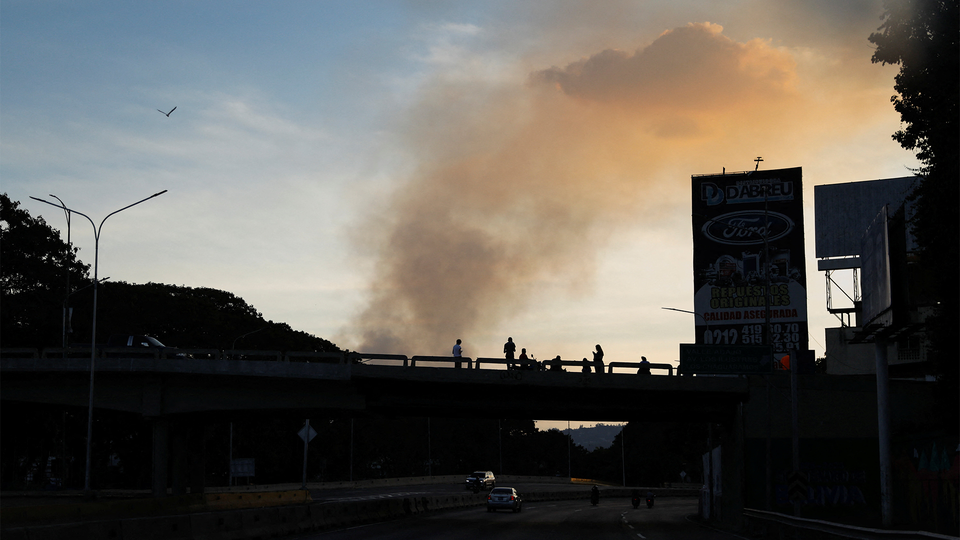
Not just the specifics—but the broader global context—will determine what happens next. Leonardo Fernandez Viloria / Reuters Now that the United States has snatched Nicolás Maduro from his presidential compound, there are questions to ask about Venezuela: Will this lead to a return to democratic order in the country, a new dictatorship, or mere chaos? There are also new questions about the United States: Was this an unconstitutional act of war? Will it lead to more violent acts in the Western Hemisphere? Will it fracture MAGA’s foreign-policy consensus? It is too early to answer those questions, but a prior one can be addressed.
The first strategic question is not What are we trying to do? or even Who is our enemy? It is What else is going on? Strategists who fail to understand the context in which they operate come to grief. In this case, because Venezuela is part of a larger set of failed or failing dictatorships, and the intervention itself will cause reactions in many other countries, context is the first thing to think about.
To paraphrase Tolstoy, all stable liberal democracies have a family resemblance; all failing dictatorships have maladies of their own. Geography, culture, recent and distant history, and personalities shape their particular course. But the commonalities in regimes that are staggering or have recently crumpled are striking: Iraq, Libya, Syria, Cuba, Iran, Russia, and, before them, the Communist dictatorships of Eastern Europe shared broadly similar experiences.
They were all decades from their founding. Early revolutionary fervor had given way to rule by a deeply corrupt and brutal nomenklatura. Economies rotted under the weight of crony capitalism or the various lies, cheats, and inefficiencies of socialism, unless temporarily sustained by external aid (Cuba) or oil (Iraq, Libya, Iran). Whereas the first generation of leaders—Hugo Chávez, Ruhollah Khomeini, Hafez al-Assad—was murderous but adroit, highly intelligent, and politically supple when they had to be, the next generation—Maduro, Ali Khamenei, Bashar al-Assad—was less so. Or, the first generation simply declined from senescence and the debilitating effects of power long exercised without check.
The ancient Greeks called this anacyclosis, the cycle of regimes. What is unusual and distinct in the current circumstances, however, is the extent to which modern dictatorships can hang on even as their economy crumbles, their leaders decline mentally, and their populations cease to believe the propaganda stuffed down their throats.
In the past, a popular uprising or a coup could bring tyranny to an end. That was the fate of the East European Communist dictatorships, in a variety of ways—Wojciech Jaruzelski of Poland reluctantly ceding power to Lech Wałęsa and Polish democrats, or Nicolae Ceauşescu ending up riddled with his soldiers’ bullets. In both cases, at a certain point, the forces of order—the police or the military—refused to put down an uprising and turned on the regime.
Today, however, overthrowing a failing dictatorship is much more difficult. The techniques of repression have become so refined that, as in Iran thus far, popular uprisings have been suppressed by efficient riot control and selective arrests and murders. Coup-proofing is an art, and many dictators now spend a great deal of effort making sure that their own generals will not attempt to overthrow them. The techniques are varied, but today’s authoritarians are assisted by a kind of Comintern of tyrannies. Cuba, for example, has provided thousands of advisers to Venezuela, including some who helped refashion the Venezuelan General Directorate of Military Counterintelligence. Iran has benefited from Chinese technology, including facial recognition and riot-police kits. No failing dictator, or very few of them, need stand against their people entirely on their own.
Their regimes are still fragile, as Vladimir Putin learned, to his horror, in 2023, when his former caterer, Yevgeny Prigozhin, with only a few thousand mercenaries, launched a coup that met almost no opposition before it collapsed. But for the most part, now only a hard knock from the outside brings dictators down. Libya’s Gaddafi succumbed to an American and European bombing campaign as he was brutally suppressing a rebellion. Syria’s al-Assad went down after Israel gutted Lebanese Hezbollah, following which Turkish aided and directed insurgents representing a minority of the country marched into Damascus. American soldiers, not insurgent Shiites or disaffected Iraqi generals, got rid of Saddam Hussein. And it now appears that American commandos have ended the rule of Nicolás Maduro, though not necessarily that of his regime.
Unfortunately, it is much easier to create a stable and more liberal new order from the ruins of a dictatorship brought down by the people or the army than one taken down by a foreigner. An air of illegitimacy, particularly in the face of febrile nationalism, will undermine the new rulers. No matter how unpopular a modern dictator might be, there will be an important percentage of his population who have benefited from his rule, who will be aggrieved by his overthrow, and who, exposed to revenge from the rest, will attempt to preempt it. Moreover, because one of the means of defeating popular revolts and coups is the use of a large, ideologically based militia—the Basij of Iran or the colectivos of Venezuela—there are bound to be plenty of angry young men with weapons that they are ready to use.
On top of this, when a multi-decade dictatorship falls, it leaves behind a society that has been atomized and brutalized in ways that are difficult to undo. One of the mistakes Americans made in Iraq was to believe that the Iraq of the 1970s—highly educated, generally secular, with functioning bureaucracies—still existed. Instead, they encountered a society stripped of much of its potential leadership by exile, prisons, and firing squads. In the case of Venezuela, despite the country’s democratic history and aspirations, something similar may be true.
The international repercussions of the Maduro raid will be a second crucial piece of context. There are those who are excited or even relieved by Maduro’s removal—on the conservative end of the political spectrum in Colombia and Argentina, for example. Others in Latin America, such as Brazil’s Lula, are angry at Yankee interventionism. But other reactions will be even deeper.
Cuba’s government must be thinking that its country is next on the list. Not only does it stand to lose a quarter of its oil supply; it faces a bitterly anti-communist U.S. secretary of state and national security adviser whose stock has risen with Donald Trump. For China, Maduro’s removal is a major setback; for Russia, too, which has provided some modest help to Maduro (a Russian aircraft linked to the former Wagner group landed, possibly carrying military goods, in October of last year). The various narco-trafficking groups have reason to be alarmed as well, particularly after the targeted killing of more than 100 suspected drug smugglers by U.S. forces. Farther away, leaders of the Iranian regime should fear similar campaigns of kidnapping or targeted killing directed by a president who has already threatened to act if they continue shooting their own civilians.
Maduro’s kidnapping involved the bombing of multiple military sites and the killing of scores of Venezuelan and possibly Cuban personnel. It was an act of war, not law enforcement. It is reasonable to expect asymmetric but warlike responses. Many actors, in Central and Latin America and beyond, have an interest in making this experience a protracted and painful one for the United States. An insurgency that ties the United States down in Venezuela would delight Beijing and Russia. Drug cartels that have been able to make the Mexican state back down through their violence might be tempted to try their luck with Trump by staging drone attacks on sporting events or clogged highways in the United States, or by even more spectacular acts such as driving an explosive-packed submersible into the hull of a cruise ship in the Caribbean.
In war, the other side always thinks that it has some choices, and, worse, that it might have a chance. All may turn out for the best here—a free, prosperous, law-abiding, and America-aligned Venezuela, and a set of dictatorships abroad eager to reform and accommodate the United States. But the other possibilities deserved meticulous consideration before the order to remove Maduro was given. One doubts they received it at Mar-a-Lago.