People cry when tyrants die due to a shattered sense of reality, not just grief or joy. Tears reflect powerlessness and the loss of predictability, affecting both loyalists and dissidents. This emotional rupture can have lasting impacts on society.
Key Takeaways
•Tears for tyrants stem from a feeling of powerlessness and a shattered compass, not just simple grief or happiness.
•Dictators create predictability in people's lives, and their death disrupts this, causing emotional turmoil even among opponents.
•Crying can be a performance for survival in oppressive regimes, as seen in cases like North Korea and Iran.
•The legacy of a tyrant's rule can persist for generations, affecting civic life and recovery long after their death.
•Emotional reactions to a dictator's demise are complex, blending anger, relief, and confusion, often indistinguishable from the outside.
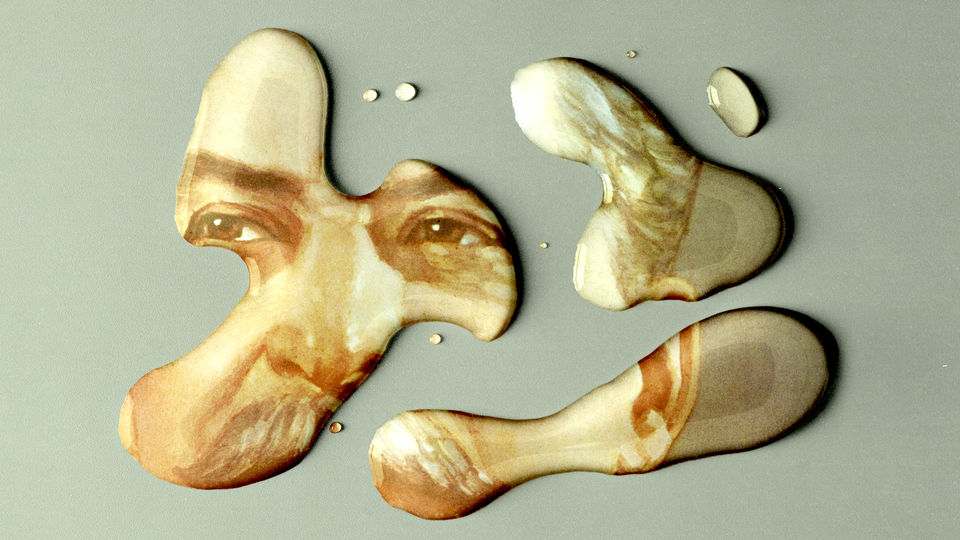
Both loyalists and dissidents wept over the death of Ayatollah Khamenei. This common reaction to a tyrant’s demise is a symptom of the damage they do. Illustration by Paul Spella / The Atlantic. Sources: Roger Viollet / Getty; Jose A. Bernat Bacete / Getty. The Iranian state television announcer was gasping for air. I almost felt bad for him. That’s how hard he was weeping when he delivered the news of Ayatollah Ali Khamenei’s demise. He reached for a tissue, blew his nose. His cheeks glistened. This was not Walter Cronkite choking up for a second while delivering the news of John F. Kennedy’s assassination. The Iranian announcer was heaving.
In New York City, Masih Alinejad, a dissident who was targeted for death by the Islamic Republic, of which Khamenei was the supreme leader, burst out into the streets when she heard the news. “The dictator of my country is dead! He’s dead!” she shouted, wailing hoarsely. A stranger stopped to hug her—uncertain, surely, if she was experiencing joy or sadness, relief or exhaustion, or even if she was sane. On a street corner, by herself, she looked into her phone’s camera at her nearly 9 million Instagram followers, and cried and cried.
Such torrential downpours, from loyalists and dissenters alike, often follow the deaths of notorious and long-ruling dictators—Joseph Stalin, Mao Zedong, Saddam Hussein. And from the outside, this display of emotion might seem confusing, or easy to dismiss as a performance for the state or the media. Take the epidemic of crying after the North Korean leader Kim Jong Il succumbed to a heart attack in 2011. Crowds of hundreds with their heads lowered bawled loudly in unison; others fell to the ground and shook in their grief. Did they love the man who starved them and trapped them like rats in a cage? Were they acting for one another in order to avoid suspicions of disloyalty? Or were they really mourning? And if so, for what exactly?
The same questions might be asked about Iranian reactions to the death of Khamenei. People do not all shed tears for the same reasons, of course. The Iranian announcer was grieving the loss of a “father,” as he put it, while for Alinejad and so many other Iranians in exile and at home, the vaporized man was a villain who had micromanaged every aspect of their lives, perhaps ordered their friends tortured and killed. There are tears of anger and tears of deliverance, and they don’t always look all that different. But there is one reason, I think, for all this sobbing: a shattered compass.
Ad Vingerhoets, a scholar of crying and the author of Why Only Humans Weep, has studied the various reasons people shed tears, and he writes that “the most common emotional trigger is a feeling of powerlessness or helplessness.” What could be more destabilizing than the loss of the Great Leader? If Mao was, as Communist propaganda had it, the “reddest, reddest sun,” wouldn’t an eclipse make humans do what other animals do at such moments—howl in confusion and fear?
In 1986, on the tenth anniversary of Mao’s death, a series of oral histories from Chinese citizens appeared in the Los Angeles Times describing what they felt when they heard he was gone. “I was shocked. Mao dead?” said a student named Shen Ji. “The first words we learned to speak were ‘Long Live Chairman Mao.’ The first words we learned to write were ‘Long Live Chairman Mao.’ He was God. God never dies.” Another respondent said he was overwhelmed by the news because as a boy he had been told that Mao could live 10,000 years, and he believed it. These people’s tears were not always a straightforward response to a feeling of grief. Shen described crying out of self-pity because all the other students at his school were able to produce tears but he couldn’t. What would this mean for his future in the Communist Party? All would be lost. “My classmates were now crying so rhythmically that I began to feel a deep admiration, and jealousy,” he said. “My heart ached. And then—my eyes moistened. I could do it. I could. Tears ran down my cheeks.”
What collapses with the dictator is what dictators spend their long reigns reordering around themselves: predictability. Even those who hated the ayatollah have now entered a story without its reliable antagonist. The Soviet poet Joseph Brodsky wrote an article on the 20th anniversary of Stalin’s death called “Reflections on a Spawn of Hell”—leaving no one to mistake how he felt about the man. And yet he completely understood the copious tears that flowed through Russian gutters in March 1953. Stalin had been as reliable a presence as the sky for three decades, “no matter how nightmarish it had been.” The citizens were used to him, “as people get used to the portrait of a relative or to an old lamp,” Brodsky continued. “People grew up, got married, got divorced, had children, got old and and all the time the portrait of Stalin hung over their heads. There was some reason to weep.”
For Soviets, Stalin was “a category of consciousness,” Brodsky wrote—meaning that he lived inside their heads. This was true for Khamenei as well. For three decades, the Iranian leader set the boundaries for morality, for thought, for what could be spoken and what could be worn. He reached into the most private parts of people’s lives. And only last month he committed mass murder against those who dared to protest his regime. In his white beard and black robe, he was represented by the state as an eternal being, a total master of the domain under his control. Shiite Muslims, for whom he was a religious and not just a political leader, were crying out in pain in the streets of Tehran, describing themselves as “orphans.”
It would be easy to reduce these tears to simple expressions of either happiness or sadness. But if we recognize the deeper well they are drawn from, the implications for what happens next are much more troubling. You can’t just wipe away that feeling of rupture, or the decades of fear that preceded it. People become comfortable with the reality they know; they will mourn even an abusive father, and might require a lifetime to overcome the abuse. Even those who unreservedly despised him, but had no other leader, might not know what to look for in an alternative, or whether to trust a good steward if one comes along.
The poet Osip Mandelstam was one of Stalin’s many victims. His widow, Nadezdha, described well the reverberations of the regime for both those who belonged to it and those who opposed it. “Every section of the population has been through the terrible sickness caused by terror, and none has so far recovered, or become fit again for civic life,” she wrote in 1970, more than three decades after Mandelstam died in a labor camp. “It is an illness that is passed on to the next generation, so that the sons pay for the sins of the fathers and perhaps only the grandchildren begin to get over it—or at least it takes on a different form with them.”
The tyrant is gone and soon the tears will dry, too, but their source, the sudden disappearance of what felt like a fixed reality, will be with Iranians for a long time.