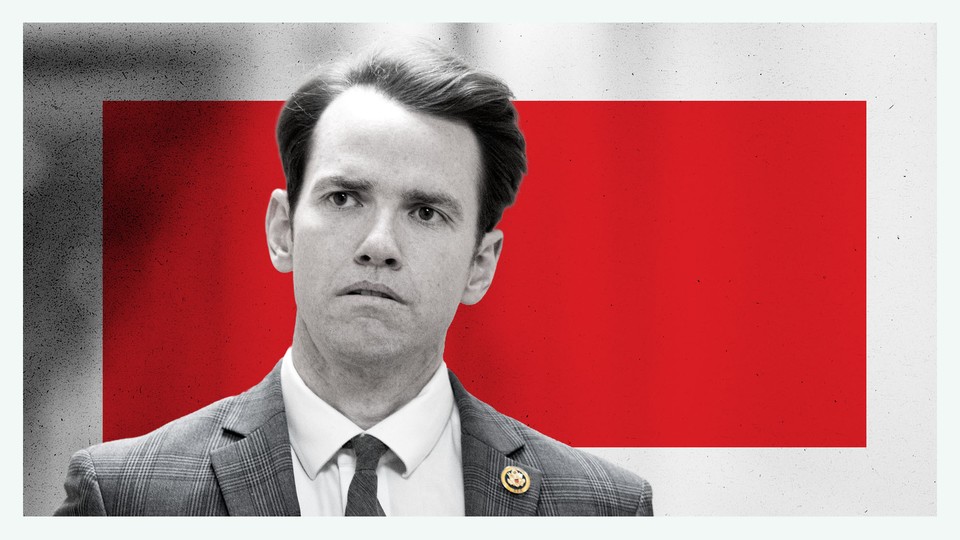
California Rep. Kevin Kiley is leaving the GOP to run as an independent, citing gerrymandering and party polarization. His move reflects a broader trend of the Republican Party becoming less tolerant of dissent and more focused on loyalty.
Key Takeaways
•Kevin Kiley's switch to independent highlights the GOP's intolerance for free-thinking legislators and increasing polarization.
•Gerrymandering and Trump's influence have made Republicans fear primary challenges more than general elections, driving out moderates.
•Kiley will still caucus with Republicans to retain committee assignments, showing practical constraints in the House's partisan system.
•The rise of political independents in Congress mirrors a growing trend among voters disengaging from major parties.
What one lawmaker’s defection from the GOP says about the state of politics Illustration by The Atlantic. Source: Bill Clark / CQ-Roll Call, Inc / Getty. In a sea of congressional bloviators, Kevin Kiley has always stood out. The two-term California lawmaker, unlike most of his colleagues, does not reflexively defend the president and, at least recently, has been a frequent critic of his own party’s leadership. So it shouldn’t have been particularly shocking when, earlier this week, Kiley announced that he would run for reelection not as a Republican, but as an independent.
Kiley will be the newest initiate of Congress’s tiny club of independents, which, until this week, consisted of just two senators: Bernie Sanders of Vermont and Angus King of Maine. More important, though, the switch represents the latest example of the Republican Party eating its own.
Politically, Kiley’s decision is something of a Hail Mary pass. The new House maps that California voters approved last fall as part of the Democrats’ retaliation for GOP gerrymandering in Texas carved up his district, which stretches from the Sacramento suburbs hundreds of miles south along the Nevada border. Kiley had to choose whether to challenge a conservative colleague, Representative Tom McClintock, in a safe Republican seat, or to run in a district that Democrats drew in their own favor. He chose to avoid a potentially nasty intraparty primary and seek the seat that includes his hometown (and that voted for Kamala Harris by about 10 points in 2024). In such a Democratic-leaning district, however, running as an independent might be Kiley’s only chance to win.
Kiley’s move may have been prompted by short-term expediency, but it fits into a longer-running pattern of the Republican Party becoming less tolerant of free-thinking legislators and Congress as a whole becoming more polarized. Over the past two decades, the GOP’s moderate wing has shrunk to the point where most members avoid the term altogether. The Republicans who hold a dwindling number of swing seats are more conservative (and more loyal to party leadership) than were the most electorally endangered Republicans in the 1990s and early 2000s.
In recent years, those GOP lawmakers who regularly criticize Trump or vote against the party don’t last very long. In the Senate, North Carolina’s Thom Tillis voted against the president’s signature tax-cut bill last year and then promptly announced that he wouldn’t be seeking reelection. Representative Don Bacon of Nebraska voices his displeasure with Trump regularly; he, too, is retiring after this year.
Gerrymandering has only worsened this trend among House Republicans, as has Trump’s demand for near-total fealty within the party. With fewer competitive districts, GOP lawmakers fear a Trump-backed primary challenge more than a general-election defeat at the hands of Democrats. And when Republicans—egged on by Trump—launched their nationwide redistricting war last summer in Texas, Kiley became a casualty. His district was one of five held by the GOP in California that Democrats targeted; they redrew another five of their own seats to make them harder for Republicans to flip. “One of the evils of gerrymandering is that it elevates partisanship above everything else. It makes it the sum and substance of our politics,” Kiley told us in an interview. “So I thought, well, maybe one antidote to that is to just take partisanship out of the equation.”
Kiley has bucked the GOP a few times in the past, including, most recently, when he criticized House Speaker Mike Johnson’s handling of the 43-day government shutdown, and then signed a discharge petition to force a vote on extending health-care subsidies. But even in shedding his party label, Kiley isn’t completely abandoning Republicans. He will continue to caucus with the party in the House, which helps the GOP retain its slim majority and ensures that Kiley can keep his committee assignments. Kiley attributed this decision to House rules that hand power almost exclusively to the majority party, though he said he would try to change them. “It’s a practical necessity to remain associated with one of the two caucuses,” he said. “And since I was elected for this term as a Republican, that seems like the right thing to do.”
Political independents have lately been more common in the Senate than in the House, although there, too, they tend to align themselves with one party or the other. Senator Kyrsten Sinema of Arizona left the Democratic Party in 2022, and Senator Joe Manchin of West Virginia did the same in 2024, briefly joining Sanders and King as independents who still caucused with the Democrats. (Neither sought reelection, and they both left Congress in January 2025.) In the House, Representative Justin Amash quit the GOP to become an independent in 2019; he, too, decided against seeking another term. Political prognosticators see Kiley’s experiment expiring with similar speed: The nonpartisan Cook Political Report, a top electoral forecaster, projects that Democrats will win Kiley’s district easily.
In declaring his independence, Kiley joins a parade that has been led not by politicians but by voters. The number of Americans registering as independents (or simply not choosing a party) has dwarfed gains made by either major party over the past several years. Kiley said he hopes other members of Congress follow his lead: “If I can help to encourage others to at least adopt that mentality, I think it’d be a really good thing for politics in this country.” Whether he does might depend on whether California voters reward his independence this fall.