Norwegian novelist Vigdis Hjorth repeatedly explores childhood trauma and family secrets in her autofictional works, blurring reality and fiction. Her latest novel 'Repetition' examines how storytelling can reveal unsayable truths while transcending simple trauma narratives.
Key Takeaways
•Vigdis Hjorth's writing often revisits childhood sexual assault and family secrets, creating tension between reality and fiction that has caused public controversy within her own family.
•Her novel 'Repetition' explores how fiction can reveal deeper truths than reality, focusing on a protagonist who discovers writing's power through a fabricated diary entry about sex.
•Hjorth's work transcends simple trauma plots by immersing readers in the full complexity of past experiences rather than just revealing traumatic events.
•The author demonstrates how repetition in storytelling serves as a means of self-knowledge and preservation of memory, even when complete revelation remains impossible.
•Hjorth's themes extend beyond autofiction to broader questions about language's power, children's silenced suffering, and families' resistance to uncomfortable truths.
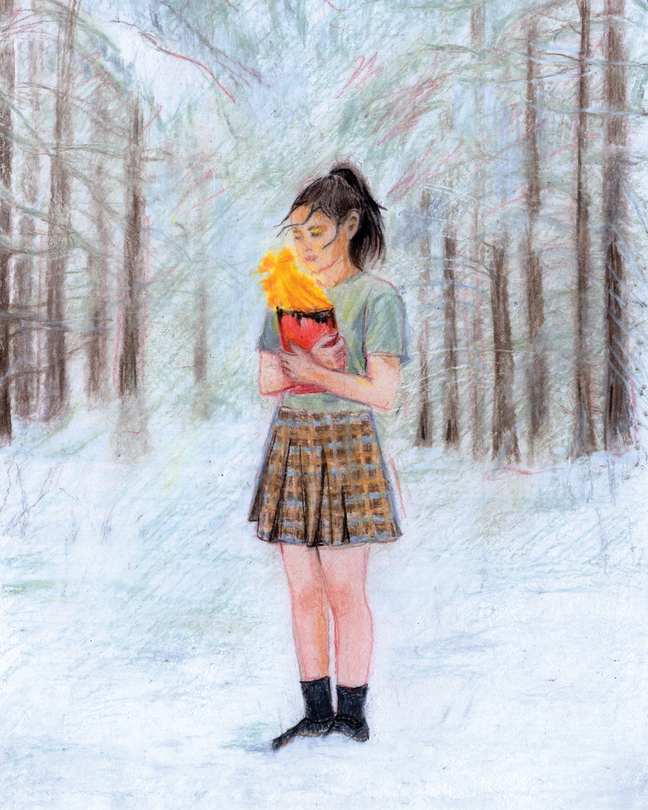
The wildly popular Norwegian novelist Vigdis Hjorth returns to a dark past. Kristina TzekovaVigdis Hjorth, one of Norway’s most famous novelists, is best known for writing about the sexual assault of a child by her father. She’s published more than 20 books since the 1980s, a number of which take up the same material—a woman trying to remember something that’s too dangerous to remember; a family with a secret. Her writing tends to be classified as virkelighetslitteratur, or “reality fiction,” and for good reason. Hjorth makes Norway sound like a small town—the sort of place where your neighbors know you’re home if they can see your footsteps in the snow—and the overlap between her life and work has more than once been the literary version of tabloid news there.
In 2016, she published Will and Testament. The novel was a hit, won the Norwegian Critics Prize for Literature, and made her family furious. Her sister Helga accused Hjorth of using their family members’ correspondence in the book; Hjorth said she had permission. Helga then wrote her own novel, about a woman whose sister lies about being raped by their father. Unlike her fellow Norwegian writer Karl Ove Knausgaard, Hjorth doesn’t give her characters real people’s names. But if anyone had doubts concerning how close the family in Will and Testament came to reality, Helga’s response seemed perfectly crafted to dispel them. That people talk about the book the way they do, Hjorth has suggested, is partly Helga’s fault: “I can’t say that there’s nothing from reality, because she has proven it.”
If you’re thinking, Not another autofictional trauma plot—don’t. Hjorth’s books—especially her latest, Repetition, now out in English—are much stranger, and more interesting, than that. As readers, we’re accustomed to being steered toward the revelation of a trauma. But what happened to the protagonist of Repetition is never made fully explicit. Again and again, the book returns to one long-ago November. There is knowledge here, but it is a knowledge no one wants, leaving the reader slipping around in the dark.
What the novel is working toward is not the exposure of a violation, let alone the processing of any real-life event, but a recognition of the self—a self who survives the scourges of childhood, and a storytelling-self who learns that fiction can reveal otherwise unsayable truths.
As Repetitionopens, the first-person narrator, a novelist in her 60s, sits next to an unhappy teenager and her parents at the symphony one night. She’s reminded vividly of events in her own 16th year. The novel in store appears to be about an adolescent girl’s first sexual experience. She meets a boy; alone in her room, she practices French kissing by pushing her tongue against the mirror; they dance at a party, and another party; she drinks a beer, and another beer; the boy leads her upstairs.
But the boyfriend quickly proves to be a marginal figure compared with the girl’s parents, particularly her compulsively vigilant mother. She is always lurking, waiting for her daughter to come home so that she can inspect her for traces of rebellion—“fingering my clothes and sniffing me, my hair, my breath,” asking her where she’s been and with whom. The book, like many of Hjorth’s, is full of questions, which add up to a deeper one: “Why then this feeling of dread?” Even if you don’t know that Hjorth has written about a violated child before, you come to suspect that this is not the girl’s first sexual experience.
At the center of the novel is a diary. Now that the girl has a boyfriend, the act that has obsessed her for years, the thing she fears she’ll never be able to do right, that she can never manage to joke about the way her friends do, can happen: sex. She promises the diary that she “will write about it here, on these blank pages.”
But the night is a failure. The boy is too nervous or inept to do his part. How can she disappoint “the expectant, hungry, hopeful diary”? She has to write something. So she makes it up: “I invented what I had imagined in explicit detail.”
The entry starts like a bad romance novel, the boy “brazen and swollen like hardened steel.” But soon the language becomes fast and frank: “On paper I did everything I would never have dared to do.” She puts the words down “eagerly and with a liberating lack of inhibition and a comforting tenderness for myself.” She goes on: “I wrote and I wrote, I filled my enormous void with words.” Writing is so powerful that the words themselves become a sex act.
And then her parents find the diary. Their grief and rage are terrifying. But she has discovered something she’ll never forget: that “fiction can have a greater impact than the truth, and be more truthful.” What she means, in part, is that her made-up story elicited a reaction—her father’s despair, her mother’s rejection—that she will truly understand only later, when the girl knows the family’s secret.
All of this is agonizing, but Hjorth also writes sublimely about the wonder and subjugation of life as a teenager—what it feels like to be a girl with friends, to live in a place that’s lovely even in the cold and the dark. And she can be very funny. The girl “might be capable of doing anything should the opportunity present itself, except”—so relatable—“it didn’t.” Consider the sexless sex scene: The boy climbs on top of her and thrusts and groans. But he’s not inside her. She tries pointing out the problem: “You’re not inside me.” When he stands up, the condom falls right off his flaccid penis. Later, smug and swaggering, he whispers in her ear, “Now I’ve made a woman of you.”
The story isn’t funny in the end, because it’s replaced by the diary version, which causes so much damage. But it’s funny while you’re reading it.
Repetition is a powerful sliver of a book—it really doesn’t have enough pages to contain as much life as it does. It transcends the trauma plot by, counterintuitively, immersing us completely in the past: not in one devastating event, but in the whole past, of moment after moment. Terrible things happen in families, in history, Hjorth seems to be saying, but that’s not so remarkable. What’s remarkable is that these people, who used to be us, existed—that, day after day, they actually lived like this:
I went to the kitchen and sat down in my usual seat, fishcakes in white sauce and potatoes with chopped parsley, I will never forget it. It really did happen, it is strange to remember it now and it seems unreal that this family would sit around a kitchen table and have dinner together almost every night all year round, it’s mind-blowing, but that is how it was, and the strangest thing of all is that it was the most natural thing in the world. “Will you never let it go?” the narrator of Repetition demands. “No. I repeat and recall and relive and retell.” Of Hjorth’s six novels that have been translated into English, all by Charlotte Barslund, four have at their core a broken childhood and buried secrets. Hjorth and her protagonists know that retreading this territory can feel claustrophobic. Will and Testament—made up of thoughts and second thoughts, attacks and counterattacks—is about the narrator’s battle to make her family listen to what her father did. When nobody does (“Shame on you”; “What nonsense”; “Liar, Mum hissed”), she has no choice: She repeats herself. But don’t think for a second that anyone is more fed up than she is. Put it in her epitaph, she thinks: “All because of my stupid childhood.”
Release from remembering would be bliss, but even if that were possible, it’s not Hjorth’s goal. Repetition is needed to know oneself, and to make oneself known. Hjorth’s protagonists also turn that obsessive attention outward—to try to understand others. In Is Mother Dead, which was longlisted for the 2023 International Booker Prize, the narrator struggles to approach her estranged mother by imagining over and over what could have made her the way she is. What must she have suffered that left her incapable of caring for her child? The result is a colossal, and failed, feat of empathy: A mother can be forgiven many mistakes, but not for giving up on loving her daughter. It is the saddest story about a parent, and the saddest story about the limits of storytelling, I think I have ever read.
The narrator of Repetition is different from these earlier protagonists because she knows that her art grows out of her repetitions. She is no longer trying to explain herself to anyone, but fixing in memory that which threatens to slip away. The book emerges from the tension between what the narrator expects to be “unforgettable”—the night with the boy—and the originating event that everyone has tried so hard to forget. She writes to return to the past, to the bewildered girl she used to be—to save her from “the mute darkness.”
More than four decades ago, Hjorth published her first book: a children’s picture book about a boy in a yellow apartment building. She has written fiction and nonfiction about politics, philosophy, drinking. Long Live the Post Horn!, published in the United States in 2020, is very different from Repetition (it’s about a consultant tasked with writing PR materials opposing a European Union policy on postal rates that … Actually, don’t worry about it). Yet it’s also concerned with the power of language, and children’s capacity to wield that power. It begins in despair—“the silence on the Metro and the chill, the sick and the fear of getting sick”—before brightening into hope.
Deep in the book comes a story: A postman recounts how he has spent months tracking down an old woman named Helga Brun so that he can deliver her a letter. Her tale, he warns, is “shocking” and “dreadful” yet (how very Hjorth) “enjoyable.” Helga arrives on an island in 1967. She has come to teach at the island’s school for the summer, so that working parents have somewhere to send their children while the ordinary instructors have a vacation. (Americans: This is not magical realism; it’s just Scandinavia.) She teaches the children geography and takes them outdoors to learn the names of birds. Parents smile “at the sight of this cheerful group, the island’s future.”
But then she assigns an essay. What is it about? The children won’t say, but something sinister is going on. They brood and can’t sleep until one night they start frantically writing, and when they’re done, instead of leaving the papers on their desks where the parents can read them, the children run outside, all the way to Helga’s house, to deliver the essays straight into her hands.
The next day, their eyes are “eerily dark,” and the parents shudder to look at them. Now we’re in a horror movie, and all the adults of the island, “led by the vicar and the doctor,” gather at the school—missing only pitchforks to complete the scene—and storm inside to demand that Helga tell them “the title of the essay.” When Helga answers, the parents leap forward to seize the essays; the children scream. Everyone, young and old, grabs
at the delicate papers which were torn to shreds between fearful, frantic fingers, the children stuffed the scraps into their mouths and swallowed them, in less than a minute the pile was pulverised from the shared desire of everyone involved, a desire for annihilation. Helga is sent away. The children will forget, the parents say, but the children don’t. Forty years later, one of them writes that letter the postman is determined to deliver, thanking Helga for asking the one thing their parents couldn’t stand to know, the thing the children had suffered over, alone and in silence: “Why am I unhappy?”
One reason I love this parable is that it’s such a long way from autofiction. But all of Hjorth’s themes are here. The children know that what they wrote is so powerful, it has to be destroyed. Would they have told the parents eventually, if only they’d been patient and gentle? I don’t know.
The narrator of Repetition tears up her diary and flushes the pages down the toilet. For many years, she doesn’t write. Then one day she publishes a children’s book. That’s okay, her parents must have felt. That’s no threat. She keeps going. She imagines her parents anxiously leafing through her books—their relief, at first, “when they didn’t find what they were looking for,” their worry growing as the books come closer to the truth. Pity them, those “poor, long-suffering parents always on tenterhooks.” Since she was a child, she has never understood why they were afraid of her. Now that she’s a writer, she knows why.
Even in Repetition, however, so much remains unsaid—not to protect the parents, but to protect the self. The girl “would not have survived remembering and reliving” all that has happened. “It could have killed her, I know this because I, her mature self, don’t have the strength” to relive it either. I wonder if Hjorth will ever write a character who does. But even if that were possible, I can’t imagine her project ever being finished. The memories of childhood return because they need “to tell you something,” the narrator says on the first page of Repetition. On the last page, she has a vision. She opens the door to find the girl she used to be: “I put my arms around her, she lets herself be held and our embrace suspends time.”
This article appears in the April 2026 print edition with the headline “Vigdis Hjorth’s Family Secrets.”