Trump's decision to attack Iran stems from his long-held hawkish views and imperial approach to power, not the shifting official pretexts. He capitalized on Iran's vulnerability after years of telegraphing military action against the country. The responsibility for the war lies solely with Trump, who has consistently advocated for using force.
Key Takeaways
•Trump's shifting explanations for attacking Iran suggest poor planning and obscure his true motives.
•The president has advocated military action against Iran since 1980, viewing it as a solution to American problems.
•Trump's imperial approach to power led him to exploit Iran's vulnerability after Israel weakened its defenses.
•The decision to start the war was Trump's alone, despite potential benefits for allies like Israel and Saudi Arabia.
•Believing Trump was a 'peace president' required ignoring his long history of hawkish statements and actions.
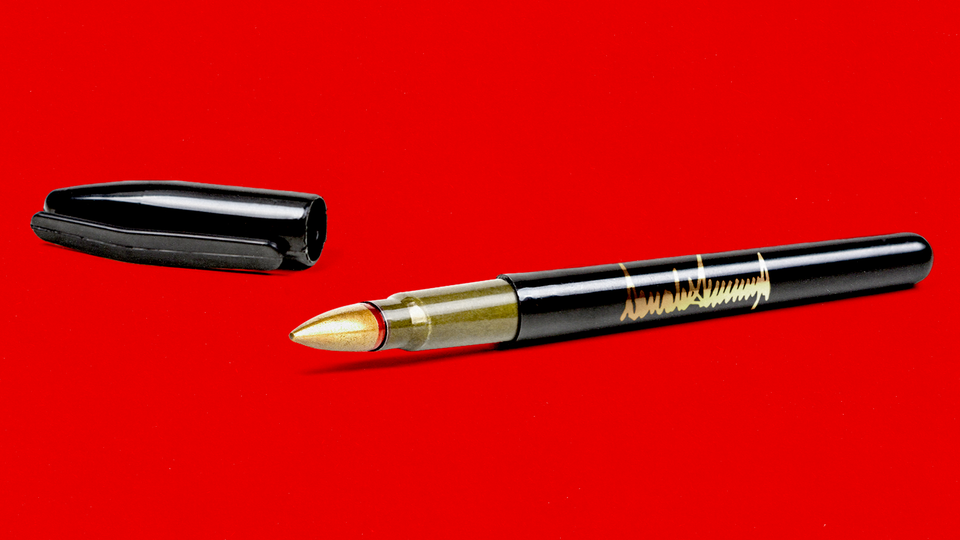
Trump has called for sending American forces to Iran since 1980. He finally has, and must own the consequences. Illustration by Paul Spella / The Atlantic. Source: Getty. Why did President Trump decide to attack Iran? It depends on what day of the week you ask. On Saturday, the president claimed in a recorded address that he acted because Iran’s rulers refused to “renounce their nuclear ambitions” and were developing long-range missiles that threatened America and its allies. On Sunday, a senior administration official told reporters that Iran and its proxies “posed an imminent threat to U.S. personnel and allies in the region.” On Monday, House Speaker Mike Johnson and Secretary of State Marco Rubio suggested that Trump acted preemptively to protect U.S. forces in advance of an unavoidable Israeli attack on Iran that would inevitably lead Iran to retaliate against America. The next day, Trump rejected this framing, telling reporters that “if anything, I might have forced Israel’s hand” because he believed Iran was “going to attack if we didn’t do it.”
All of these pretexts present problems. Why would America need to destroy Iran’s nuclear facilities if, as Trump previously claimed, they’d been “completely and totally obliterated” eight months ago in Operation Midnight Hammer? In 2025, the Defense Intelligence Agency assessed that Iran’s missile program was a decade away from being able to target American shores. That hardly sounds like an imminent threat. As for the Israel excuse, Trump is the senior partner in the U.S.-Israel relationship, and he sets the terms. When he wanted Israel to end its June 2025 war with Iran, he publicly forced the country to recall its fighter jets, even without avenging a closing strike that had left four Israelis dead.
Trump could have dissuaded the Israelis once again. Instead, the president ordered the largest U.S. air-power buildup in the Middle East since the invasion of Iraq. Then, according to The New York Times, his CIA gave Israel the intelligence to locate and kill Iran’s supreme leader, Ali Khamenei. (Axiosreported instead that the intelligence was Israel’s and the CIA confirmed it.) “He was unable to avoid our Intelligence and Highly Sophisticated Tracking Systems,” Trump crowed on Truth Social, announcing Khamenei’s death. The two countries reportedly had planned the ensuing assault for weeks.
The shifting explanations for Trump’s war and the alleged imminent threat that prompted it suggest poor planning and internal confusion about the president’s motives. They are also a smoke screen. Fundamentally, a war ordered by the most powerful man in the world, commanding the most advanced military in the world, is the responsibility of the man who ordered it. Trump is a two-term president with agency, and he has long telegraphed and demonstrated his eagerness to use military force around the world—and in particular, in Iran.
In 1980, NBC interviewed a young Trump about the ongoing Iran hostage crisis. He did not hold back. “That this country sits back and allows a country such as Iran to hold our hostages, to my way of thinking, is a horror, and I don’t think they’d do it with other countries,” he said. When the interviewer asked if that meant “you’re advocating that we should have gone in there with troops,” Trump replied, “I absolutely feel that, yes,” adding that had America done so, “I think right now we’d be an oil-rich nation.” (Israeli Prime Minister Benjamin Netanyahu recently said that he had dreamed of being able to “smite the terror regime” in Iran for 40 years; it turns out Trump had him beat.)
In 1987, the Timesreported that Trump declared in a New Hampshire speech that “the United States should attack Iran and seize some of its oil fields in retaliation for what he called Iran’s bullying of America.” In 1988, Trump toldThe Guardian that “I’d be harsh on Iran. They’ve been beating us psychologically, making us look a bunch of fools.”
Trump’s instinctive hawkishness and abiding belief in military coercion as a solution to American problems extend well beyond Iran. He supported the 2003 invasion of Iraq and the 2011 intervention in Libya to topple Muammar Qaddafi, before turning against both. In his first term as president, Trump ordered the assassination of Qassem Soleimani, the head of Iran’s Islamic Revolutionary Guard Corps. In his second term, he has fast-tracked arms sales to the Middle East, menaced Canada, threatened to “get Greenland,” and abducted the dictator of Venezuela.
Believing that Trump was somehow a “peace president” devoted to American restraint, as some credulouscommentatorsclaimed, required ignoring everything he’d said before he was president and everything he’d done after he became president. As Andrew Kaczynski, a CNN reporter who, during the 2016 presidential campaign, exposed Trump’s early support for the Iraq War, put it: “Important context for Trump’s opposition to regime change wars or interventions is that he never actually opposed them at the time and only did so after they went bad.”
Trump’s officials and allies have fumbled around to find an “imminent threat” to justify the president’s decision to strike Iran. But the real impetus for such action was Trump’s imperial approach to American power, which was decades in the making. The president specializes in exploiting the weaknesses of his opponents; having watched Israel decimate Iran’s proxy armies and air defenses over the past few years, he sought to capitalize on the regime’s moment of maximum vulnerability. Other countries—most notably Israel and Saudi Arabia—potentially stand to benefit from Trump’s war. But the decision to start it was his alone, and no amount of spin from his surrogates should obscure this fact.